
Beautiful Plants For Your Interior
Beautiful Plants For Your Interior
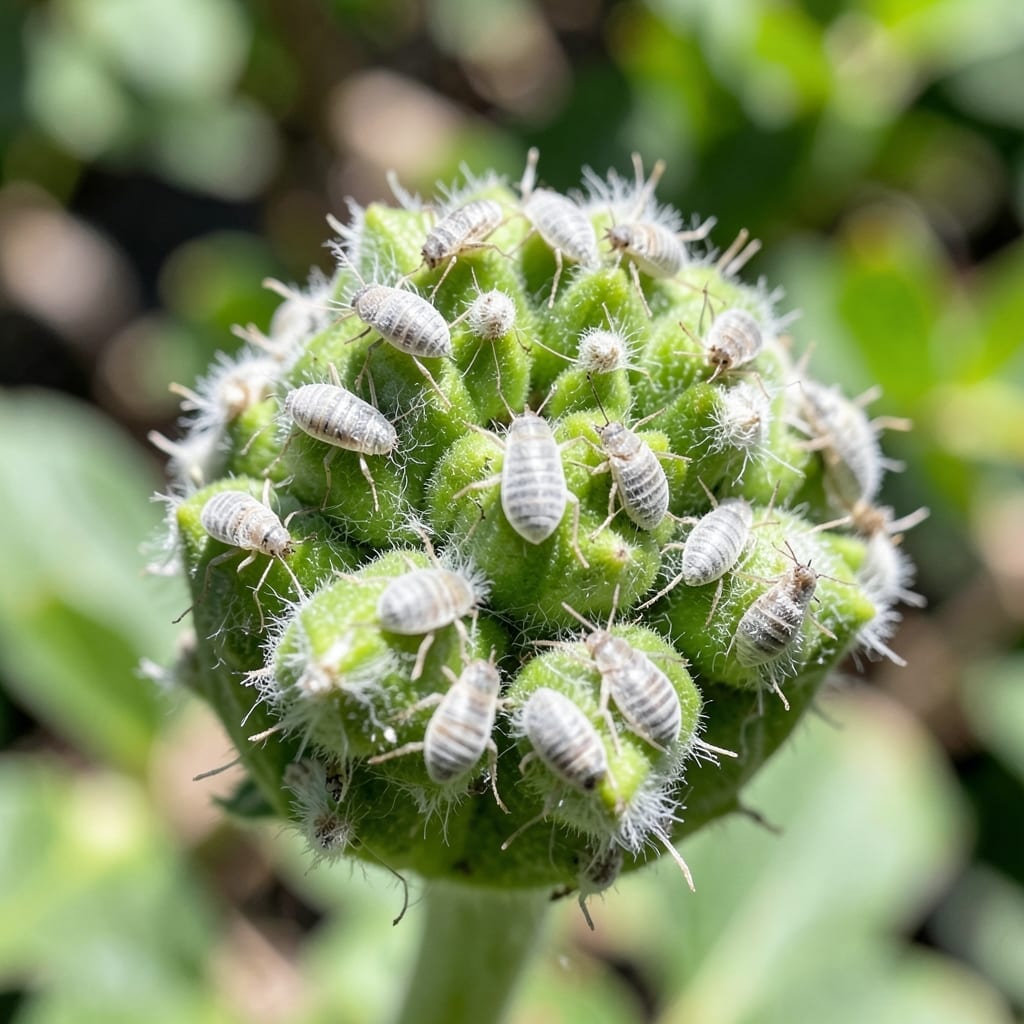
White cottony clusters on your flower buds are mealybugs stealing your plant’s strength. I’ve lost entire bloom cycles to these pests before learning how to stop them naturally.
The damage shows up as stunted growth, yellowing leaves, and buds that never open. These sap-sucking insects spread fast if ignored, but they’re easier to control than you’d think with the right approach.
You’ll see healthy blooms return within 2-3 weeks once you break their lifecycle. The key is catching them early and using consistent, non-toxic treatments.
Works for greenhouse plants, indoor arrangements, and garden beds alike. Here’s how to reclaim your flowers.
Mealybugs target flower buds for specific biological and environmental reasons. Understanding these causes helps prevent infestations and protect your plants. Here’s why it happens:
Mealybugs thrive in dense, humid environments where airflow is limited. Overcrowded plants create the perfect breeding ground, as the bugs can easily move between buds unnoticed. Soggy foliage from poor ventilation also attracts them, as they feed on the sap of stressed plants. Ensure proper spacing and prune regularly to improve air circulation.
Plants under stress—whether from nutrient deficiencies, drought, or root damage—produce higher levels of sugars and amino acids in their sap. Mealybugs are drawn to these compounds, making weakened plants prime targets. Strengthen your plants with balanced fertilization and consistent watering to deter infestations.
Excess nitrogen promotes soft, new growth, which mealybugs prefer over tougher, mature leaves. Flower buds, rich in nutrients, become irresistible. Switch to a balanced or phosphorus-rich fertilizer during the blooming phase to reduce vulnerability.
In gardens lacking beneficial insects like ladybugs, lacewings, or parasitic wasps, mealybug populations explode unchecked. These predators naturally control mealybug numbers. Encourage biodiversity by planting companion flowers (e.g., marigolds, alyssum) or introducing beneficial insects.
If mealybugs have taken over your flower buds, don’t panic—here’s how to evict them and keep them from coming back.
Dab a cotton swab soaked in 70% isopropyl alcohol directly onto visible mealybugs. The alcohol dissolves their protective waxy coating, killing them on contact. Focus on clusters in bud crevices and leaf axils. Repeat every 2–3 days until the infestation clears.
Mix 1–2 tbsp of mild liquid soap (like Castile) with a quart of water and spray affected buds thoroughly. The soap disrupts their cell membranes. Apply in the early morning or late evening to avoid leaf burn. Reapply every 4–7 days for 2–3 weeks.
Release ladybugs, lacewings, or mealybug destroyers (Cryptolaemus montrouzieri) into your garden. These beneficial insects feast on mealybugs. To encourage them to stay, provide a water source and avoid broad-spectrum pesticides.
They return due to hidden eggs or missed clusters. Mealybugs lay eggs in crevices, so repeat treatments every 2-3 days for 2 weeks to break their lifecycle. Inspect undersides of leaves and bud stems thoroughly.
Prune and discard severely affected buds immediately in a sealed bag. This prevents spread to healthy parts. Never compost infested plant material, as mealybugs can survive and reinfect.
While rarely fatal, severe infestations stunt growth and weaken plants. Act quickly—they sap nutrients and can attract sooty mold. Healthy plants usually recover within 2-3 weeks of treatment.
Natural methods often work better for flower buds. Neem oil or insecticidal soap are safer and won’t harm pollinators. Reserve chemical pesticides for extreme cases only.