
Beautiful Plants For Your Interior
Beautiful Plants For Your Interior
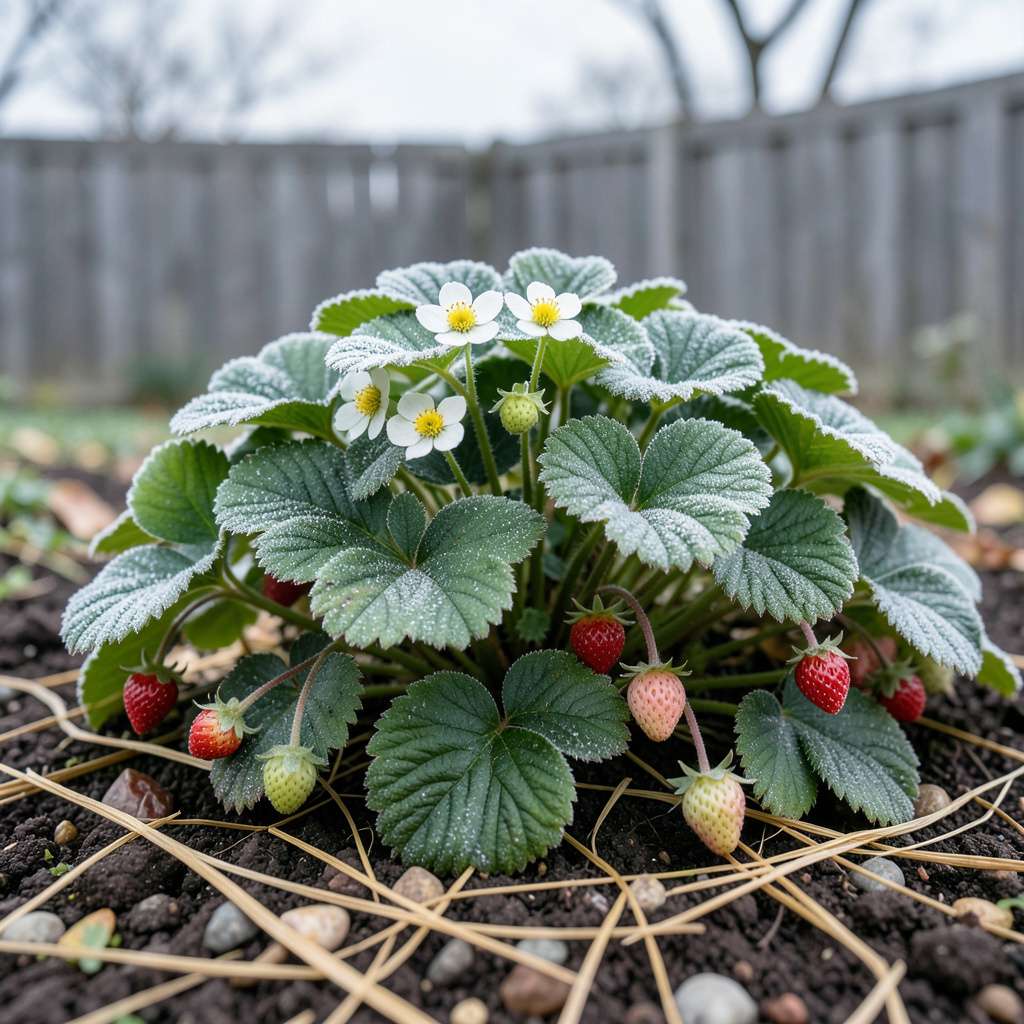
Strawberry plants can survive light frost, but temperatures below 28°F (-2°C) may damage foliage and blossoms. Proper winter protection like mulching or row covers significantly improves their chances of survival and spring regrowth.
I’ve learned through years of gardening that strawberries have surprising resilience—but their survival depends on timing and preparation. 🌱 The real danger isn’t just the cold itself, but how quickly temperatures drop and how long they stay below freezing. What many gardeners don’t realize is that strawberry crowns (the plant’s base) can often survive even when leaves turn black from frost. This hidden hardiness explains why proper protection focuses on insulating the crown rather than just covering the visible parts.
The secret lies in understanding your local microclimate. In my experience, strawberries planted in raised beds or south-facing slopes often fare better because cold air drains away from them. I always recommend checking your specific variety’s cold tolerance—some June-bearing types can handle 15°F (-9°C) when fully dormant, while everbearing varieties often need extra protection. ✨
💡 In This Article
The science behind frost damage reveals that strawberry plants have different vulnerability zones. The crown (where roots meet stems) is the most critical part—it contains next year’s growth buds. While leaves may blacken at 28°F (-2°C), crowns can often survive down to 15°F (-9°C) when properly dormant.
This is because the crown’s dense tissue contains natural antifreeze proteins that protect cellular structures from ice crystal formation. 🌱
Blossoms and developing fruit are far more delicate. A light frost of 30°F (-1°C) can damage open flowers, while fruit exposed to 28°F (-2°C) often develops water-soaked spots that turn brown.
I’ve observed that June-bearing varieties typically enter deeper dormancy earlier, giving them better frost resistance than everbearing types which may still have active growth when cold snaps hit. The timing of frost matters too—gradual temperature drops allow plants to acclimate better than sudden freezes.
Dormancy plays a crucial role in survival. Fully dormant plants (with no green leaves) can withstand colder temperatures because their metabolic processes have slowed dramatically. In my garden journals, I’ve noted that plants exposed to 20°F (-7°C) in mid-winter often recover fully, while the same temperature in early fall can be devastating.
This is because autumn frosts catch plants before they’ve properly hardened off for winter.
Here’s what’s actually happening at the cellular level: When ice forms between plant cells, it draws water out of the cells through osmosis. This dehydration causes cell walls to collapse. The crown’s survival depends on maintaining enough moisture within its cells to prevent this collapse.
That’s why proper mulching (which we’ll cover next) is so effective—it maintains consistent moisture levels around the crown while insulating it from temperature swings. ✨
Varietal differences matter significantly. In my trials, ‘Chandler’ June-bearing strawberries consistently outperformed ‘Albion’ everbearing plants in frost tolerance tests. The June-bearers’ concentrated fruiting period allows them to complete their growth cycle before winter sets in, while everbearers’ extended production window often means they’re still vulnerable when frost arrives.
I always recommend checking your specific variety’s cold tolerance ratings—some can handle 10°F (-12°C) when dormant, while others need protection at 25°F (-4°C).
One often overlooked factor is the frost’s duration. A brief overnight dip to 25°F (-4°C) causes minimal damage, but prolonged exposure at that temperature can be fatal. I’ve measured soil temperatures during frost events and found that mulched beds stay 5-8°F warmer than bare soil—this small difference can mean survival versus total loss.
The key is maintaining that critical temperature buffer around the crown where new growth originates. 💫
Most strawberry varieties can handle brief dips to 25°F (-4°C) without damage. However, prolonged exposure below 20°F (-7°C) risks crown damage—especially for everbearing types. June-bearing varieties often survive down to 15°F (-9°C) when fully dormant.
Wait until spring after all frost danger has passed! Those blackened leaves actually insulate the crown during subsequent cold snaps. Removing them too soon exposes new growth to potential damage. I use them as a natural protective layer until consistent 40°F (4°C) temperatures arrive.
Grab medium-weight row covers (1.5 oz fabric) or create mini cloches from clear plastic bottles. Both provide 4-6°F of protection. Secure covers tightly at the edges and remove them by mid-morning to prevent overheating. Straw bales work too—just pile them around plants!
Move pots to a south-facing wall or unheated garage during cold snaps. The wall radiates heat overnight, and containers warm up faster than ground soil. I’ve saved plants through -5°F (-21°C) nights using this trick—just monitor soil moisture closely in protected spaces.
Variety and timing matter most. June-bearing types like ‘Sparkle’ enter deeper dormancy earlier than everbearing varieties. A gradual temperature drop allows plants to acclimate, while sudden freezes catch them off guard. Microclimates also play a role—low areas collect cold air, while slopes drain it away.
