
Beautiful Plants For Your Interior
Beautiful Plants For Your Interior
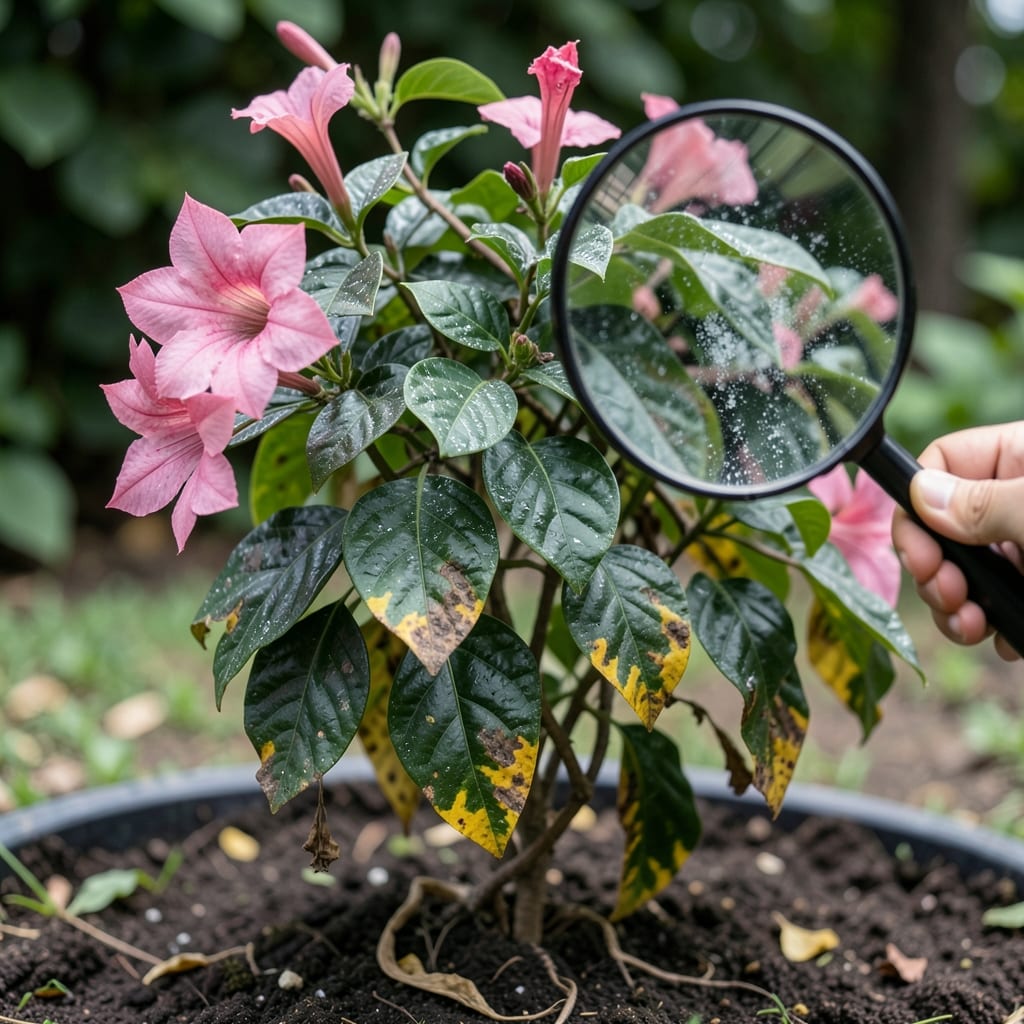
My mandevilla looked stunning until the leaves turned yellow overnight. 🌿 These tropical vines are tough but not invincible, and catching problems early makes all the difference.
Most issues start with too much water, too little air flow, or the wrong kind of soil. I’ve seen powdery mildew, leaf spot, and root rot take down healthy plants in weeks when ignored.
Organic treatments like neem oil, baking soda sprays, and better drainage can turn things around fast. The key is acting before the damage spreads to stems and blooms.
Prevention is simpler than cure—just give them sunlight, good circulation, and well-draining pots. They’ll reward you with vibrant growth all season long.
Mandevillas are tough, but even these vibrant climbers can fall prey to diseases when conditions aren’t ideal. Understanding the root causes helps you prevent problems before they start. Here’s what’s really going on behind the scenes:
Excess moisture is the #1 trigger for fungal diseases like Phytophthora root rot and powdery mildew. When soil stays soggy, oxygen is squeezed out, and harmful fungi thrive. Mandevillas hate “wet feet”—their roots suffocate, weakening the plant and inviting infection.
Stagnant, humid air creates a perfect storm for foliar diseases such as downy mildew and leaf spot. These pathogens spread rapidly when leaves stay wet for extended periods. Poor spacing between plants or dense canopies trap moisture, accelerating spore germination.
Insects like aphids, spider mites, and whiteflies don’t just sap plant strength—they punch holes in leaves and stems, giving bacteria and viruses (e.g., Xanthomonas leaf spot) an easy entry point. Their sticky honeydew also fuels sooty mold growth.
Too much nitrogen promotes lush, soft growth that’s highly susceptible to fungal attacks. Conversely, potassium or calcium deficiencies weaken cell walls, making plants more vulnerable to infections like Alternaria leaf blight.
Dirty pruners or reused potting mix can introduce pathogens directly. Fungal spores and bacterial cells linger on unsterilized tools, while old soil may harbor dormant diseases ready to strike stressed plants.
Keeping your mandevilla healthy starts with quick action and smart habits. Below are targeted fixes for common issues, paired with prevention tips to stop problems before they start.
If leaves turn yellow, check the soil. Overwatering or poor drainage can suffocate roots, while underwatering causes stress. Let the top inch of soil dry between waterings, and ensure pots have drainage holes. Prevention tip: Water deeply but infrequently, and place your plant in bright, indirect light to avoid scorching.
Spider mites, aphids, or mealybugs leave sticky residue or webbing. Spray leaves with a mix of water and mild soap or neem oil to dislodge pests. For stubborn cases, wipe leaves with a damp cloth. Prevention tip: Inspect new plants before bringing them near your mandevilla, and keep the area free of debris where pests hide.
Black or brown spots on leaves often signal fungal disease. Prune affected leaves immediately to prevent spread, and avoid overhead watering. Thin out dense foliage to improve airflow. Prevention tip: Water at the base of the plant early in the day so leaves dry quickly in sunlight.
Sudden wilting or leaf drop can result from temperature swings or low humidity. Move the plant away from drafts, heaters, or AC vents. Mist leaves regularly or use a humidity tray. Prevention tip: Maintain consistent conditions—mandevillas thrive in 60–80°F (15–27°C) with moderate humidity.
💡 Pro tip: Always sterilize pruning tools with rubbing alcohol between cuts to avoid spreading disease!
Powdery mildew appears as white, powder-like spots. It thrives in high humidity and poor airflow. Treat with a baking soda spray and improve ventilation immediately.
Yellow leaves often signal overwatering or poor drainage. Let the top 1 inch of soil dry between waterings and ensure pots have drainage holes.
Act fast! Remove the plant from soil, trim black/mushy roots, and repot in fresh, well-draining mix. Avoid watering for 3-5 days after repotting.
Water at the base in the morning, space plants for airflow, and remove fallen leaves. Apply neem oil preventatively every 2-3 weeks.