
Beautiful Plants For Your Interior
Beautiful Plants For Your Interior
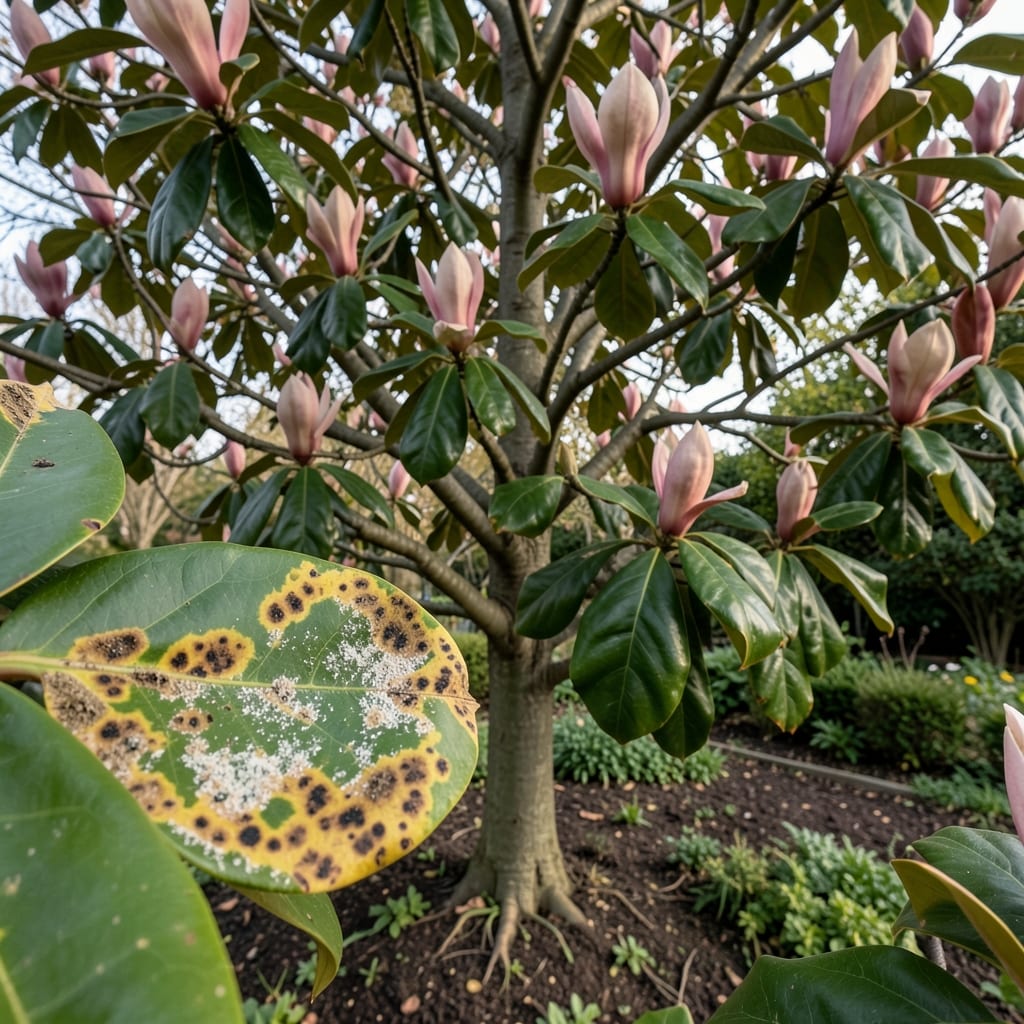
Spotted magnolia leaves last spring had me panicking. 🌿 I thought I was looking at a dying tree, but it turned out to be a common fungal issue that’s easier to fix than I imagined.
The first sign is usually those dark brown or black spots with yellow halos. They spread fast if left alone, turning leaves brittle and dropping them early. Catching it early means the difference between a struggling tree and a healthy one.
Organic treatment works surprisingly well—no harsh chemicals needed. A simple copper-based spray or even a baking soda solution can stop the spread and protect new growth.
Prevention is simpler: improve airflow, clean up fallen leaves, and avoid overhead watering. Your magnolia will thank you with lush, disease-free foliage.
Magnolia leaf diseases often stem from a mix of environmental stressors and pathogenic invaders. Understanding the root causes helps you prevent and treat problems effectively. Below are the primary triggers, explained scientifically yet practically.
Most magnolia leaf diseases, like Cercospora leaf spot or anthracnose, are caused by fungi thriving in warm, wet conditions. These pathogens spread via spores in water splashes or wind. Overhead watering and poor air circulation create ideal breeding grounds.
Prolonged leaf wetness—from rain, dew, or irrigation—softens leaf tissues, making them susceptible to infection. Magnolias in humid climates or poorly drained soil are especially at risk. Action: Water at the base and space plants for airflow.
Heat stress weakens magnolias, reducing their natural defenses. Sudden temperature swings (e.g., late frosts) can also damage leaves, inviting secondary infections. Mulching helps stabilize soil temperature.
Over-fertilizing (especially with nitrogen) promotes lush, tender growth that’s more vulnerable to disease. Similarly, crowded plantings limit airflow. Fix: Use balanced fertilizer and prune for openness.
Insects like scale or aphids wound leaves, creating entry points for pathogens. Their honeydew also fosters sooty mold. Regularly inspect foliage and treat infestations organically (e.g., neem oil).
Tackling leaf disease in magnolias starts with identifying the cause and applying targeted fixes. Here’s how to address common issues and keep your tree thriving.
Fungal spots or powdery mildew? Prune crowded branches to boost airflow, and remove fallen leaves to reduce spores. Apply neem oil or a baking soda spray (1 tsp baking soda + 1 quart water + a few drops of dish soap) weekly until symptoms fade. Prevention tip: 💡 Water at the base to keep leaves dry.
Scale, aphids, or mites leaving sticky residue or curled leaves? Introduce ladybugs or lacewings to feast on pests. For heavy infestations, spray with insecticidal soap at dusk. Prevention tip: 🌡️ Inspect leaves regularly, especially in spring when pests emerge.
Yellowing leaves or root rot? Let the soil dry between waterings, and ensure your magnolia is planted in well-draining soil. If the issue persists, check for clogged drainage and amend with compost. Prevention tip: ✨ Use a moisture meter to avoid guesswork.
Pale or stunted leaves may signal a lack of nitrogen or iron. Test your soil and amend with organic fertilizer or chelated iron as needed. Prevention tip: 🎯 Feed magnolias in early spring and late fall for steady growth.
Consistency is key—monitor your tree and act at the first sign of trouble!
Brown spots with yellow halos often indicate fungal infections like leaf spot. These typically appear in warm, wet conditions and spread quickly without treatment.
Yes, excessive moisture leads to yellowing leaves or root rot. Magnolias prefer well-draining soil and dry periods between waterings. Use a moisture meter to avoid overdoing it.
Improve airflow by pruning crowded branches and remove fallen leaves. A baking soda spray or neem oil works well as organic treatments. Always water at the base.
Inspect leaves regularly, especially in spring when pests emerge. Treat infestations with insecticidal soap at dusk for best results.