
Beautiful Plants For Your Interior
Beautiful Plants For Your Interior
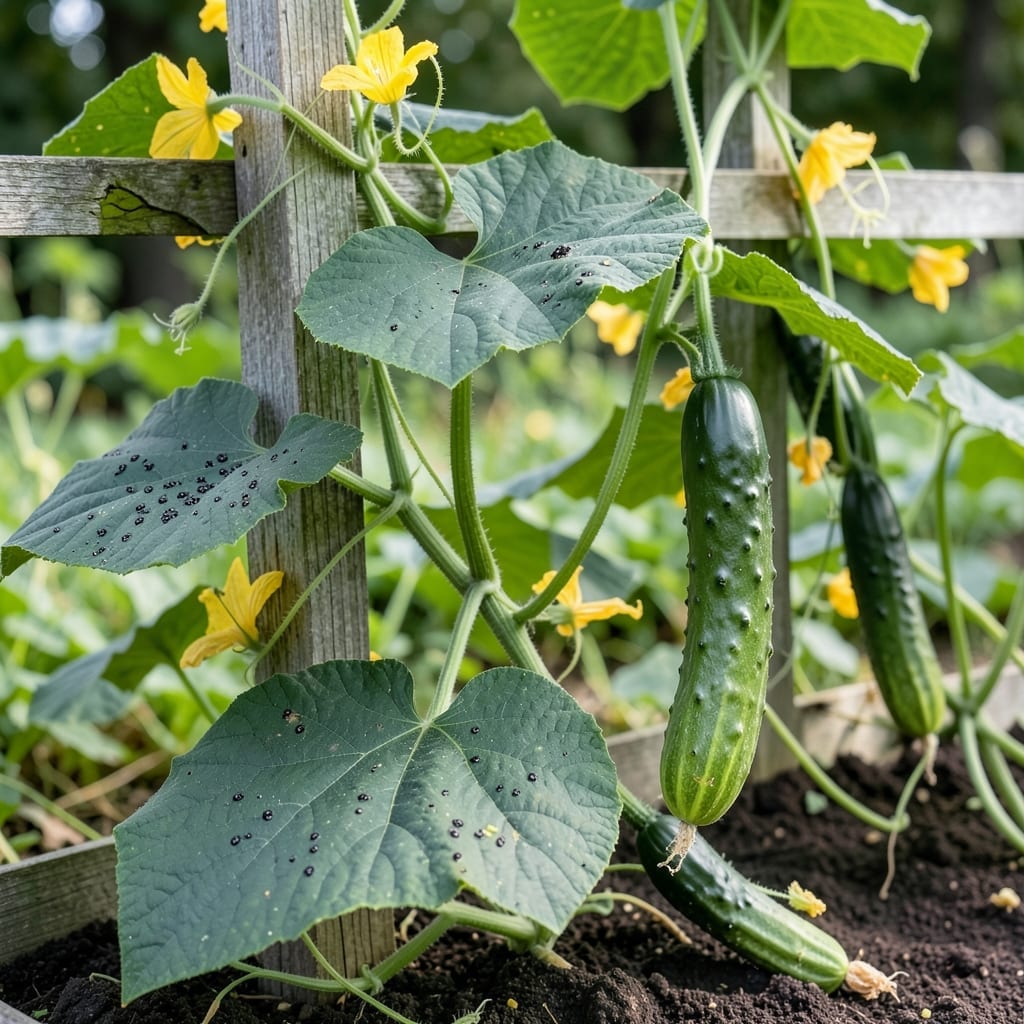
Those tiny black specks on your cucumber leaves aren’t just unsightly—they’re a warning sign. I’ve seen healthy vines turn spotted overnight, and ignoring them means saying goodbye to your harvest.
This is almost always a fungal issue, spreading fastest in warm, wet conditions. The dots start small but merge into larger patches, eventually killing leaves and stunting fruit production.
Here’s the thing—you can stop it with early action. Remove infected leaves first, then adjust watering and airflow. A simple copper spray often finishes the job.
Caught early, your plants can recover fully within 2-3 weeks and still produce a strong crop. Don’t wait until it’s too late to act.
The appearance of little black dots on cucumber plants is typically a sign of underlying issues, often tied to environmental conditions or pathogens. Below are the most common causes, explained with scientific precision.
Colletotrichum orbiculare, the fungus responsible for anthracnose, thrives in warm, wet conditions. It produces black, sunken lesions on leaves, stems, and fruit. The spores spread via water splashes (e.g., rain or overhead irrigation) and can survive in plant debris. High humidity (above 90%) and temperatures between 75–85°F (24–29°C) accelerate its growth.
Pseudomonas syringae or Xanthomonas campestris bacteria cause small, water-soaked spots that turn black as they dry. These pathogens enter through wounds or stomata (leaf pores) and proliferate in moist environments. Overhead watering and crowded plantings (poor airflow) are major contributors.
While not directly causing black dots, pests like spider mites and aphids weaken plants, making them susceptible to secondary infections. Their feeding creates tiny wounds where fungi or bacteria can enter. Additionally, aphids excrete honeydew, which attracts sooty mold—a black, fungal growth that appears as dots on leaves.
A lack of potassium or magnesium can manifest as dark, necrotic spots on cucumber leaves. Potassium deficiency often starts as yellowing edges (scorching) before turning black, while magnesium deficiency causes interveinal chlorosis (yellowing between veins) with black dots in severe cases. Poor soil fertility or imbalanced pH (below 6.0) limits nutrient uptake.
Here’s how to tackle those pesky black spots on your cucumber plants, with practical fixes for each common cause.
Remove and destroy infected leaves immediately to prevent spread. Apply a copper-based fungicide or a homemade mix of 1 tsp baking soda + 1 quart water + a drop of dish soap. Spray every 7–10 days, especially after rain.
Prevention: 💡 Space plants for airflow, water at the base (not leaves), and rotate crops yearly.
Blast pests off with a strong stream of water, then apply neem oil or insecticidal soap. For severe infestations, introduce beneficial insects like ladybugs.
Prevention: 🎯 Inspect plants weekly, keep the garden free of debris, and plant pest-repelling companions like marigolds.
Prune infected foliage and avoid overhead watering. Treat with a bactericide containing Bacillus subtilis or a weak hydrogen peroxide solution (1 part 3% H₂O₂ to 10 parts water).
Prevention: ✨ Use drip irrigation, disinfect tools, and start with disease-resistant seed varieties.
Let the top inch of soil dry between waterings. Improve drainage by amending soil with compost or creating raised beds.
Prevention: 🌡️ Water deeply but less frequently, and ensure pots have drainage holes.
Test soil and amend with a balanced fertilizer or organic matter (compost, worm castings). For magnesium deficiency, add Epsom salt (1 tbsp per gallon of water) as a foliar spray.
Prevention: 🔥 Feed plants regularly with a nutrient-rich diet and mulch to retain soil moisture.
Yes, fungal and bacterial spots can spread via water, wind, or garden tools. Remove infected leaves immediately and avoid overhead watering to prevent contamination of nearby plants.
If the dots are only on leaves, the fruit is usually fine. Discard cucumbers with visible black spots or lesions, as they may harbor pathogens. Always wash produce thoroughly before eating.
Rotate crops yearly, use drip irrigation, and ensure 3-4 feet of spacing between plants for airflow. Start with resistant varieties like ‘Straight Eight’ or ‘Marketmore 76’.
A homemade spray of 1 tsp baking soda + 1 quart water + dish soap works well. Apply every 7-10 days until spots disappear. Neem oil is another effective organic option.