
Beautiful Plants For Your Interior
Beautiful Plants For Your Interior
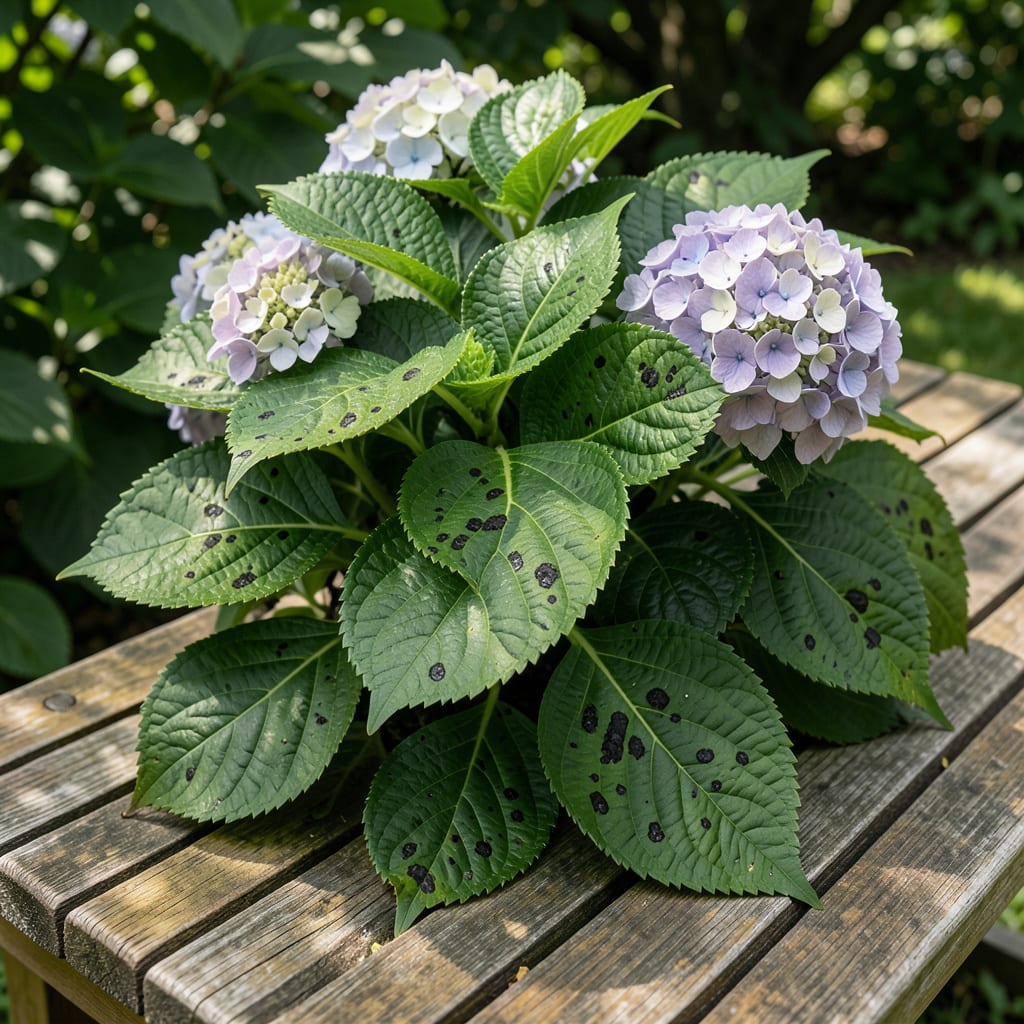
Those black spots on your hydrangea leaves aren’t just ugly—they’re a warning sign. I’ve seen both sunburn and fungal infections create similar damage, but they demand opposite solutions.
The difference comes down to pattern and timing. Sunburn shows up as crispy edges after hot afternoons, while fungal spots spread from the center outward, often with yellow halos.
Catching it early means the difference between a quick fix and a season-long battle. Proper diagnosis saves your plants from unnecessary treatments that might make things worse.
We’ll sort out which problem you’re dealing with and how to stop it before your shrubs suffer permanent damage.
Black spots on hydrangea leaves usually stem from a few key issues, each with distinct triggers. Below are the most common causes, explained with actionable insights.
The primary culprit is often Cercospora or Alternaria fungi, which thrive in warm, humid conditions. These pathogens spread via water droplets, infecting leaves and creating circular black or brown spots with yellow halos. Overhead watering and poor air circulation accelerate their growth.
Intense sunlight can scorch hydrangea leaves, especially varieties like Hydrangea macrophylla (bigleaf hydrangeas) that prefer partial shade. Prolonged exposure to direct UV rays causes necrotic spots, often dark with crispy edges. This is common in drought-stressed plants or during heatwaves.
Soggy soil or waterlogged roots create the perfect breeding ground for root rot (Phytophthora) and leaf-spotting fungi. When roots suffocate, they fail to absorb nutrients, leading to yellowing leaves with black patches. Compacted soil or containers without drainage holes worsen the problem.
A deficiency in potassium or phosphorus can weaken leaf tissue, making it more susceptible to diseases and environmental stress. Black spots may appear alongside purple veins (phosphorus deficiency) or leaf margin browning (potassium deficiency). Over-fertilization, especially with nitrogen, can also trigger salt burn, causing dark, dead spots.
Once you’ve identified the cause of black spots on your hydrangea leaves, these targeted fixes will help restore your plant’s health and beauty. 🌿
Remove and destroy infected leaves to stop the fungus from spreading. Apply a copper-based fungicide or neem oil spray every 7–10 days until the issue clears. Prevention tip: Improve air circulation by spacing plants properly and watering at the base in the morning. 💡 Avoid overhead watering to keep leaves dry.
If leaves are scorched from too much direct sunlight, move potted hydrangeas to a shadier spot or use shade cloth for in-ground plants. For immediate relief, trim the worst-affected leaves to reduce stress. Prevention tip: Hydrangeas thrive in partial shade—aim for morning sun and afternoon shade, especially in hot climates. ✨
Let the top inch of soil dry out between waterings. If the soil stays soggy, check for compacted roots and aerate the soil. For potted hydrangeas, ensure the container has drainage holes. Prevention tip: Use a moisture meter to avoid guesswork, and mix in compost to improve drainage. 🌡️
Spray leaves with insecticidal soap or a mix of water and dish soap to deter aphids, mites, or scale. For severe infestations, use horticultural oil. Prevention tip: Inspect leaves regularly and encourage beneficial insects like ladybugs. 🎯
Test your soil to confirm deficiencies. Amend with a balanced, slow-release fertilizer (10-10-10) or organic options like compost. For iron or magnesium shortages, use chelated iron or Epsom salt sprays. Prevention tip: Feed hydrangeas in early spring and mid-summer for steady growth. 🍃
Fungal spots often have yellow halos and appear in clusters. They spread from the center outward and thrive in humid conditions. Check for a pattern across multiple leaves.
Yes, prolonged sunburn can weaken the plant. Move it to partial shade immediately and trim damaged leaves. New growth will adapt better to the corrected light conditions.
Remove infected leaves first, then apply a copper-based fungicide. Improve air circulation and avoid overhead watering to prevent further outbreaks.
