
Beautiful Plants For Your Interior
Beautiful Plants For Your Interior
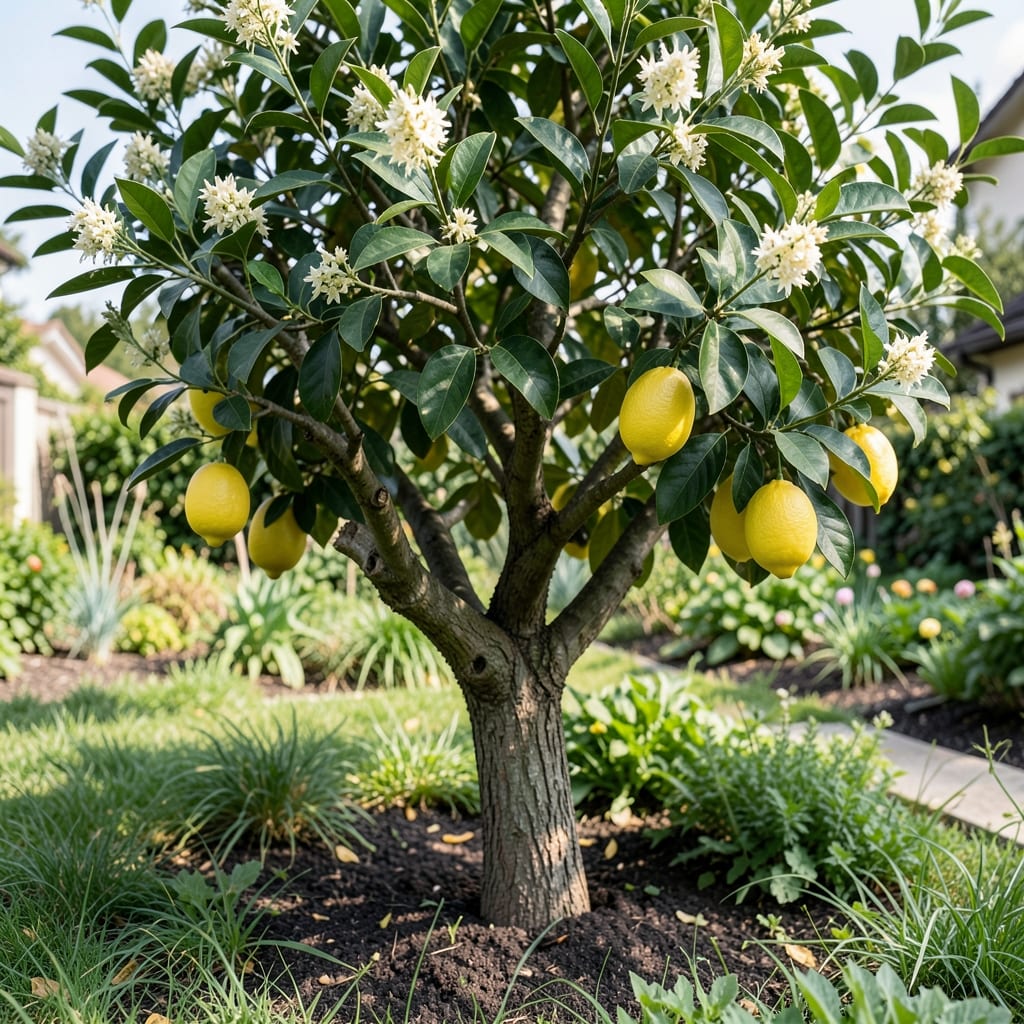
Those oval, slightly pointed lemon leaves tell you more about your tree’s health than you might realize. Their shape isn’t just pretty—it’s a roadmap to spotting problems early.
Healthy leaves are bright green and firm, but curl, spots, or discoloration signal it’s time to act. I’ve caught issues early just by noticing subtle changes in my own lemon trees.
📚 In This Guide
Here’s how I diagnose leaf problems and nurse my lemon trees back to health.
Start by looking closely at the overall shape of the leaves. Healthy lemon leaves are elliptical with a slightly pointed tip and smooth edges. If you notice curling, especially upward or downward, it often signals stress from underwatering or overwatering.
Check for irregularities like serrated edges or cupping, which can indicate nutrient deficiencies or pest damage. I always compare affected leaves to healthy ones on the same tree—this makes spotting differences much easier.
Healthy lemon leaves are a vibrant, deep green. Yellowing, known as chlorosis, often points to nitrogen deficiency or poor drainage. Dark green veins with yellowing between them? That’s a classic sign of iron deficiency, common in alkaline soils.
Feel the leaf surface for abnormalities. Sticky residue suggests aphids or scale insects, while a powdery coating could be powdery mildew. I run my fingers gently over the leaves—any bumpiness or roughness usually means pests or disease.
Brown or black spots with yellow halos often indicate fungal infections like anthracnose or leaf spot. Tiny holes or chewed edges usually mean caterpillars or leaf miners are at work. I’ve found that early morning inspections reveal the most activity from pests.
If you see webbing under the leaves, spider mites are likely the culprit. They thrive in hot, dry conditions, so increasing humidity around the plant can help deter them. Always isolate heavily infested leaves to prevent the problem from spreading.
Look at where the leaf attaches to the stem. Dark, sunken lesions at the base of the leaf or along the stem can indicate bacterial canker or gummosis. If the stems are brittle or blackened, the plant may be suffering from a more systemic issue.
Check the overall vigor of the tree. Wilting, stunted growth, or leaf drop can signal root problems or severe pest infestations. I make it a habit to step back and observe the whole plant—sometimes the issue isn’t just the leaves, but the tree’s environment or care routine.
For pest issues, I start with a strong blast of water to dislodge aphids or mites, then follow up with neem oil or insecticidal soap. Fungal problems often require improving air circulation and removing infected leaves. Always sterilize your pruning tools between cuts to avoid spreading disease.
Nutrient deficiencies can usually be corrected with a balanced fertilizer or soil amendments like iron chelates. If the problem is environmental, such as poor drainage, consider repotting the tree in well-draining soil. I’ve learned that addressing the root cause—rather than just the symptoms—is the key to long-term health.
Here’s what I’ve learned from years of troubleshooting lemon tree issues firsthand.
The Comparison Trick: In Step 1, always compare affected leaves to healthy ones on the same tree. This simple habit makes spotting subtle differences in shape, edges, or color much easier—especially when you’re first learning to identify problems. I keep a mental image of what healthy lemon leaves should look like.
Early Morning Inspections: For Step 3, I’ve found that early morning is the best time to check for pest activity. Many insects are most active then, and the cooler temperatures make it easier to spot webbing, holes, or other signs of damage that might be less visible later in the day.
Whole Plant Perspective: Step 4 emphasizes looking beyond just the leaves. Trust me on this—sometimes the real issue is in the stems, roots, or overall environment. I make it a habit to step back and assess the entire tree’s health, not just the obviously troubled leaves.
Tool Sterilization: This is non-negotiable for Step 5: always sterilize your pruning tools between cuts. I learned this the hard way after accidentally spreading disease from one branch to another. A quick wipe with rubbing alcohol between cuts prevents so many problems.
Lemon leaves may change shape due to diseases like citrus greening, pests, or environmental stress. Nutrient deficiencies or improper watering can also cause deformities. Inspect leaves for spots, curling, or yellowing to identify the issue.
Curled leaves often indicate pest infestations (e.g., aphids) or water stress. Treat with insecticidal soap or neem oil for pests, and ensure consistent watering. Check for over-fertilization, which can also cause curling.
Prune deformed leaves in early spring or late winter before new growth starts. Remove only severely damaged leaves to prevent disease spread. Always sterilize pruning tools to avoid contaminating healthy parts.
Yes! Use neem oil, baking soda sprays, or compost tea to combat fungal/bacterial issues. Introduce beneficial insects like ladybugs for pest control. These methods are eco-friendly and safe for organic gardens.
Yellowing and leaf drop often signal nutrient deficiencies (e.g., nitrogen or iron) or root rot. Test soil pH (ideal: 6.0–7.0) and adjust fertilization. Ensure proper drainage to avoid waterlogged roots.