
Beautiful Plants For Your Interior
Beautiful Plants For Your Interior
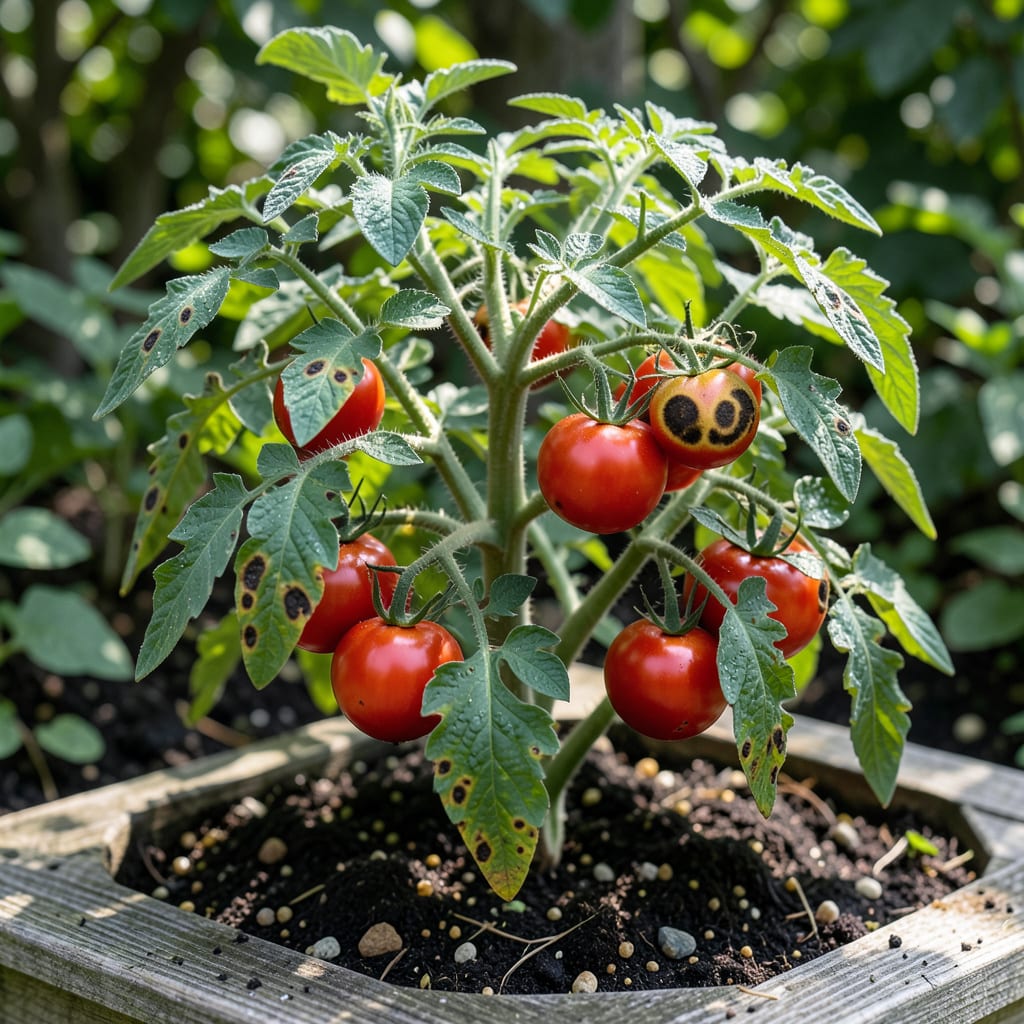
Those black spots on your tomato leaves aren’t just ugly—they’re a warning sign. I’ve seen healthy plants turn into skeletonized stems in 2 weeks when ignored.
Early blight, septoria, or even bacterial speck are the usual culprits. Each leaves slightly different patterns, but the solution starts the same: remove infected leaves immediately and stop overhead watering.
Organic fixes actually work here. Copper fungicide, baking soda sprays, or simply improving air circulation can turn things around. The key is catching it early before it spreads to fruit.
Your tomatoes aren’t doomed. With the right approach, they’ll bounce back stronger and keep producing all season.
Black spots on tomato leaves are a red flag 🚩—and the causes range from fungal invaders to environmental stress. Here’s the science behind the most common culprits.
Early blight (Alternaria solani) and septoria leaf spot (Septoria lycopersici) are the top fungal offenders. These pathogens thrive in warm, humid conditions (70–80°F with high moisture). They spread via water splashes, infected soil, or debris, producing circular, dark spots with concentric rings or yellow halos. Spores germinate on wet leaves, penetrating tissue within hours.
Xanthomonas or Pseudomonas bacteria cause irregular, water-soaked black spots, often with a greasy appearance. Unlike fungi, these bacteria enter through wounds or stomata (leaf pores) and multiply rapidly in wet, crowded foliage. Overhead watering accelerates their spread.
Extreme temperature swings, calcium or potassium deficiencies, or sunscald can mimic disease symptoms. For example, blossom end rot (from calcium imbalance) may start as dark spots on leaves before affecting fruit. Poor air circulation traps humidity, stressing plants and inviting secondary infections.
Sap-sucking pests like aphids and whiteflies weaken plants, leaving behind sticky honeydew that fosters sooty mold—a black fungal coating. Their feeding wounds also create entry points for bacteria and fungi.
Black spots on your tomato leaves can feel alarming, but with the right approach, you can restore your plant’s health. Below are targeted solutions for the most common causes, along with prevention tips to keep your tomatoes thriving. 🌱
Remove and destroy all infected leaves immediately to prevent spread. Apply copper-based fungicides or a DIY mix of 1 tsp baking soda + 1 quart water + a drop of dish soap every 7–10 days. Prevention tip: Space plants 2–3 feet apart for airflow and water at the base to keep leaves dry. 💡
Blast pests off with a strong stream of water, then apply neem oil or insecticidal soap every 3–5 days until they’re gone. Introduce beneficial insects like ladybugs for natural control. Prevention tip: Inspect the undersides of leaves weekly and use reflective mulch to deter pests. ✨
Switch to drip irrigation or a soaker hose to keep foliage dry. If the soil is waterlogged, improve drainage by amending with compost or raised beds. Prevention tip: Water early in the morning so leaves dry quickly in the sun. 🌞
For calcium deficiency (black spots with yellow halos), add crushed eggshells or a calcium spray. For magnesium deficiency (yellowing between veins), mix 1 tbsp Epsom salt per gallon of water and spray leaves. Prevention tip: Test soil annually and fertilize with a balanced organic fertilizer. 🎯
Act fast, stay consistent, and your tomato plants will bounce back stronger! 🌿
Yes! With prompt action, most plants rebound fully. Remove infected leaves, treat with copper fungicide or neem oil, and improve airflow. Recovery often takes 2-3 weeks if the issue is caught early.
Stop overhead watering immediately and switch to drip irrigation. Space plants 2-3 feet apart for better circulation, and remove affected foliage to contain the problem.
Not directly, but left untreated, the disease can weaken the plant and reduce yield. Fruit quality may decline if the plant’s energy is diverted to fighting the infection. Act fast to protect your harvest.
Yes, as long as the fruit itself shows no signs of rot or disease. Wash tomatoes thoroughly before eating. Avoid consuming any visibly affected fruit.
