
Beautiful Plants For Your Interior
Beautiful Plants For Your Interior
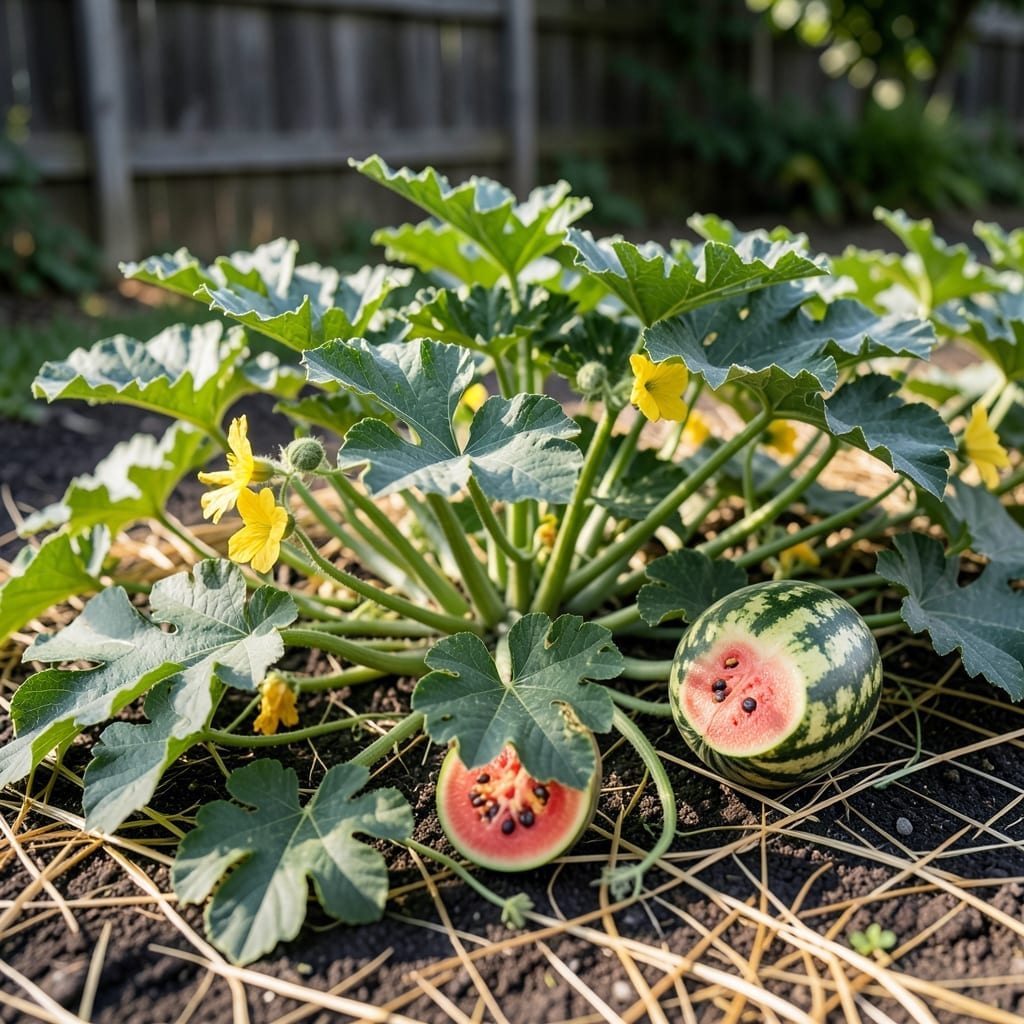
Watermelon leaves tell you everything if you know what to look for. I’ve saved countless vines by catching early signs—yellow edges, brown spots, or that telltale powdery coating.
Most issues fix fast with the right approach. The key is matching symptoms to solutions before damage spreads. Healthy leaves mean sweeter fruit and a stronger harvest.
📚 In This Guide
Here’s how I identify and address common leaf problems before they spread through your entire vine.
Begin with a thorough examination under natural light. Look for yellowing between veins (indicating nutrient deficiency), dark spots with halos (bacterial leaf spot), or white powdery coating (powdery mildew). I always check both upper and lower leaf surfaces—some problems only appear on the undersides.
Note the pattern and distribution. Are symptoms localized to older leaves (often nitrogen deficiency) or new growth (usually viral or fungal)? This distinction tells you whether the issue is mobile in the plant or spreading from external sources.
Run your fingers gently over the foliage. Raised bumps may indicate insect feeding, while crinkled or distorted leaves suggest viral infection. Watermelon leaves should feel smooth with a slight waxy texture—any stickiness often means aphid infestation.
Observe the leaf margins. Brown, crispy edges typically signal underwatering or salt burn from fertilizer, while wilting during cool mornings (when soil is still moist) strongly suggests fusarium wilt. I carry a hand lens to spot early signs of spider mite webbing.
Trace the problem leaves back to their stem attachment. Dark, sunken cankers at the base often indicate gummy stem blight. Cracked or oozing stems suggest bacterial ooze from bacterial fruit blotch. Healthy stems should be firm and green throughout.
Check where vines meet the soil. White fungal growth at the crown may be southern blight, while soft, collapsing vines often mean root rot. I gently brush away soil at the base to inspect the crown—this is where many systemic problems originate.
Consider recent weather patterns. Cool, wet periods (below 70°F) favor fungal diseases, while hot, dry spells (above 90°F) stress plants and invite spider mites. Watermelons thrive in 75-85°F with consistent moisture.
Evaluate your watering practices. Overhead irrigation spreads foliar diseases, while inconsistent soil moisture causes leaf yellowing. I switched to drip irrigation after losing an entire crop to anthracnose—game changer for leaf health.
For fungal issues, remove and destroy affected leaves immediately. Apply copper-based fungicide at first sign of powdery mildew or anthracnose. For bacterial problems, prune with sterilized tools and rotate crops next season—bacteria persist in soil for years.
Nutrient deficiencies often require soil testing. Yellowing between veins on older leaves calls for nitrogen, while purple discoloration indicates phosphorus deficiency. I keep a spray bottle of liquid seaweed for quick foliar feeding when plants show stress.
Here are the key insights I’ve gathered from years of troubleshooting watermelon plants.
Diagnostic Precision: In Step 1, focus on the pattern of symptoms rather than individual spots. Yellowing between veins on older leaves consistently points to nitrogen deficiency, while new growth issues often signal viral or fungal spread. This distinction saves time in treatment.
Tactile Inspection: Step 2’s physical examination is crucial—raised bumps often reveal early insect activity that visual inspection misses. I’ve found that aphid infestations frequently present as sticky residues before visible bugs appear, so check leaf undersides carefully.
Temperature Awareness: The 75-85°F optimal range mentioned in Step 4 is non-negotiable. I learned this the hard way when cool spells below 70°F allowed powdery mildew to spread overnight. Watermelons can’t fight fungal pressure outside their temperature comfort zone.
Prevention Strategy: For Step 5’s treatment approach, always remove affected leaves before applying fungicides. I made the mistake of spraying first once, and the copper-based fungicide couldn’t penetrate the existing powdery mildew coating effectively.
Yes, older leaves may yellow and die as part of the plant’s natural aging process. However, widespread yellowing often signals issues like nutrient deficiencies, overwatering, or disease. Check soil moisture and nutrient levels to rule out problems.
Diseases like powdery mildew, downy mildew, and anthracnose often target watermelon leaves. Look for white powdery spots, yellow patches, or dark lesions. Early treatment with fungicides or neem oil can help.
Practice crop rotation, ensure good airflow, and avoid overhead watering. Remove infected leaves promptly and use resistant varieties. Regularly inspect plants for early signs of trouble.
Yes! Young, tender watermelon leaves are edible and can be cooked like spinach or used in salads. They’re rich in nutrients, but avoid older, tough leaves as they may taste bitter.
Wilting leaves can result from underwatering, overwatering, or root rot. Check soil moisture—it should be damp but not soggy. If roots are healthy, adjust your watering schedule.