
Beautiful Plants For Your Interior
Beautiful Plants For Your Interior
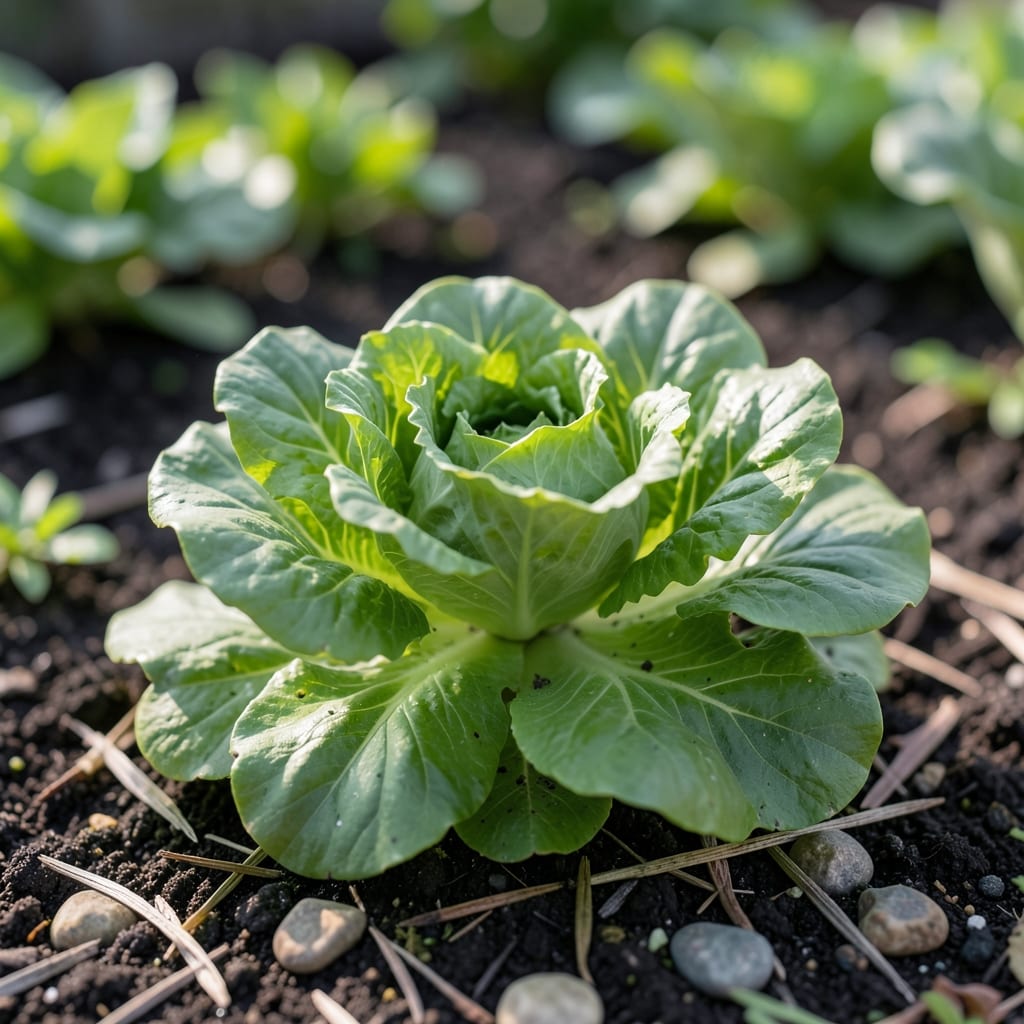
Those first true leaves on your lettuce seedlings signal the real growth has begun. I learned the hard way that these aren’t just baby leaves—they’re your plant’s foundation for healthy development.
At this stage, consistent moisture and gentle light make all the difference. Get it right, and you’ll have strong, vibrant plants ready for transplanting in no time. Skip the basics here, and you risk weak growth later.
📚 In This Guide
Here’s how I nurture seedlings from their first fragile sprouts to robust, healthy plants.
True leaves appear after the initial rounded cotyledons, which are actually part of the seed itself. You’ll notice true leaves have a more defined shape—serrated edges for varieties like romaine or smooth for butterhead—that matches the mature plant. Cotyledons are smooth and uniform, while true leaves emerge in pairs and show the plant’s characteristic form.
This distinction matters because cotyledons don’t photosynthesize efficiently. Once you see 2-3 sets of true leaves, the seedling can produce its own food and begin rapid growth. I check daily after germination, as this stage arrives 10-21 days post-sprouting depending on variety and conditions.
When true leaves emerge, it’s time to thin seedlings to prevent competition. Use clean scissors to snip weaker sprouts at soil level, leaving the strongest plant per cell or 6-8 inches apart in rows. This prevents leggy growth and ensures each plant develops a sturdy stem.
Increase water slightly but avoid wetting the leaves—true leaves are more susceptible to fungal issues than cotyledons. I water at the base in the morning so foliage dries quickly in the sun. The soil should stay evenly moist, never soggy, to support the expanding root system.
True leaves demand more light than cotyledons to drive photosynthesis. Move seedlings to full sun (6+ hours daily) or supplement with grow lights 12-14 hours if indoors. Without enough light, true leaves grow pale and elongated, a sign of etiolation that weakens the plant permanently.
I rotate pots daily to ensure even exposure. Watch for leaves orienting toward the light source—this tells you the plant is maximizing its energy capture. True leaves should appear deep green and firm within 3-5 days of proper light adjustment.
Once true leaves are established, the seedling has exhausted the nutrients stored in the seed. Apply a balanced, water-soluble fertilizer at half-strength every 7-10 days. I prefer organic fish emulsion or seaweed extract, which provide gentle nutrition without burning tender roots.
Over-fertilizing at this stage causes rapid but weak growth. You’ll see it in floppy stems and oversized but thin leaves. The goal is steady development, so I stop fertilizing if leaves develop brown edges—a sign of nutrient burn. Healthy true leaves should be vibrant and slightly leathery to the touch.
Here’s how to ensure your seedlings thrive as they develop true leaves.
Light Exposure: In Step 3, the 12-14 hours of grow light exposure is critical for preventing etiolation. True leaves need this extended light to photosynthesize effectively and develop their characteristic deep green color and firm texture.
Watering Technique: When true leaves emerge, as mentioned in Step 2, avoid wetting the foliage. Water at the base in the morning so leaves dry quickly in the sun, reducing the risk of fungal diseases that target these more delicate leaves.
Fertilization Timing: Step 4 emphasizes applying fertilizer at half-strength every 7-10 days. Stick to this schedule—over-fertilizing at this stage leads to weak, floppy growth, while under-fertilizing can stunt development.
Thinning Seedlings: As outlined in Step 2, spacing seedlings 6-8 inches apart ensures they don’t compete for light and nutrients. This prevents leggy growth and helps each plant develop a sturdy stem.
Lettuce true leaves appear after cotyledons (seed leaves) when the plant is 2-3 weeks old. If they’re slow, check for adequate light, warmth, and moisture. Poor conditions delay true leaf development.
True leaves typically emerge 7-14 days after germination, depending on variety and growing conditions. Ensure consistent moisture and temperatures between 60-70°F for optimal growth.
Yes! Transplanting is safest once 2-4 true leaves appear, as the plant is sturdy enough to handle stress. Use care to avoid damaging the delicate roots.
Unhealthy true leaves may be yellow, wilted, or spotted. This can signal overwatering, nutrient deficiencies, or pests. Check soil moisture and inspect for aphids or fungal issues.
If true leaves stall, try improving light exposure or using a balanced fertilizer. Alternatively, start fresh with new seeds if conditions were poor initially.