
Beautiful Plants For Your Interior
Beautiful Plants For Your Interior
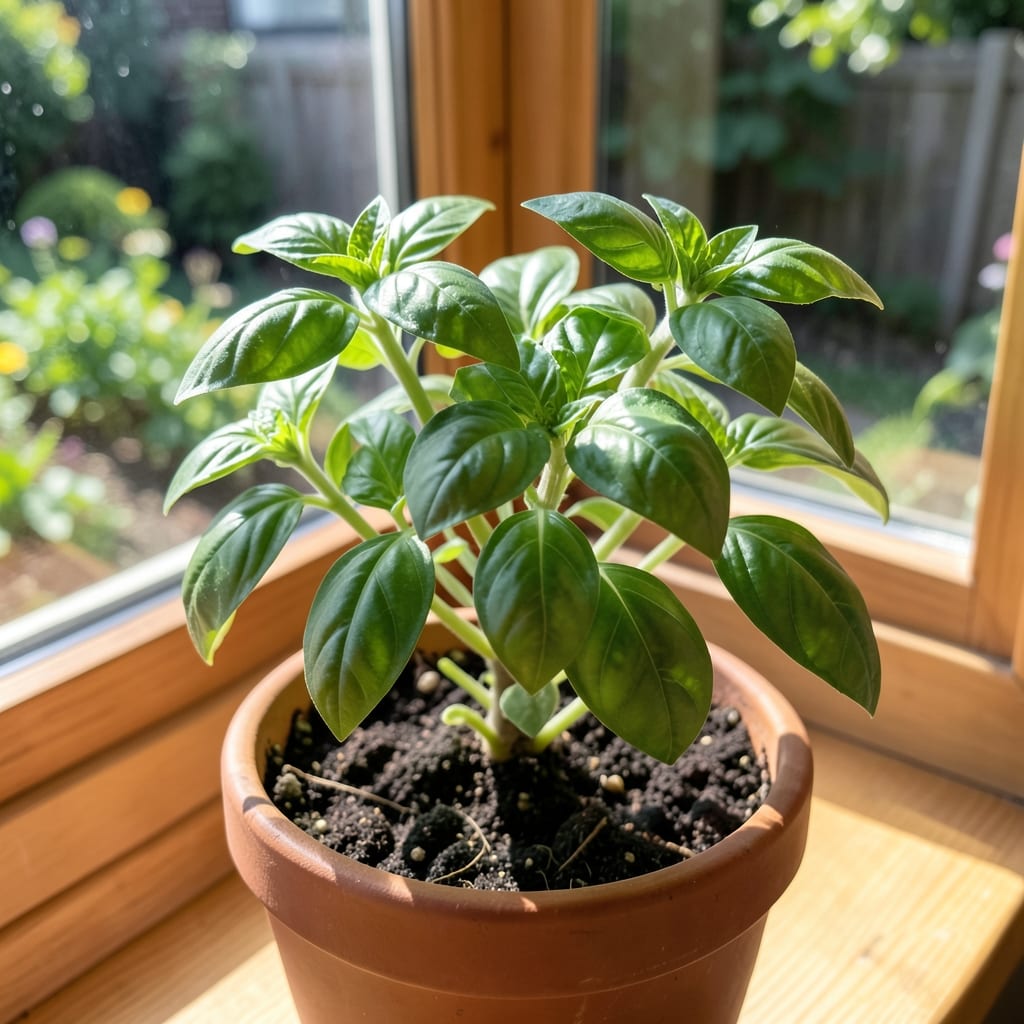
Those first two leaves on your basil seedlings aren’t just cute—they’re your plant’s first real test. I’ve watched enough batches fail to know that this stage makes or breaks your harvest.
Get the light, water, and temperature right here, and you’ll have strong, healthy plants ready for transplanting in 4-6 weeks. Mess it up, and you’ll be starting over.
📚 In This Guide
Here’s how to nurture strong basil seedlings and recognize their healthy first leaves.
The first leaves you’ll see on basil seedlings are cotyledons—round, thick leaves that appear as the seed germinates. These aren’t true leaves but rather embryonic structures that provide initial nourishment. They typically emerge 5-10 days after sowing, depending on soil temperature and moisture.
I check daily for these first signs of life. The cotyledons will be a lighter green than the true leaves that follow, and they’ll unfurl from the seed coat. This is your confirmation that germination was successful, but the real growth is just beginning.
After the cotyledons, you’ll notice a new pair of leaves forming at the center of the seedling. These are the first true leaves, which look distinctly different—more pointed and textured, with that classic basil shape. They usually appear 2-3 weeks after the cotyledons.
This is the moment that matters: true leaves indicate the seedling has established its own photosynthetic system. I watch for them to reach about ½ inch long before making any adjustments to care. The stem should also look sturdier, transitioning from fragile to slightly woody.
Healthy first true leaves on basil are deep green with a slight glossiness, indicating good nutrient uptake. If they appear pale or yellowish, the seedlings likely need more light or a touch of fertilizer. I position my grow lights 2-4 inches above the plants to prevent leggy growth.
Check the undersides of the leaves too—healthy basil leaves should have no spots, holes, or curling edges. If you see any discoloration or deformities, it could signal overwatering, pests, or disease. I gently touch the soil to ensure it’s moist but not soggy at this stage.
Once the first true leaves are fully developed, the seedling is ready for more consistent care. I begin watering at the base to keep the leaves dry, which prevents fungal issues. The soil should dry slightly between waterings—wait until the top ½ inch feels dry to the touch.
At this point, I also start a light fertilizer regimen, using a balanced liquid feed at half strength every 2 weeks. The goal is to support the development of the next set of leaves, which will grow larger and more abundant as the plant matures.
Watch for the stem to thicken and new leaf pairs to emerge from the center. This is your sign that the basil is transitioning from seedling to a robust young plant.
Small adjustments during these early stages make a big difference in seedling success.
Germination Timing: The cotyledons emerging in 5-10 days is your first sign of life, but don’t rush the process. I’ve found that maintaining consistent soil moisture and temperature around 70°F speeds up germination without stressing the seedlings.
True Leaf Transition: When those first true leaves appear 2-3 weeks after cotyledons, resist the urge to fertilize immediately. Wait until they reach that ½ inch length mentioned in Step 2—this ensures the seedling has established its own photosynthetic system before you introduce nutrients.
Light Positioning: The 2-4 inch distance for grow lights in Step 3 isn’t arbitrary. Any higher and your seedlings will stretch toward the light, becoming leggy. Any lower risks burning the delicate leaves. I adjust my lights gradually as the plants grow taller.
Watering Wisdom: That “top ½ inch feels dry” rule from Step 4 is your best defense against overwatering. Basil seedlings hate soggy roots, and this simple check prevents most fungal issues. I use my finger to test the soil rather than relying on visual cues alone.
Basil seedlings typically sprout their first leaves (cotyledons) in 5–10 days under ideal conditions (warmth, moisture, and light). True leaves follow in 2–3 weeks.
Slow growth often stems from cold soil, overwatering, or insufficient light. Ensure temps stay above 70°F, use well-draining soil, and provide 6–8 hours of sunlight daily.
Yes! Cotyledons are edible but milder than mature basil. They’re safe to use in salads or garnishes, though true leaves offer more flavor.
Yellowing, wilting, or spotted leaves signal issues like overwatering, pests, or disease. Healthy first leaves are bright green, firm, and free of blemishes.
Avoid heavy fertilizers early on. Use a diluted, balanced liquid fertilizer (10-10-10) only after true leaves emerge to prevent burning delicate seedlings.