
Beautiful Plants For Your Interior
Beautiful Plants For Your Interior
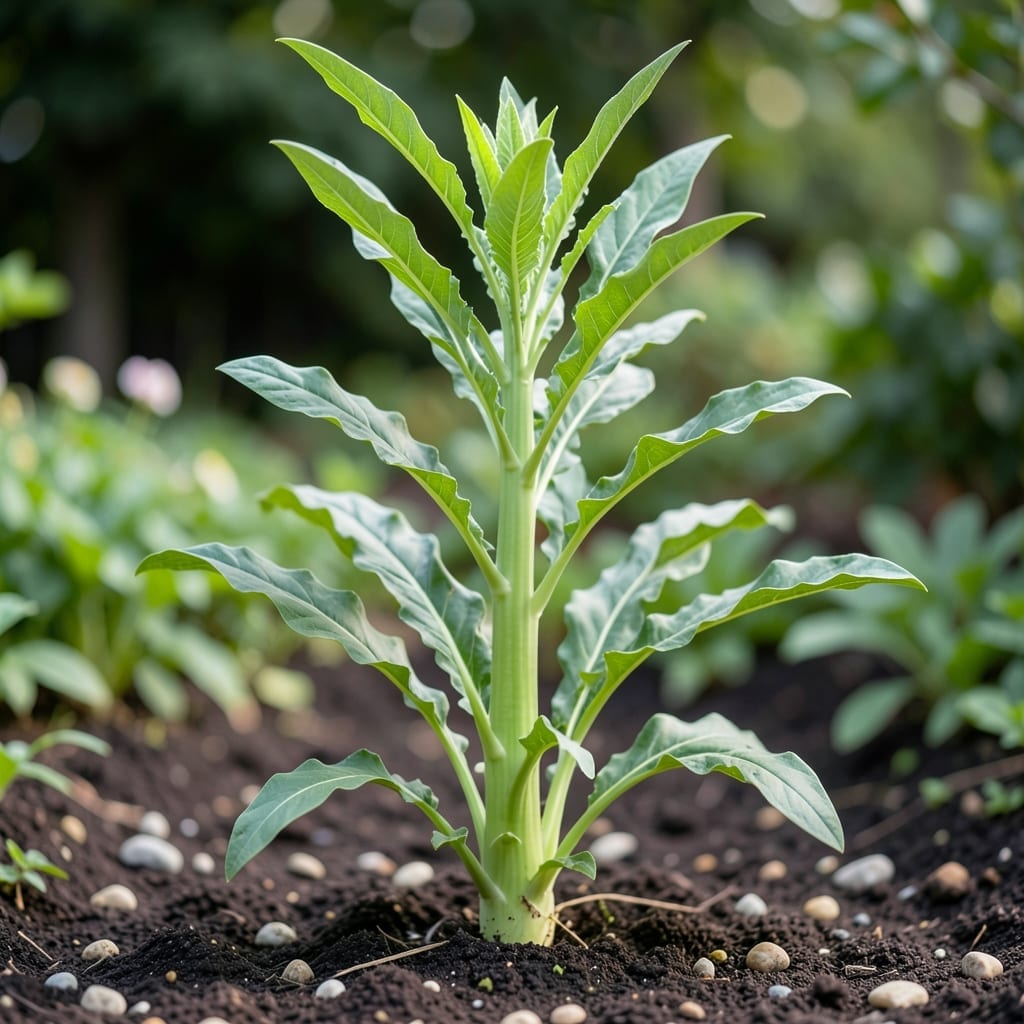
Celtuce is a unique vegetable with a thick, asparagus-like stem and small lettuce-like leaves, offering a mild, slightly nutty flavor used in both raw and cooked dishes.
I love how celtuce bridges the gap between two garden favorites, giving you the best of both worlds. The stem can be peeled and sliced for stir-fries or eaten raw, while the leaves work perfectly in salads. Its subtle flavor makes it incredibly versatile in the kitchen. 🔥
What sets it apart is its growth habit—unlike regular lettuce, it forms an elongated edible stalk when mature. This happens because the plant focuses energy on vertical growth rather than leaf production.
💡 In This Article
Celtuce, or stem lettuce, is a cultivar of Lactuca sativa bred specifically for its thick central stalk. Unlike leaf lettuce that spreads outward, celtuce directs its energy upward, forming a 1-2 inch diameter stem that can reach 12-18 inches tall.
This happens because the plant undergoes a process called “bolting” earlier, but instead of flowering, it elongates its stem. 🔥
The stem’s development is triggered by environmental factors like longer daylight hours and warmer temperatures above 75°F. As the plant matures, the outer layers of the stem become fibrous while the inner core remains tender and crisp. The leaves, while edible, are smaller and more sparse than traditional lettuce, making the stem the primary harvest.
✨
From a botanical perspective, celtuce’s stem is essentially a compressed version of what would normally be a flowering stalk. The plant stores water and nutrients in this thickened structure, giving it that satisfying crunch when raw or a meaty texture when cooked. This adaptation makes it particularly drought-resistant compared to leaf lettuce varieties. 💫
For gardeners, celtuce requires consistent moisture and well-draining soil to prevent the stem from becoming bitter or woody. It’s ready to harvest when the stem feels firm and the plant is about 10-12 weeks old. The key is harvesting before the stem becomes too fibrous, which happens if left in the ground beyond maturity. ⚡
What makes celtuce fascinating is its dual-purpose nature. While most lettuces are grown for leaves, celtuce offers both a vegetable stem and greens from a single plant. This efficiency is why it’s gained popularity in home gardens where space is limited but variety is desired. 🌟
It has a milder, slightly nutty flavor with a crisp texture in the stem. The leaves taste similar to romaine but less bitter, while the thick stalk offers a satisfying crunch.
Yes! Both the thick stem and leaves are edible. Peel the fibrous outer layer of mature stems before eating. Young plants can be consumed whole.
Celtuce reaches harvest size in about 10-12 weeks. The stem becomes ready when it’s 1-2 inches thick and feels firm to the touch.
Wrap unwashed stems in damp paper towels and place in a sealed container. It keeps in the fridge for 1-2 weeks. For longer storage, pickle sliced stems.
Bitterness develops from heat stress or over-maturity. Harvest before stems exceed 18 inches tall and provide consistent water.