
Beautiful Plants For Your Interior
Beautiful Plants For Your Interior
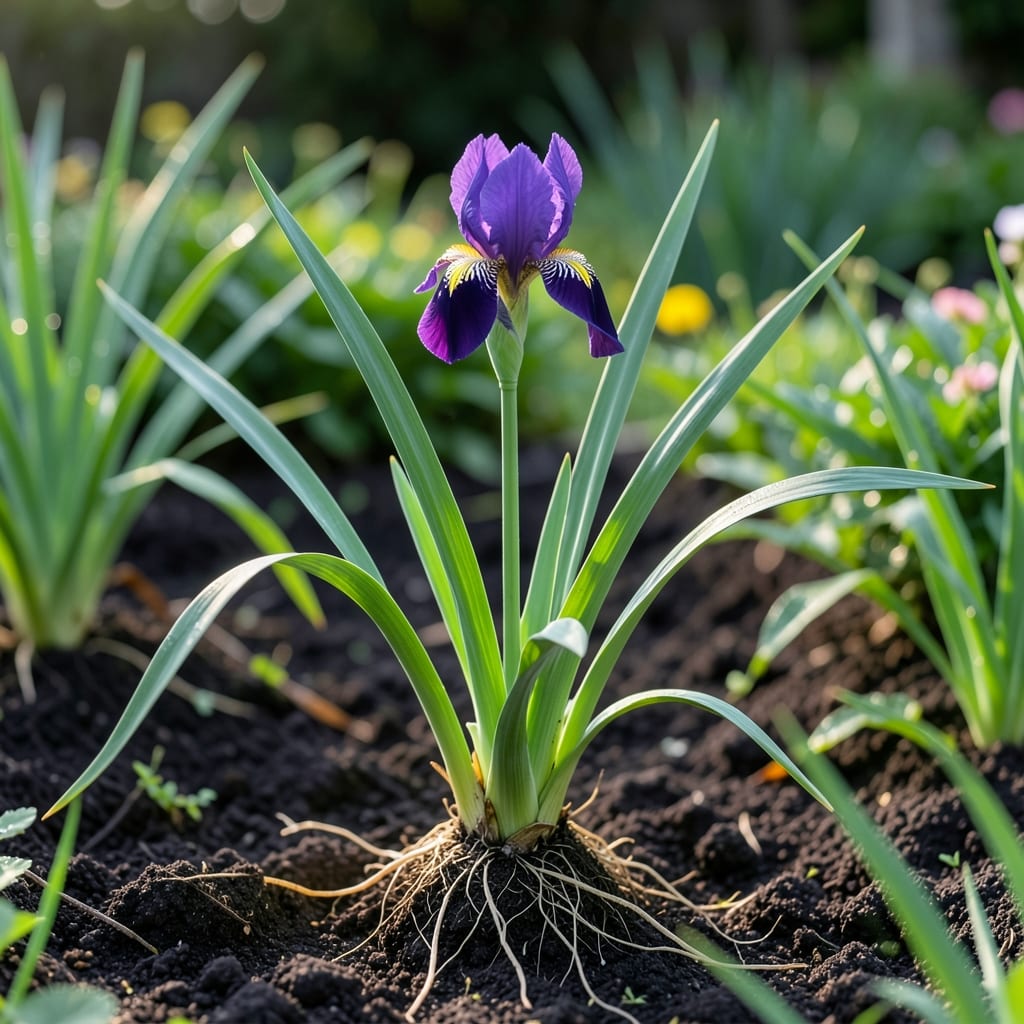
I learned the hard way that irises thrive when you understand their roots. Rhizomes or bulbs—each type needs different care to stay healthy and productive.
Plant them right, water them smart, and you’ll avoid the rot and stunted growth that plague most gardeners. The payoff is years of reliable blooms with minimal effort.
📚 In This Guide
With the right approach, you can ensure your iris plants develop a strong, healthy foundation.
Iris plants grow from rhizomes, which are thick, horizontal underground stems that store energy and nutrients. These rhizomes spread just below the soil surface, and healthy ones feel firm to the touch. You’ll notice they produce fans of sword-like leaves, with each fan connected to a section of the rhizome.
Real talk: if the rhizome feels soft or mushy when you handle it, that’s a sign of rot—usually from too much moisture. A healthy rhizome should look plump and light brown, not shriveled or dark. This is the moment that matters: the rhizome is the heart of your iris’s root system, so its condition determines the plant’s overall health.
When planting, position the rhizome so its top is partially exposed to sunlight. I bury about two-thirds of the rhizome in well-draining soil, leaving the upper portion visible. This prevents rot while allowing the rhizome to absorb warmth from the sun, which encourages strong growth.
Space them 12-24 inches apart to give roots room to spread without competition. If you plant too deep, the rhizome can’t access the light it needs, and the plant will struggle to establish itself. You’ll see new growth emerge from the fans within a few weeks if planted correctly.
After planting, water deeply but only once a week unless your climate is extremely dry. Iris roots need moisture to establish, but they rot easily in soggy soil. I check the soil by digging my finger 1 inch down—if it feels dry, it’s time to water.
Apply a low-nitrogen fertilizer in early spring to support root growth without promoting excessive leafy growth. Avoid high-nitrogen options, as they can lead to soft rhizomes and weak root systems. You’ll know the roots are developing well when the plant produces multiple healthy fans and blooms vigorously.
Every 3-5 years, iris clumps become crowded, and their root systems weaken. I dig up the entire clump in late summer, then gently separate the rhizomes by hand or with a clean knife. Discard any sections that feel soft or show signs of disease.
Replant the healthiest rhizomes with at least one fan of leaves attached. Trim the leaves to 6 inches tall to reduce water loss while the roots re-establish. This process rejuvenates the root system, ensuring your iris plants stay healthy and productive for years to come.
These simple adjustments will help you grow the strongest iris root system possible.
Planting Depth: In Step 2, remember that burying two-thirds of the rhizome while leaving the top exposed is non-negotiable. I learned this the hard way when my first iris planting failed because I covered them completely. The exposed portion needs sunlight to prevent rot and encourage growth.
Watering Wisdom: For Step 3, that once-a-week watering schedule is perfect for most climates. The 1-inch soil check is your best guide—if it feels dry at that depth, it’s time to water. Overwatering is the most common mistake, and iris roots will rot faster than you can say “soggy soil.”
Fertilizer Focus: Stick to low-nitrogen fertilizer in early spring as mentioned in Step 3. High-nitrogen options might give you lush leaves, but they’ll weaken the root system. The goal is strong, healthy rhizomes, not just pretty foliage.
Division Timing: Step 4’s 3-5 year division schedule keeps your iris plants thriving. Late summer is ideal because the plants have time to re-establish roots before winter. Trim those leaves to 6 inches—it reduces water loss and helps the rhizomes focus energy on root regrowth.
Iris roots typically grow 4-6 inches deep, but rhizomes spread horizontally near the soil surface. Ensure loose, well-draining soil to accommodate their shallow yet expansive growth.
Divide iris rhizomes every 3-4 years in late summer or early fall (6-8 weeks before frost). This prevents overcrowding and rejuvenates blooming.
Yes! Use a wide, shallow pot (12+ inches deep) with drainage holes. Plant rhizomes partially exposed to sunlight, and water sparingly to avoid rot.
Rot often occurs from poor drainage or overwatering. Plant rhizomes in raised beds or amend heavy soil with sand. Ensure they’re not buried too deep!
Most irises grow from thickened underground stems (rhizomes), not true bulbs. Bearded and Siberian irises use rhizomes, while Dutch irises grow from bulbs.