
Beautiful Plants For Your Interior
Beautiful Plants For Your Interior
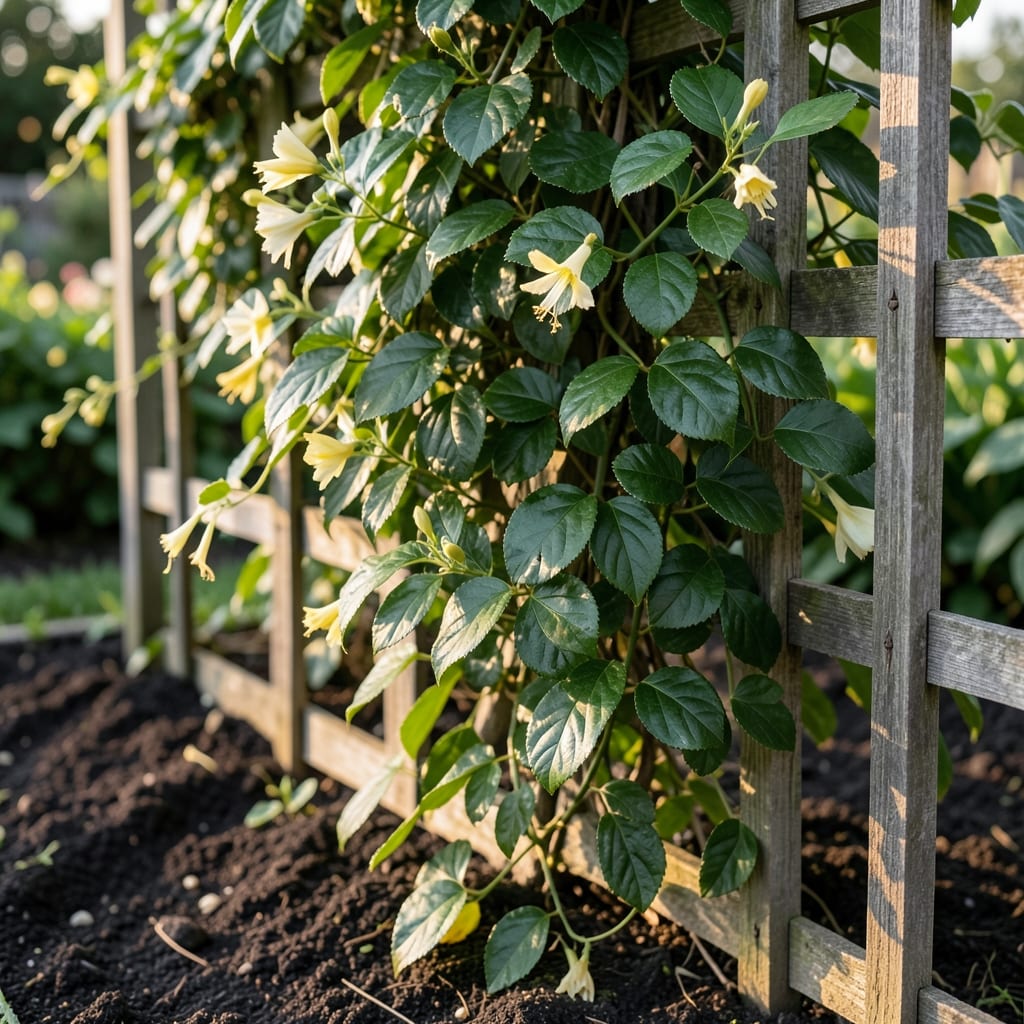
Japanese honeysuckle leaves first caught my attention with their deep green, oval shape and subtle fragrance when crushed. This vigorous vine thrives in partial shade to full sun, making it adaptable to most gardens.
Proper care keeps the foliage lush and disease-free. I’ve found consistent watering and well-draining soil prevent most issues, while regular pruning maintains its managable growth and encourages healthy new leaves.
📚 In This Guide
This method ensures healthy growth and abundant foliage without the invasive spread common to this species.
Choose a location with partial shade to full sun, though Japanese honeysuckle tolerates a wide range of light conditions. The soil should be well-draining with a slightly acidic to neutral pH (6.0-7.0). I always test the soil first—this plant struggles in heavy clay or waterlogged areas.
Avoid planting near structures or trees, as the vines can become aggressive and smother nearby vegetation. Dig a hole twice as wide as the root ball and just as deep. Loosen the soil at the sides to encourage root expansion into the surrounding area.
Place the root ball in the hole, ensuring the top sits slightly above ground level to prevent settling. Backfill with native soil, pressing lightly to remove air pockets. Water deeply immediately after planting to settle the soil and hydrate the roots.
I’ve found that mulching with 2-3 inches of organic material (like wood chips) helps retain moisture and suppress weeds, but keep it 6 inches away from the stem to prevent rot. The first few weeks are critical—maintain consistent moisture until the plant shows new growth.
Install a sturdy trellis or arbor at planting—Japanese honeysuckle is a vigorous climber and will quickly overtake anything in its path. Train the vines onto the support as they grow, tying them loosely with garden twine if needed.
Prune aggressively in late winter or early spring before new growth starts. Remove any dead, diseased, or overgrown stems to maintain shape and prevent the plant from spreading uncontrollably. This also improves air circulation, reducing the risk of fungal issues.
Water established plants 1-2 times per week during dry spells, providing 1-1.5 inches of water each time. Japanese honeysuckle is drought-tolerant once established, but consistent moisture encourages lush foliage.
Fertilize lightly in early spring with a balanced, slow-release product. Over-fertilizing leads to excessive vine growth and fewer leaves, so I stick to a single application annually. Monitor for pests like aphids or spider mites, which can stress the plant and reduce leaf production.
Harvest leaves in the morning when their essential oils are most concentrated. Snip young, tender leaves from the tips of the vines, taking no more than one-third of the foliage at a time to avoid stressing the plant.
Regular harvesting encourages bushier growth and more leaf production. If you’re using the leaves for tea or culinary purposes, ensure the plant hasn’t been treated with pesticides. Always wash leaves thoroughly before use to remove dust or debris.
Cultivating this plant successfully comes down to a few key details most gardeners overlook.
Soil pH Precision: The specified 6.0-7.0 pH range in Step 1 isn’t arbitrary—this plant’s root system struggles to absorb nutrients outside this window. Test your soil before planting, and amend with lime to raise pH or sulfur to lower it if needed. I learned this after losing two plants to nutrient deficiency in slightly alkaline soil.
Planting Depth Critical: In Step 2, placing the root ball slightly above ground level prevents settling that can suffocate the plant. Many gardeners bury it too deep, leading to stem rot. Press the soil gently but firmly to eliminate air pockets that could dry out roots during those critical first weeks.
Pruning Timing Wisdom: The late winter or early spring pruning window in Step 3 is non-negotiable. Pruning later in the season removes the very growth that produces leaves, defeating the purpose. Use clean, sharp tools to make precise cuts, and always sterilize between cuts to prevent disease transmission.
Harvesting Discipline: Step 5’s one-third foliage rule exists for a reason. Over-harvesting stresses the plant, reducing both leaf quality and future growth. Morning harvesting captures peak essential oil concentration, but always use clean tools to avoid introducing pathogens to the cuts.
While some traditional uses exist, Japanese honeysuckle leaves (Lonicera japonica) can be toxic if ingested in large quantities. Always consult a healthcare professional before consumption, and avoid them if pregnant, nursing, or on medication.
Look for opposite, oval-shaped leaves with smooth edges, 1–3 inches long. They’re dark green above and paler underneath. The vine also produces fragrant white or yellow flowers.
Prune in late winter or early spring before new growth starts. This helps control its aggressive spread and encourages healthier foliage. Wear gloves to avoid skin irritation!
Some herbal practices use them for tea or topical applications, but scientific evidence is limited. Proceed with caution—misuse may cause nausea or dermatitis. Always patch-test or seek expert advice first.