
Beautiful Plants For Your Interior
Beautiful Plants For Your Interior
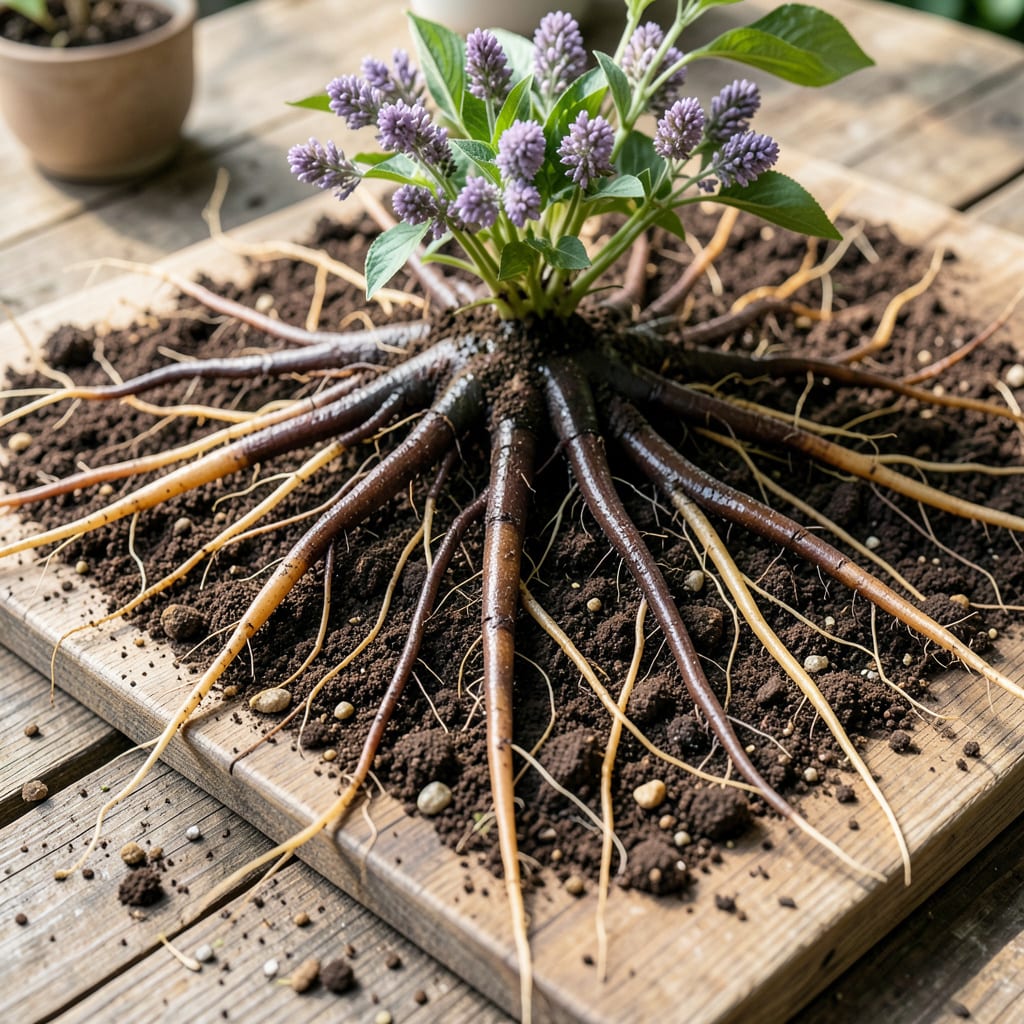
Lilacs hide their power underground. I learned this the hard way when my first bush struggled until I realized its roots spread far wider than the branches.
This network demands space—plant too close to fences or foundations and you’ll fight both the bush and the concrete. Give them 8-10 feet of room, and those roots will anchor a plant that thrives for decades.
📚 In This Guide
Here’s the method I’ve refined to help you nurture healthy roots and vibrant blooms season after season.
Lilac bushes develop a fibrous, spreading root system that extends far beyond the plant’s canopy. The primary roots grow 12-18 inches deep, while lateral roots can spread 2-3 times the width of the shrub. This extensive network anchors the plant and absorbs water efficiently.
You’ll notice most active roots concentrate in the top 6-12 inches of soil, where organic matter and oxygen are plentiful. This shallow root zone explains why lilacs benefit from regular mulching to protect and nourish the critical surface area.
Test your soil’s drainage by digging a 1-foot deep hole and filling it with water. If it drains within 1 hour, you have the well-draining conditions lilac roots prefer. Amend heavy clay with compost to improve structure, as waterlogged roots will rot.
Lilacs thrive in slightly alkaline soil with a pH of 6.5-7.5. I always add a handful of wood ash to the planting hole to boost pH if my soil test shows acidity. The roots will show their appreciation through vigorous growth and abundant blooms.
When planting, set the lilac so the root flare (where roots meet stem) sits 1-2 inches above soil level. This prevents stem rot and encourages lateral root development. Dig the planting hole twice as wide as the root ball but no deeper than the container.
Space multiple lilacs 10-15 feet apart to accommodate mature root systems. Crowded roots compete for water and nutrients, leading to stunted growth. You’ll see better air circulation and healthier plants with proper spacing.
Water newly planted lilacs deeply once a week for the first month, giving them 1-1.5 inches of water each time. This encourages roots to grow downward in search of moisture. After establishment, water only during prolonged dry spells.
Always water at the base of the plant, keeping foliage dry to prevent fungal diseases. I use a soaker hose for even distribution. You’ll know roots are well-hydrated when the top 1-2 inches of soil feel moist but not soggy.
Apply a 2-3 inch layer of organic mulch around the base, keeping it 3 inches away from the stem to prevent rot. This insulates roots from temperature extremes and retains moisture. Replenish mulch annually as it decomposes.
Avoid deep cultivation around lilacs, as their shallow roots are easily damaged. Instead, hand-pull weeds or use a shallow hoe. I’ve found that a yearly application of compost as top dressing provides gentle nutrition without disturbing the root system.
These insights will help you avoid common pitfalls and nurture a thriving lilac with strong roots.
Root Depth Awareness: Remember that primary roots grow 12-18 inches deep, but the most active roots are in the top 6-12 inches of soil. This means you should focus your care efforts—like mulching and watering—on that upper layer where the majority of nutrient absorption happens.
Drainage Test Tip: When testing soil drainage in Step 2, dig exactly 1-foot deep and fill with water. If it doesn’t drain within 1 hour, amend with compost to prevent waterlogging, which can rot the roots. This simple test can save you years of frustration with poor plant health.
Planting Precision: In Step 3, setting the root flare 1-2 inches above soil level is non-negotiable. I learned this the hard way after losing a young lilac to stem rot. Also, digging the hole twice as wide as the root ball gives lateral roots room to spread without crowding.
Mulching Strategy: Apply that 2-3 inch layer of organic mulch in Step 5, but keep it 3 inches away from the stem to avoid rot. This protects the shallow root zone from temperature swings and moisture loss, while still allowing air circulation at the base.
Lilac roots typically spread 12–18 inches deep, but they can extend wider than the bush’s canopy. Most roots stay in the top 6–12 inches of soil, focusing on nutrient absorption and stability.
Yes, but grass may struggle due to competition for water and nutrients. Opt for shallow-rooted ground covers like creeping thyme or mulch to avoid stressing the lilac’s root system.
Early spring or fall is ideal, when the plant is dormant. Transplanting during these times reduces stress and helps roots establish before extreme temperatures.
Yellow leaves often indicate poor drainage or compacted soil, which can suffocate roots. Check soil moisture and aerate if needed to improve root health.
Lilac roots are not typically invasive but can spread aggressively if left unchecked. Regular pruning and root barriers can help manage their growth in small spaces.
