
Beautiful Plants For Your Interior
Beautiful Plants For Your Interior
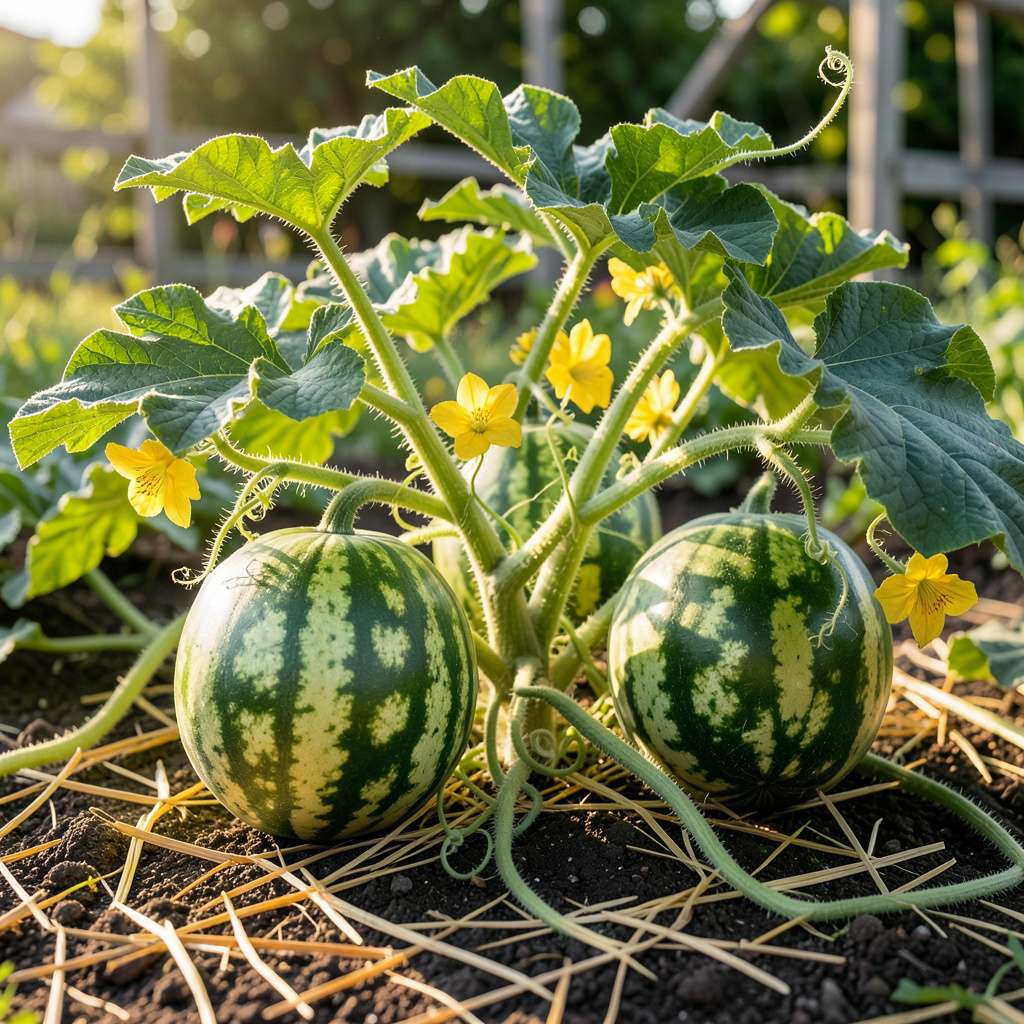
Watermelon plants feature large, lobed green leaves with rough texture, long sprawling vines that can reach 20 feet, and bright yellow flowers. The fruit develops from small green balls into striped melons as it matures.
I love how watermelon plants transform a garden with their dramatic presence. Those jagged, sandpaper-like leaves aren’t just for show—they help the plant conserve moisture in hot climates. 🌿 The vines grow aggressively, often spreading wider than most gardeners expect, which is why I always recommend giving them plenty of space or training them vertically. What’s fascinating is watching the tiny green orbs appear after pollination, gradually developing those classic stripes we all recognize.
One thing that surprises new growers is how the yellow blossoms only open for a single day. This brief window makes pollination timing crucial for fruit development. I’ve found that morning sunlight brings out the most vibrant flower displays, creating a stunning contrast against the deep green foliage.
💡 In This Article
Watermelon leaves are nature’s solar panels—deep green, roughly textured, and divided into 3-5 lobes with serrated edges. These leaves can grow 6-10 inches wide, creating a dense canopy that shields developing fruit from sunburn. The surface feels like fine sandpaper, a trait that helps deter pests while maximizing light absorption.
This rough texture comes from tiny hair-like structures called trichomes, which also reduce water loss in hot conditions. 🌞
The vines are the plant’s powerhouse, capable of extending 10-20 feet in a single growing season. They grow in a sprawling pattern with curly tendrils that emerge opposite the leaves. These tendrils aren’t just decorative—they’re sensitive to touch and will coil around anything they contact, helping the plant climb or anchor itself.
Unlike cucumber vines that grow more vertically, watermelon vines spread horizontally, often forming a circular pattern that can cover 50-100 square feet of garden space.
What distinguishes watermelon from its cucurbit cousins is the stem and leaf attachment. Watermelon stems are thicker and more rigid than cucumber stems, with a distinctive fuzzy appearance. The leaves attach with a longer petiole (leaf stem) that’s often 4-6 inches long, giving them a “floating” appearance above the vine.
This spacing allows air circulation that prevents fungal diseases in humid climates. 💨
The vine’s coloration offers clues about plant health. Healthy vines display a vibrant green hue with white striations near the nodes where leaves emerge. Stress signs appear as yellowing between veins or purple stems, indicating nutrient deficiencies.
The main vine can reach 1-2 inches in diameter at maturity, with secondary runners developing once the plant establishes itself—typically 4-6 weeks after germination.
For comparison, squash plants have broader leaves with fewer lobes, while cucumber leaves appear more delicate and less textured. Watermelon vines also produce fewer but larger leaves compared to pumpkins, which develop more foliage.
The tendrils on watermelon vines are particularly robust, capable of supporting the weight of developing fruit—something I’ve tested by gently hanging small weights to observe their strength. ✨
One fascinating adaptation is how the vines develop “adventitious roots” at leaf nodes when they contact soil. These secondary roots help the plant absorb more water and nutrients, especially valuable in sandy soils where watermelons thrive.
I’ve noticed these roots form more aggressively when vines are mulched with straw, creating a network that can extend the plant’s reach for resources.
Watermelon leaves are larger (often 6-10 inches wide) with deeper lobes and rougher texture than cucumber leaves. The vines also spread horizontally rather than climbing vertically. Look for the distinctive fuzzy stems and longer leaf petioles (4-6 inches) that give watermelon plants their unique appearance.
After pollination, you’ll notice small green balls forming where female flowers were. These start about the size of a marble and grow rapidly—adding 1-2 pounds per week in warm weather. The tendril nearest the developing fruit will remain green while the melon expands.
Most varieties share the classic lobed leaf shape, but seedless types often have slightly smaller, darker green leaves. Heirloom varieties may show more variation in leaf size and texture. The basic 3-5 lobed pattern with sandpaper-like texture remains consistent across all watermelon plants.
The sprawling growth pattern (often 10-20 feet wide) helps the plant maximize sun exposure and root development. This horizontal expansion allows multiple fruit to develop simultaneously while the tendrils anchor the vines. It’s an evolutionary adaptation for surviving in open, sunny environments.
While challenging, it’s possible with strong trellises and slings to support developing fruit. Dwarf varieties like ‘Sugar Baby’ adapt better to vertical growing. Standard varieties may produce smaller melons when grown vertically due to the weight stress on vines.
