
Beautiful Plants For Your Interior
Beautiful Plants For Your Interior
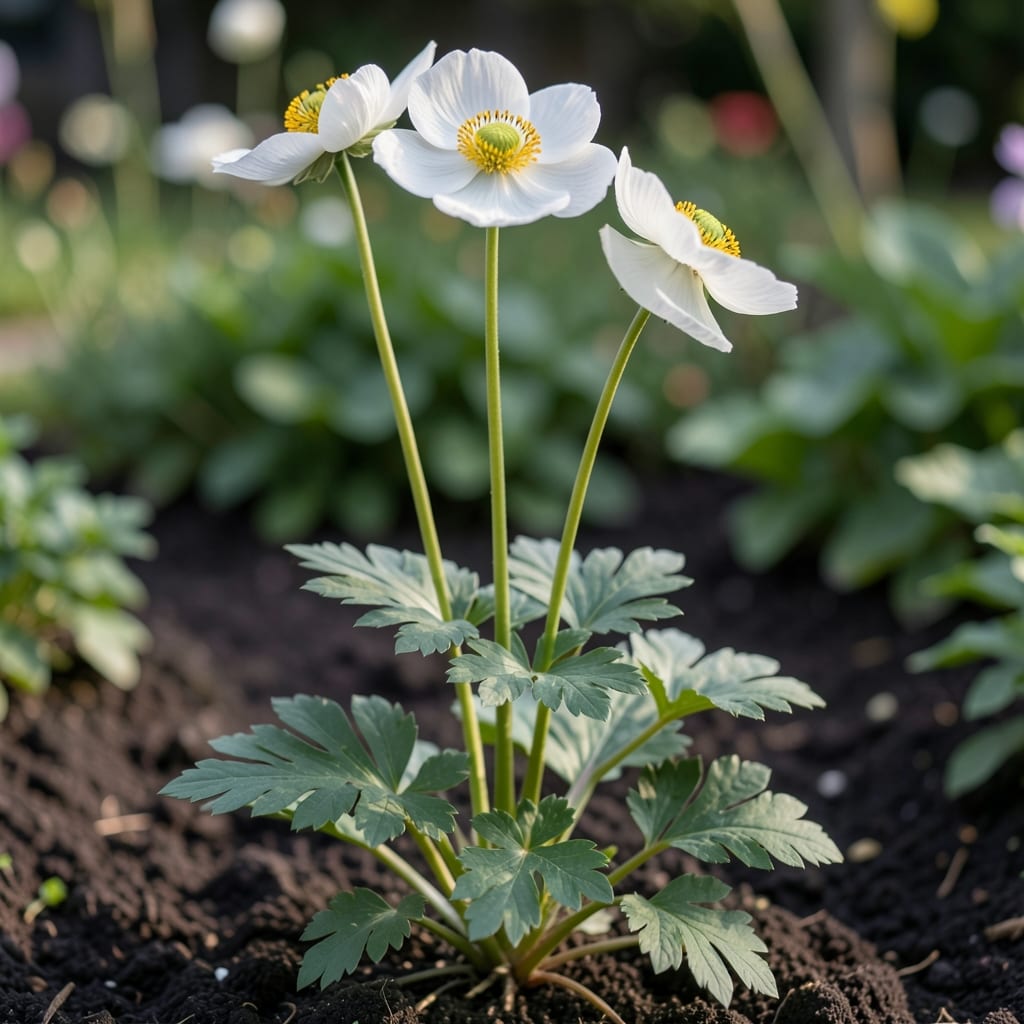
White Japanese anemones bring effortless elegance to shady spots. I fell for these 3-foot-tall beauties after watching them bloom from late summer through frost, asking almost nothing in return.
They thrive in partial shade with rich, well-draining soil, and once established, they’re practically drought-proof. The delicate white flowers sway in the slightest breeze, creating movement that transforms quiet garden corners into living art.
📚 In This Guide
Here’s the method I use to establish these elegant perennials in partial shade with consistent success.
Select a site with partial to full shade, especially in hotter climates where afternoon sun can scorch the delicate petals. Japanese anemone white thrives in well-draining soil enriched with organic matter. I always test soil drainage first by digging a 12-inch-deep hole and filling it with water—if it drains completely within 2-3 hours, the site is suitable.
Avoid low-lying areas where water pools after rain. These plants prefer consistent moisture but will rot in soggy conditions. A location with morning sun and afternoon shade produces the most vibrant blooms and prevents leaf scorch during summer heatwaves.
Loosen the soil to a depth of 18 inches and mix in 2-3 inches of compost to improve fertility and drainage. This step ensures the long taproots can establish deeply, which is critical for drought tolerance and winter hardiness. I’ve found that adding a handful of bone meal to the planting hole encourages stronger root development.
Space plants 18-24 inches apart to allow for their mature spread. Japanese anemone white forms clumps that expand slowly over time, so proper spacing prevents overcrowding. Water the prepared area thoroughly the day before planting to settle the soil and eliminate air pockets.
Dig a hole slightly wider and the same depth as the root ball. Gently remove the plant from its container and loosen any circled roots to encourage outward growth. Place the anemone in the hole so the crown sits 1 inch above the soil line—this prevents rot and allows for natural settling.
Backfill with the amended soil, pressing lightly to remove air gaps. Water deeply immediately after planting until the soil is saturated to a depth of 6 inches. I mulch around the base with 1-2 inches of organic mulch to retain moisture and suppress weeds, but I keep it 3 inches away from the stem to avoid stem rot.
Water newly planted anemones 2-3 times per week for the first month, then reduce to once weekly once established. The goal is to keep soil evenly moist but not waterlogged. I check soil moisture by inserting my finger 1 inch deep—if it feels dry, it’s time to water.
Apply a balanced, slow-release fertilizer in early spring as new growth emerges. Deadhead spent blooms to encourage prolonged flowering, but leave the seed heads in late fall if you want self-seeding. Cut back dead foliage in late winter just before new growth starts, which helps prevent disease and keeps the planting tidy.
Japanese anemone white is relatively pest-resistant, but watch for aphids and slugs, especially in damp conditions. A strong spray of water knocks aphids off, while beer traps or diatomaceous earth control slugs effectively. I inspect the undersides of leaves weekly for early signs of trouble.
Powdery mildew can appear in humid weather or crowded plantings. Ensure good air circulation by thinning out dense clumps every 2-3 years. If mildew appears, treat with a baking soda solution (1 tablespoon baking soda, 1 teaspoon dish soap, 1 gallon of water) applied every 7-10 days until the issue resolves.
Small details make the difference between struggling plants and thriving blooms.
Soil Drainage Test: That 2-3 hour drainage test in Step 1 is non-negotiable. If water lingers longer than 3 hours, amending with compost or sand is essential. I learned this the hard way when my first planting sat in soggy soil and rotted within weeks. Partial shade won’t save waterlogged roots.
Planting Depth Precision: In Step 3, positioning the crown exactly 1 inch above the soil line prevents crown rot while allowing for natural settling. I’ve seen gardeners bury the crown too deep, only to watch their anemones slowly decline. Trust the process—this small elevation makes all the difference.
Mulching Strategy: The 1-2 inches of organic mulch mentioned in Step 3 retains moisture beautifully, but that 3-inch gap from the stem is critical. Piling mulch against the stem creates a moist environment that invites rot. I use shredded bark and maintain that buffer zone religiously.
Watering Consistency: For the first month, sticking to that 2-3 times per week schedule in Step 4 establishes strong roots. After establishment, the shift to once weekly watering works perfectly in most climates. The finger test—inserting 1 inch deep—is more reliable than any moisture meter I’ve tried.
Japanese anemone white thrives in partial shade and moist, well-drained soil. Water regularly, especially during dry spells, and mulch to retain moisture. Prune back in late winter to encourage new growth and vibrant blooms.
The ideal time to plant is in early spring or fall. This allows the roots to establish before extreme summer heat or winter cold. Avoid planting in the peak of summer for best results.
Common issues include powdery mildew, leaf spot, or aphids. Ensure good air circulation and avoid overhead watering to prevent fungal diseases. Treat pests with organic or chemical solutions as needed.
While it prefers partial shade, Japanese anemone white can tolerate full sun in cooler climates. Ensure the soil stays consistently moist, as full sun can cause stress if the plant dries out.
Yes! Consider hostas, astilbes, or hellebores for similar shade-tolerant beauty. Each offers unique textures and colors to complement your garden’s aesthetic.