
Beautiful Plants For Your Interior
Beautiful Plants For Your Interior
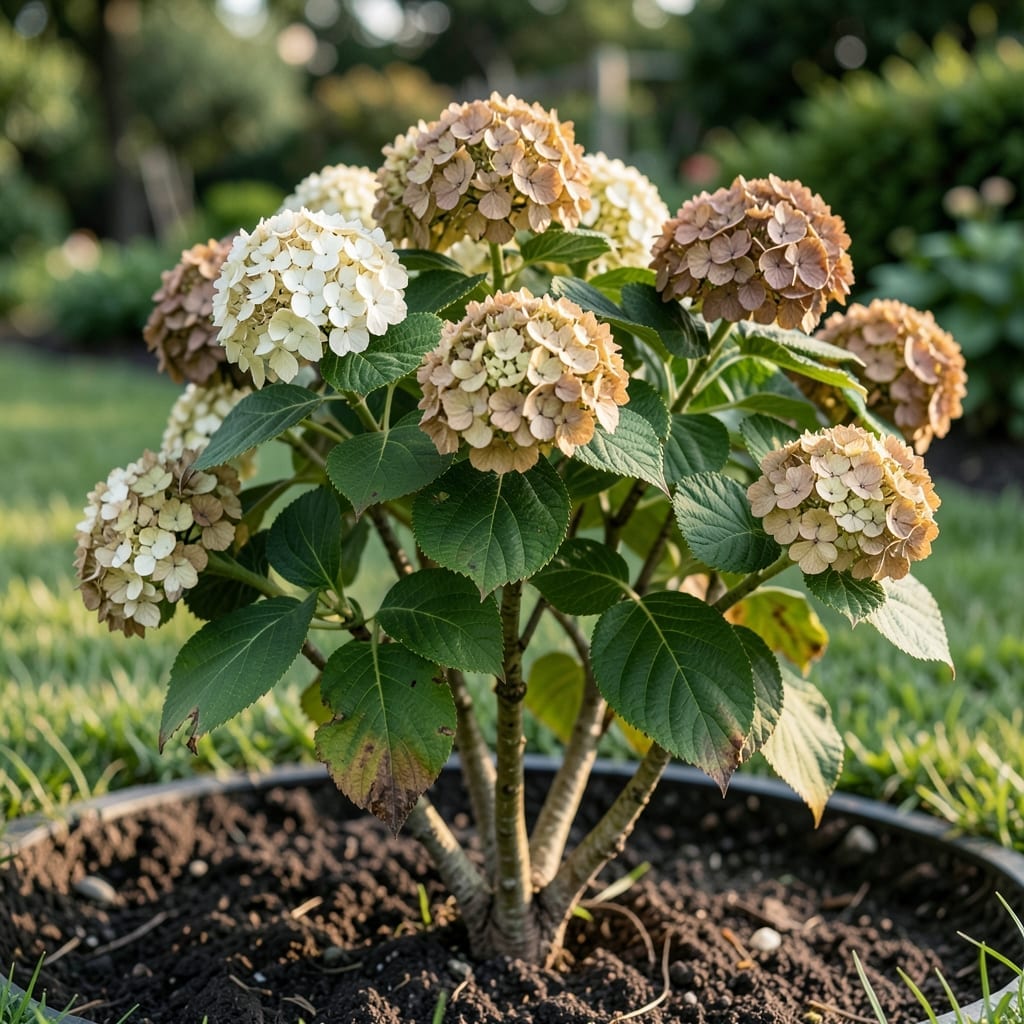
Brown hydrangea blooms signal something’s off with your plant. I’ve seen this happen when watering gets inconsistent or the soil stays too wet. The flowers turn crispy at the edges, then spread inward like a slow-moving fire.
Sometimes it’s not water at all—heat stress, nutrient shortages, or even a sneaky fungal issue can cause the same brown creep. I learned the hard way that overwatering does more damage than drought. Checking soil moisture with a finger prevents both problems.
Catching it early makes all the difference. Trim off the worst blooms to redirect energy, then adjust your care routine. Most hydrangeas bounce back within 2-3 weeks once conditions improve.
Keep a garden journal to track what works. Weather, watering, and bloom timing all tell a story if you pay attention.
Hydrangea blooms turning brown often signal underlying stress. Here are the most common causes, explained scientifically:
Excessive heat or direct sunlight can damage hydrangea petals, causing them to dehydrate and brown. Hydrangeas thrive in partial shade, and Hydrangea macrophylla (bigleaf hydrangeas) are especially sensitive. When temperatures exceed 85°F (29°C), cell membranes in the petals break down, leading to necrosis (tissue death). This is often seen as crispy, brown edges.
Both underwatering and overwatering can trigger browning. Hydrangeas need consistently moist (but not soggy) soil. Drought stress causes petals to dry out and turn brown, while root rot from overwatering suffocates roots, preventing nutrient uptake. A Phytophthora or Pythium fungal infection may also develop in waterlogged soil, accelerating decline.
Lack of essential nutrients, particularly phosphorus or magnesium, can cause blooms to brown prematurely. Phosphorus supports flower development, and its deficiency leads to weak, discolored blooms. Magnesium is vital for chlorophyll production; without it, petals may develop interveinal chlorosis (yellowing between veins) before browning.
Hydrangeas are pH-sensitive. While pH affects flower color (acidic soils yield blue blooms, alkaline yields pink), extreme pH levels can stress the plant. A sudden pH shift (below 5.0 or above 7.5) can disrupt nutrient absorption, leading to brown, wilted blooms. Test soil pH and amend with lime (to raise pH) or sulfur (to lower pH) as needed.
Pests like aphids and spider mites sap plant juices, weakening blooms and causing browning. Fungal diseases such as powdery mildew or botrytis blight can also infect flowers, leading to unsightly brown spots. Inspect plants regularly and treat with neem oil or organic fungicides at the first sign of trouble.
Bringing your hydrangeas back to their vibrant best starts with pinpointing the issue and applying the right fix. Here’s how to tackle the most common causes of browning blooms:
If the soil is bone-dry, give your hydrangeas a deep watering at the base (not the leaves) until the top 2–3 inches of soil are moist. For soggy soil, stop watering immediately and improve drainage by mixing in compost or mulch. Prevention tip: 💡 Stick your finger in the soil—if it’s dry at 1 inch deep, it’s time to water. Aim for consistent moisture, not extremes.
Move potted hydrangeas to a spot with morning sun and afternoon shade. For in-ground plants, create shade with a light fabric or nearby taller plants. Mulch around the base to retain moisture and cool the roots. Prevention tip: 🌡️ Hydrangeas thrive in dappled light—avoid harsh midday sun, especially in hot climates.
Test your soil (kits are inexpensive and easy to use). If it’s lacking, amend with a balanced, slow-release fertilizer (10-10-10) or organic options like compost or worm castings. For yellowing leaves with brown edges, a dose of magnesium sulfate (Epsom salt) can help. Prevention tip: ✨ Feed hydrangeas in early spring and again in midsummer for steady nutrition.
Inspect leaves and stems for aphids, spider mites, or powdery mildew. Blast pests off with water or apply neem oil. For fungal issues, remove affected blooms and improve air circulation by spacing plants properly. Prevention tip: 🎯 Prune dead or crowded branches to keep your plant healthy and pest-resistant.
Protect blooms from strong winds or heavy rain by staking tall stems or moving pots to a sheltered area. If frost is forecasted, cover plants with burlap or a frost cloth overnight. Prevention tip: 🌿 Plant hydrangeas in a location shielded from prevailing winds to prevent physical damage.
With a little attention and these targeted fixes, your hydrangeas can bounce back to their lush, colorful glory!
No, once blooms have turned brown, they won’t recover. Remove them to redirect energy to healthy growth.
Water deeply 2-3 times per week in hot weather, less in cooler months. Always check soil moisture first.
This is classic sun scorch. Move your plant to a spot with morning sun and afternoon shade.
Not always. Nutrient deficiencies, pests, or extreme pH can also cause browning. Test soil before assuming it’s water.