
Beautiful Plants For Your Interior
Beautiful Plants For Your Interior
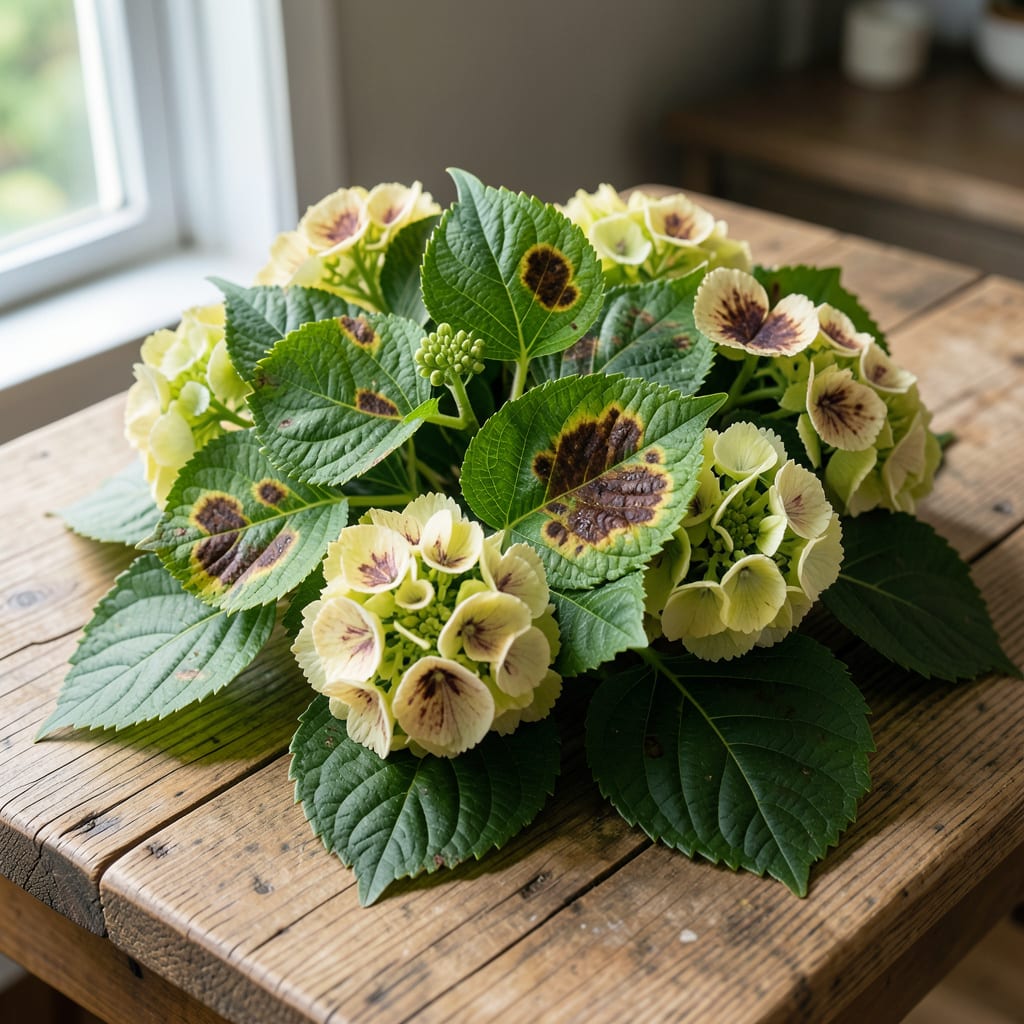
Brown spots on hydrangea leaves ruined my first garden party. 🌿 I spent weeks trying to figure out why my prized plants looked sickly until I realized it wasn’t just one culprit.
Turns out, fungal diseases, pests, and even watering habits can all leave those unsightly marks. The good news? Most causes have simple fixes once you know what you’re dealing with.
You’ll learn to spot the difference between fungal spots and environmental stress. With the right adjustments, your hydrangeas can go from struggling to thriving in just a few weeks.
No green thumb required—just a little observation and the right approach. Let’s clear up the confusion.
Brown spots on hydrangea leaves often stem from a mix of environmental stress, pathogens, or cultural missteps. Here’s a breakdown of the most common causes, with clear explanations to help you diagnose and address the issue.
Fungi like Cercospora or Anthracnose thrive in wet, humid conditions, leading to circular or irregular brown spots with darker edges. These pathogens spread via water splashing on leaves, especially in crowded plantings with poor air circulation. Overhead watering exacerbates the problem by keeping foliage damp for extended periods.
Hydrangeas love moisture, but soggy roots suffocate the plant and trigger leaf discoloration. Waterlogged soil prevents oxygen uptake, causing root rot, which manifests as brown, wilting leaves. Similarly, inconsistent watering—drought followed by a deluge—stresses the plant, leading to marginal leaf burn.
While hydrangeas prefer partial shade, too much direct sunlight (especially in hot climates) can scorch leaves, creating crisp, brown patches—often on the side facing the sun. This is a form of heat stress, where the plant loses water faster than it can absorb it, damaging leaf tissue.
Excess salts from fertilizers or hard water can accumulate in the soil, burning leaf edges and causing brown spotting. Conversely, a magnesium or potassium deficiency may lead to interveinal browning, as these nutrients are vital for chlorophyll production and cell function.
Sap-sucking pests like spider mites or aphids pierce leaf cells, causing localized browning or stippling. Their feeding disrupts the plant’s ability to transport water and nutrients, leading to necrotic spots. Check the undersides of leaves for webbing or tiny insects.
Brown spots on hydrangea leaves can often be treated with a few targeted fixes. Below are practical solutions mapped to each common cause, along with prevention tips to keep your plants thriving.
If fungal diseases like Cercospora or Anthracnose are to blame, start by removing and destroying infected leaves to prevent spread. Apply a copper-based fungicide or neem oil spray, following label instructions. To prevent recurrence, space plants for better airflow, water at the base (never overhead), and avoid wet foliage in the evening. 💡 Pro tip: Prune dense growth in early spring to improve circulation.
For spots caused by heat, drought, or sunscald, move potted hydrangeas to a shadier spot or provide afternoon shade for in-ground plants. Mulch heavily (2–3 inches of organic material) to retain moisture and regulate soil temperature. Water deeply 2–3 times per week during dry spells, preferably in the morning. ✨ Prevention: Use drip irrigation to keep leaves dry and maintain consistent moisture.
Yellowing leaves with brown edges often signal a magnesium or potassium deficiency. Apply a balanced, slow-release fertilizer (10-10-10) or a product high in the missing nutrient. For iron deficiency (common in alkaline soil), use chelated iron or amend soil with sulfur to lower pH. 🌱 Pro tip: Test your soil every 2–3 years to monitor nutrient levels.
If pests like spider mites or aphids are causing brown spots, blast them off with a strong stream of water. Apply insecticidal soap or horticultural oil, reapplying as needed. Encourage natural predators (e.g., ladybugs) by planting companion flowers like marigolds. 🎯 Prevention: Inspect leaves weekly and treat infestations early.
If herbicides or harsh fertilizers caused the damage, rinse the leaves immediately with water to dilute residues. Avoid spraying chemicals on windy days, and always follow dosage guidelines. 💡 Pro tip: Use organic or slow-release products to minimize burn risk.
Fungal spots often have dark edges and appear in humid conditions. If they spread quickly or show a ring pattern, it’s likely fungal.
Yes! Direct afternoon sun can scorch leaves, especially in hot climates. Move plants to partial shade during peak hours.
Always water at the base in the morning, keeping leaves dry. Use drip irrigation to prevent overhead splashing.
Pruning improves airflow, reducing humidity that fungi love. Remove dense growth in early spring for best results.
