
Beautiful Plants For Your Interior
Beautiful Plants For Your Interior
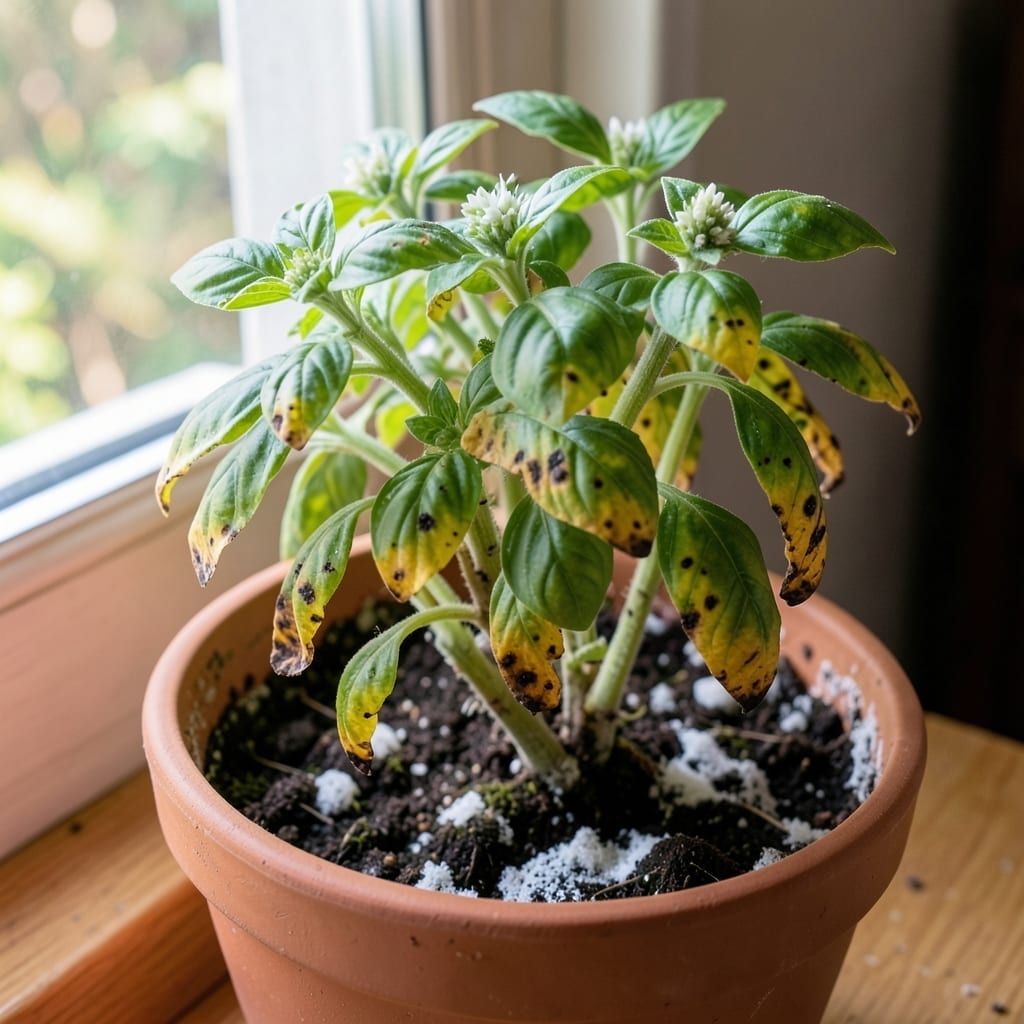
Your basil’s yellowing leaves and wilting stems might scream overwatering, but the real culprit could be fusarium fungus lurking in soggy soil. I’ve lost count of how many plants I’ve saved by catching this early.
Here’s the thing—this fungus thrives in wet conditions, so improving drainage and adjusting your watering routine are non-negotiable. A well-draining pot and soil mix can make all the difference.
Rescue starts with removing affected leaves and letting the soil dry out. Then, treat with a fungicide or natural remedy like neem oil to stop the spread.
Prevention is simpler than you think: water only when the top inch of soil is dry, and ensure your basil has plenty of airflow. Healthy plants start with smart habits.
Fusarium fungus thrives in basil when conditions favor its growth, often due to human error. Here’s why it happens:
Overwatering creates a waterlogged environment, reducing oxygen availability to basil roots. Fusarium spores, naturally present in soil, capitalize on this stress. Saturated soil prevents root respiration, weakening the plant’s defenses and allowing the fungus to invade vascular tissues, blocking water and nutrient uptake.
Basil in pots without drainage holes or dense, clay-heavy soil traps water. High humidity (above 85%) further encourages fungal spores to germinate. Stagnant air around wet foliage (e.g., from overhead watering) accelerates infection, as Fusarium oxysporum spreads via water splashes.
Stressed basil—from nutrient deficiencies, root damage, or poor light—lacks vigor to resist pathogens. Overwatering often coincides with weak growth, creating a perfect storm. The fungus enters through wounds or natural openings, then colonizes the xylem, causing wilting even in moist soil.
Reusing infected soil, pots, or unsterilized pruning tools introduces Fusarium directly. The fungus persists in debris and can survive for years. Without rotation or sterilization, each new planting risks reinfection, especially in overwatered conditions where the pathogen proliferates.
If your basil is suffering from Fusarium wilt due to overwatering, act fast with these targeted fixes. Early intervention can save your plant—and your harvest.
Let the soil dry out completely between waterings. Stick your finger 2 inches deep into the soil—if it feels damp, wait. Switch to a pot with drainage holes if yours lacks them, and use a well-draining potting mix (add perlite or sand to improve airflow).
Remove all wilted, yellow, or brown leaves and stems with sterilized scissors (dip in rubbing alcohol between cuts). Dispose of the clippings in the trash—not compost—to prevent spreading spores. If the damage is severe, prune back to healthy growth, even if it looks drastic.
For mild cases, spray leaves with a copper-based fungicide or a DIY mix of 1 tsp baking soda + 1 quart water + a drop of dish soap. Repeat every 7–10 days. For organic gardeners, neem oil (mixed with water) can help slow fungal spread.
If the plant doesn’t recover after 2–3 weeks, it’s best to remove it entirely to protect nearby plants.
Look for yellowing leaves, wilting stems, or brown spots despite wet soil. Stunted growth or blackened veins are also red flags. Early detection means better chances of saving your plant.
No, the fungus can survive in soil for years. Sterilize with heat or replace it entirely. For pots, wash with a 10% bleach solution to kill spores before reuse.
Pruning helps only if the damage is limited to leaves/stems. If roots are rotting, recovery is unlikely. Remove the plant entirely to prevent spreading to healthy ones.
Water only when the top 1-2 inches of soil are dry. In hot weather, this might be every 2-3 days. Always check soil moisture first!