
Beautiful Plants For Your Interior
Beautiful Plants For Your Interior
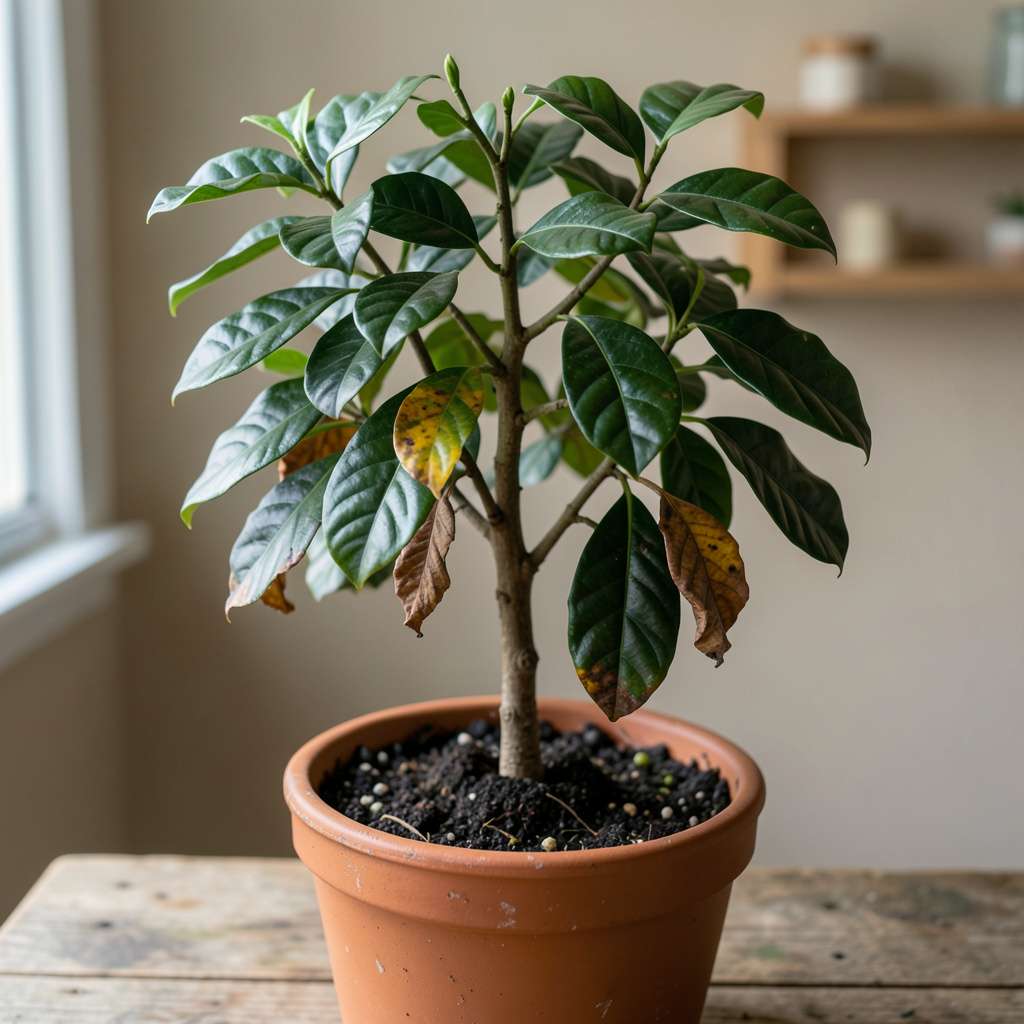
Brown leaves on coffee plants typically result from underwatering, overwatering, low humidity, or nutrient deficiencies. Check soil moisture first—adjust watering and ensure proper drainage. Yellow-brown edges suggest low humidity, while crispy brown spots indicate sunburn or salt buildup.
I’ve learned through years of trial and error that coffee plants are surprisingly sensitive to their environment. 🌱 The brown leaves often act like warning signals—your plant’s way of saying something’s off. For example, when edges turn crispy, it’s usually a humidity issue (they thrive at 60-70%), while soft brown patches often mean you’re either drowning the roots or letting them dry out completely. What many gardeners miss is that these plants hate temperature swings—keeping them in a stable 65-80°F range prevents most stress-related browning.
💡 In This Article
Coffee plants develop brown leaves when their delicate balance is disrupted—most commonly through water stress. Overwatering suffocates roots by filling air pockets in soil, while underwatering causes leaf cells to collapse from dehydration. 🌱 The key difference? Overwatered leaves feel mushy and develop yellow-brown patches, while underwatered leaves become crispy with dry, papery edges.
I’ve found that coffee plants need soil that stays consistently moist but never soggy—think of it like a wrung-out sponge.
Humidity plays a massive role in leaf health. Coffee plants originate from tropical understories where humidity hovers around 60-70%. When indoor air drops below 40%, leaves lose moisture faster than roots can replace it, causing brown edges that feel dry to the touch.
This often gets mistaken for underwatering, but the solution isn’t more water—it’s increasing air moisture through misting or a pebble tray. The brown tips you see are essentially “leaf burn” from dry air.
Nutrient deficiencies create distinct browning patterns. Magnesium deficiency shows as yellow patches between leaf veins that eventually turn brown, while nitrogen deficiency causes uniform pale yellowing that progresses to brown. I once rescued a coffee plant with interveinal browning by adding 1 tablespoon of Epsom salt to its water monthly.
The recovery took about 6 weeks, but new growth came in vibrant green. Salt buildup from tap water creates its own brown spots—these feel crusty and appear randomly across the leaf surface.
Environmental stressors trigger immediate browning. Direct sunlight scalds leaves, creating bleached brown patches where light intensity was highest. Temperature swings below 60°F or above 85°F cause leaf edges to darken and crisp. I learned this the hard way when moving a plant near an AC vent—within 48 hours, the leaves developed brown margins.
Drafts create similar stress, so placement matters as much as care routine.
The most overlooked cause? Root health. Compacted or poor-draining soil leads to root rot, where leaves turn brown and wilt despite moist soil. Healthy coffee plant roots should be firm and white—if they’re mushy and dark, you’re dealing with rot. A simple test: Gently tug the plant.
If it comes out easily, the roots have likely deteriorated. This often requires repotting with fresh, chunky soil mix containing 30% perlite or orchid bark for proper aeration.
Here’s what most gardeners miss: Brown leaves won’t turn green again. The plant redirects energy to new growth once conditions improve. Your focus should be on identifying which leaves are affected—older leaves browning first suggests nutrient mobility issues (like nitrogen moving to new growth), while random browning points to environmental stressors.
Keeping a symptom journal helps track patterns over time.
Check soil moisture every 3-4 days by inserting your finger 2 inches deep. Water when the top inch feels dry, but never let the plant sit in soggy soil. A $10 moisture meter removes the guesswork. Most coffee plants need watering about once a week, but this varies with humidity and temperature.
Unfortunately, no—once leaves turn brown, that damage is permanent. The plant will redirect energy to new growth when conditions improve. Focus on preventing further browning by addressing the root cause (water, humidity, or nutrients). You should see healthy new leaves within 2-3 weeks of proper care.
For immediate results, place the pot on a pebble tray filled with water (keep the pot above water level). A cool-mist humidifier set to 60-70% works best long-term. I mist my plants daily with distilled water—this prevents mineral buildup while boosting moisture. Grouping plants together also creates a helpful microclimate.
Sunburn creates bleached, papery brown patches where light was most intense, often on upper leaves. Disease spots appear more randomly and may have yellow halos or fuzzy growth. Check leaf undersides—sunburn won’t have additional symptoms, while diseases might show spores or unusual textures. Move sunburned plants to bright, indirect light immediately.
Tap water can cause brown leaf tips over time due to mineral buildup. For best results, use distilled, rainwater, or let tap water sit out for 24 hours before using. If you notice white crust on soil or leaves, flush the pot monthly with 4 times its volume in distilled water to remove salt accumulation.
