
Beautiful Plants For Your Interior
Beautiful Plants For Your Interior
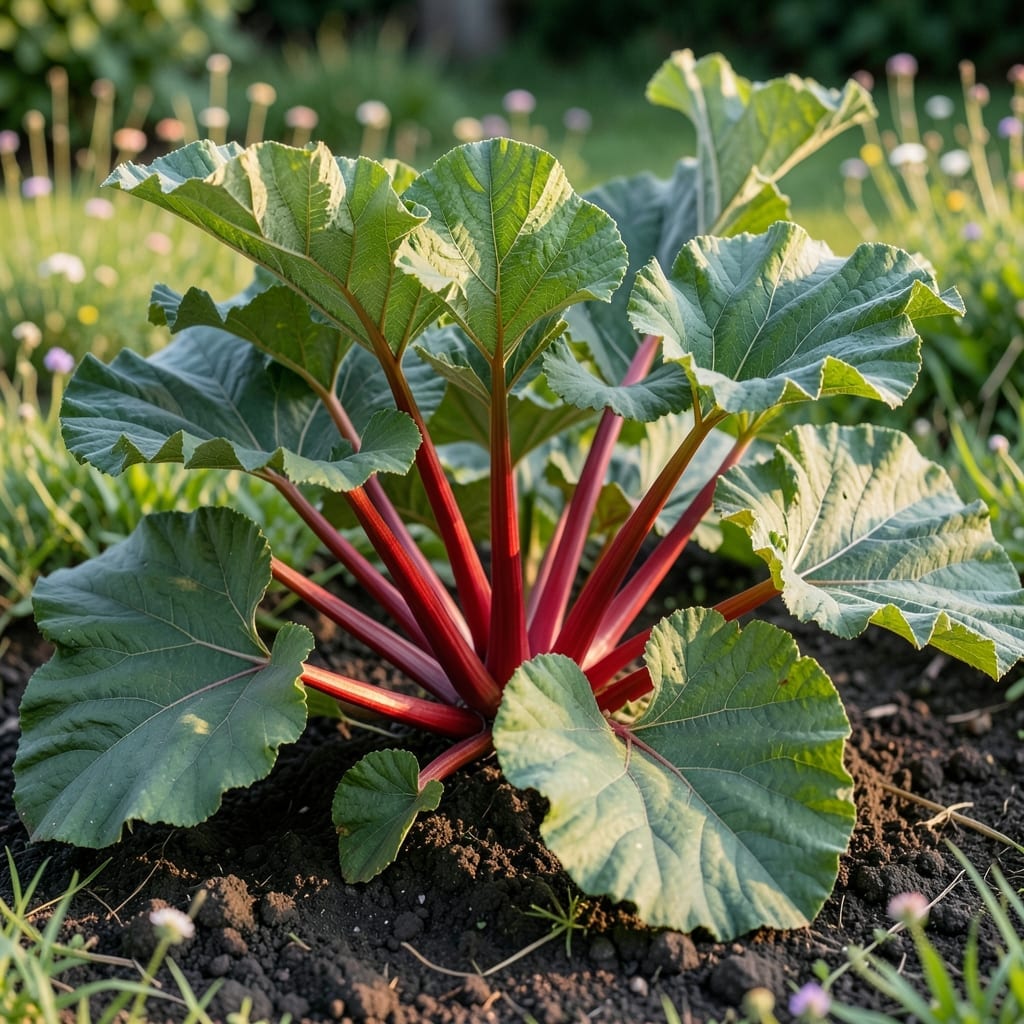
No, rhubarb is not a root vegetable. It is a perennial plant with edible stalks, and while its roots are used in some traditional medicines, the part we eat comes from the stems above ground.
I often explain that rhubarb belongs to the Polygonaceae family, making it more closely related to buckwheat than to root crops. What many don’t realize is that its tart, fibrous stalks are the prized part, while the leaves contain toxic oxalic acid. 🔥 This unique structure separates it from true root vegetables like carrots, which store nutrients in their underground parts.
💡 In This Article
Rhubarb belongs to the Polygonaceae family, placing it alongside buckwheat and sorrel. This classification reveals its true nature as a perennial herbaceous plant, not a root crop. The edible portion—the crisp, tart stalks—grows above ground, unlike carrots or beets that store energy in underground tubers or taproots. 🔥
Botanically, rhubarb isn’t even a true vegetable. It’s a stem vegetable, with petioles (leaf stems) that develop from a crown at soil level. These stalks range from 12-24 inches tall, with colors spanning deep red to pale green. The crown itself is a compressed underground stem, but we don’t consume this part. ✨
The confusion often stems from its culinary use. While we treat rhubarb like a fruit in pies, its classification remains vegetable due to the non-sweet nature of its edible parts. True root vegetables develop from the radicle (embryonic root), whereas rhubarb’s edible stalks emerge from the plant’s shoot system. 💫
What’s fascinating is how rhubarb stores energy. While root vegetables like sweet potatoes store starch in their tubers, rhubarb’s crown stores energy in its fleshy rhizome. However, we harvest the aerial stems that grow from this crown, making its growth pattern fundamentally different from underground crops. ⚡
This distinction matters for gardeners and cooks. Rhubarb’s growth habit means it requires different planting depths (1-2 inches deep for crowns) and spacing (3-4 feet apart) compared to root vegetables. The plant’s energy comes from its crown, not its fibrous roots which primarily anchor it in soil. 🌟
The crisp, tart stalks are the only edible part. Always discard the leaves, as they contain toxic oxalic acid. The crown (where stalks emerge) is not consumed.
Botanically, it’s a vegetable because we eat its savory stalks, not sweet seed-bearing structures. Culinary uses may treat it like fruit, but its classification remains vegetable.
Root vegetables store nutrients underground, while rhubarb’s edible stalks grow above ground from a crown. Its fibrous roots only anchor the plant.
Yes, but its extreme tartness makes it unpalatable for most. Cooking with sugar balances the flavor. Always avoid raw leaves.