
Beautiful Plants For Your Interior
Beautiful Plants For Your Interior
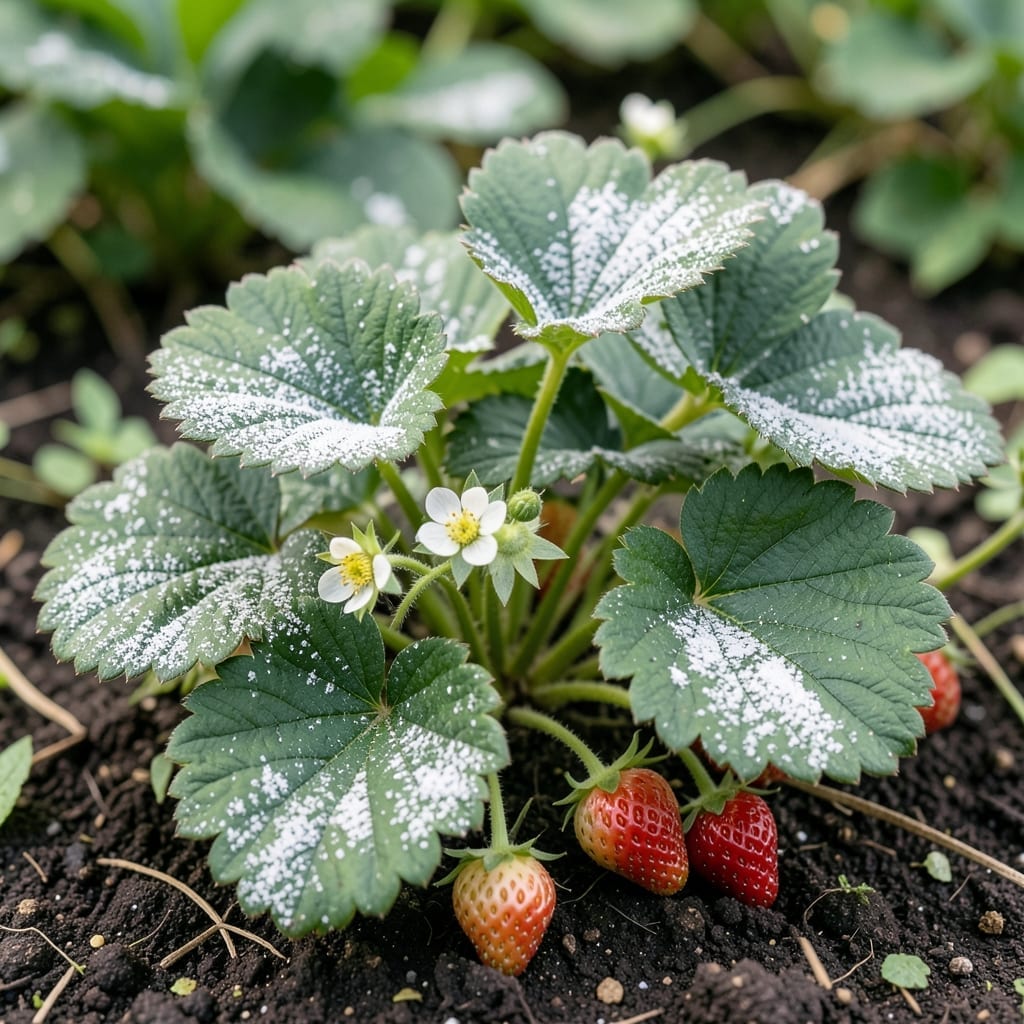
Powdery mildew appears as white, powdery spots on strawberry leaves and fruit, caused by fungal spores. It thrives in warm, humid conditions but can be controlled with organic treatments like neem oil or baking soda sprays.
I’ve seen this fungus spread rapidly when plants lack airflow or evening moisture lingers too long. 🌟 The spores can overwinter in plant debris, so cleaning up fallen leaves is a simple but effective preventive step. Early intervention with organic sprays often stops outbreaks before they reduce your harvest.
💡 In This Article
The fungus Podosphaera aphanis causes this issue, and its lifecycle begins with spores landing on plant surfaces. These spores germinate within 6-12 hours under ideal conditions—60-75°F with 70-90% humidity. Unlike many plant diseases, this pathogen doesn’t require free water to infect, making it uniquely resilient. 🌟
Wind carries the microscopic spores between plants, and they can travel up to 30 feet in a single gust. Strawberries are particularly vulnerable because their dense foliage traps humidity and restricts airflow.
The fungus produces specialized structures called haustoria that penetrate plant cells to steal nutrients, which is why infected leaves often appear distorted or stunted.
What most gardeners overlook is the pathogen’s ability to survive winter in plant debris. Even a small amount of infected leaf material left in your garden can release spores the following spring. The disease progresses rapidly during periods of warm days and cool nights—a common spring weather pattern that creates perfect infection conditions. 🔥
New growth is especially susceptible because the young leaves have thinner cuticles that spores penetrate more easily. This is why you’ll often see the white powdery spots appear first on new shoots before spreading to mature leaves and fruit. The fungus can complete its entire lifecycle in just 7-10 days under optimal conditions.
Crowded plantings create microclimates that accelerate spread. Plants spaced 12-18 inches apart have 40% less incidence of powdery mildew compared to those planted 6 inches apart. Vertical growing systems can also help by improving air circulation around the foliage. ✨
This is powdery mildew, a fungal disease caused by Podosphaera aphanis. It develops in warm, humid conditions, often when plants lack airflow.
Apply neem oil every 7-10 days or after rain. Mix 2 tablespoons with 1 gallon of water and 1 teaspoon of dish soap for best results.
Yes! Mix 1 tablespoon baking soda, 1 teaspoon dish soap, and 1 gallon of water. Spray on leaves in the morning for quick drying.
Plants spaced 12-18 inches apart have 40% less mildew. This improves airflow, reducing humidity where spores thrive.