
Beautiful Plants For Your Interior
Beautiful Plants For Your Interior
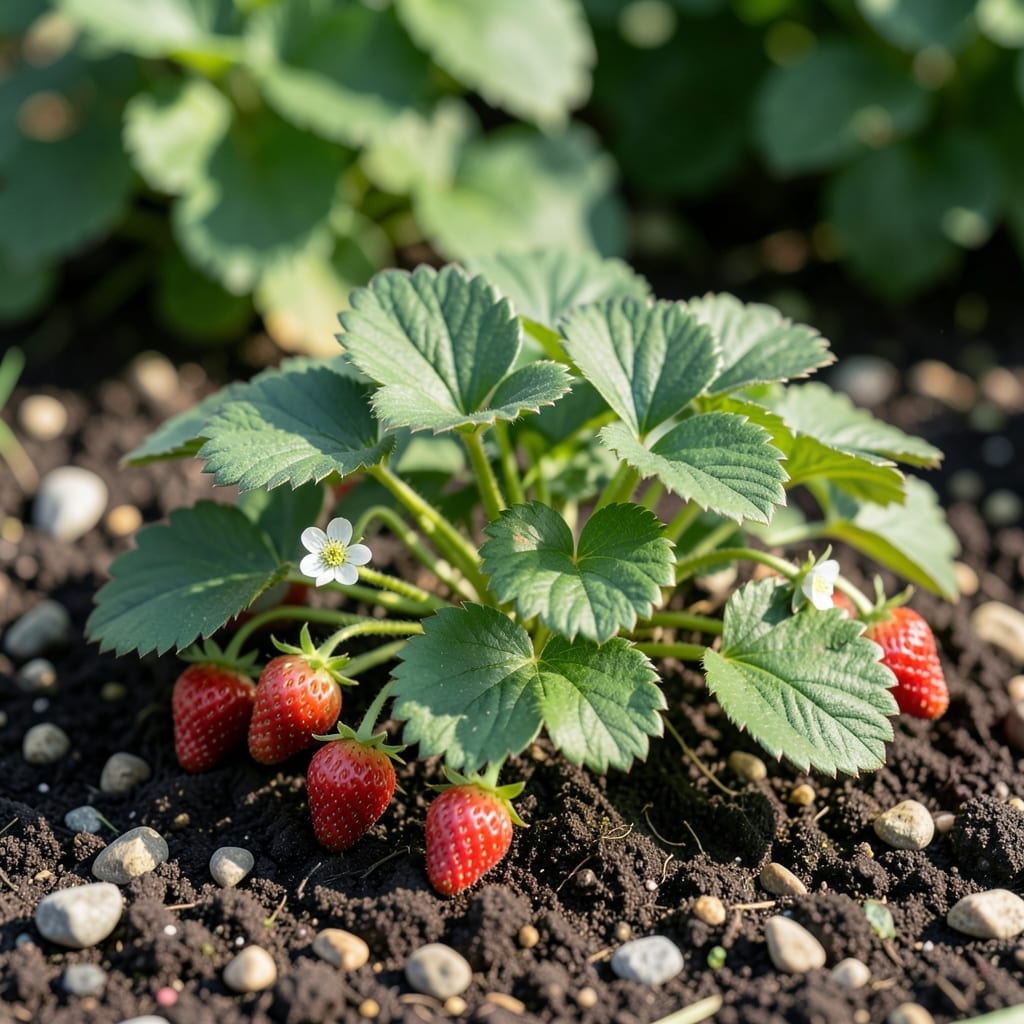
Those white spots on your strawberry leaves aren’t just unsightly—they’re stealing your harvest. I’ve lost entire plants to this before learning the simple fixes.
Powdery mildew thrives in humid conditions, but proper spacing, airflow, and a few natural sprays can stop it cold. You’ll see healthier plants and fuller berries within weeks.
Nothing exotic—just basics to fight powdery mildew and save your strawberries.
| Ingredient | Amount | Notes |
|---|---|---|
| Neem Oil 🌿 | 1 piece | Cold-pressed for best results |
| Baking Soda 🌾 | 1 tbsp | Food-grade quality |
| Liquid Soap 💧 | ½ tsp | Mild unscented variety |
| Water 💧 | 1 gallon | Room temperature |
| Pruning Shears ✂️ | 1 piece | Sterilize between cuts |
| Garden Gloves 🪴 | 1 piece | Protects hands from mildew |
| Compost Tea 🌱 | 1 gallon | Freshly brewed preferred |
| Mulch 🪵 | 2 gallons | Straw or wood chips |
| Spray Bottle 💦 | 1 piece | Fine mist nozzle |
| Row Cover 📋 | 1 piece | Lightweight fabric |
[recipe_ingredient_scaler]
Neem oil and baking soda are your best friends here. Cold-pressed neem oil works best (the refined stuff loses potency). Grab it from Home Depot or garden centers. Baking soda is sold everywhere, but ensure it’s food-grade—no additives. Liquid soap just needs to be mild; Dr. Bronner’s is a solid pick (worth the extra dollar).
No neem oil? Sulfur-based fungicides work too but can be harsh on plants. Baking soda can be swapped for potassium bicarbonate (same effect, less residue). If you lack a spray bottle, any fine-mist applicator works—just avoid heavy streams that knock off leaves.
Store neem oil in a cool, dark place—it degrades in heat. Baking soda lasts indefinitely if kept dry. Leftovers like compost tea can be used on other plants within 48 hours (after that, it loses potency).
Here’s the method I use to tackle this issue before it spreads through the entire patch.
Put on the garden gloves and use the pruning shears to remove any leaves showing white powdery spots. Cut at the base of the leaf stem to avoid tearing the plant tissue. Sterilize the shears between cuts with a quick wipe of rubbing alcohol to prevent spreading spores to healthy leaves.
Dispose of the infected material immediately—don’t compost it, as the spores can survive and reinfect your plants. I check the crown of each plant carefully, as mildew often starts there where air circulation is poor. This step alone can stop a minor outbreak in its tracks.
In the spray bottle, combine the 1 gallon water, 1 tbsp baking soda, and 0.5 tsp liquid soap. The soap helps the solution stick to the leaves. Shake gently to dissolve the baking soda completely. Real talk: if you see undissolved grains, they can clog the nozzle.
Spray the mixture thoroughly on both sides of the leaves, focusing on new growth where mildew is most likely to appear. Apply in the early morning so the leaves dry quickly in the sun. Reapply every 7-10 days or after rain, as this is preventive, not curative.
Use the 1 gallon compost tea as a foliar spray or soil drench to strengthen your plants’ natural defenses. I’ve found that healthier plants resist mildew better. Pour the tea into the spray bottle and apply it to the leaves until they’re lightly coated.
For best results, apply the compost tea in the evening when temperatures are cooler. This prevents the liquid from evaporating too quickly and ensures maximum absorption. Repeat this treatment every 2-3 weeks throughout the growing season.
Spread the 2 gallons mulch around the base of your plants to reduce soil splashing, which can spread spores. Then, mix the neem oil with 1 gallon water according to package instructions and apply it with the spray bottle. Neem oil disrupts the mildew’s life cycle and should be applied every 7-14 days.
Thin out crowded plants to improve airflow—this is the most effective long-term prevention. If humidity is high, consider using the row cover temporarily to protect plants during wet weather, but remove it once conditions improve to maintain airflow.
If you’re managing powdery mildew on strawberries, organic fungicides like neem oil or baking soda solutions are keto-compliant. These won’t disrupt your diet while protecting your plants. 🌱
Most natural treatments for white spots on strawberry leaves, such as copper fungicides or sulfur sprays, are gluten-free. Always check labels for additives in commercial products.
For those with sensitivities, avoid products containing soy or dairy-based fungicides. Stick to simple solutions like hydrogen peroxide sprays (3%) for a hypoallergenic approach. 💡
Vegetarians can safely use plant-based treatments like neem oil or compost tea. Avoid fish emulsion or animal-derived fungicides if maintaining a strict vegetarian lifestyle.
Opt for baking soda and water mixes (1 tsp per quart) instead of commercial fungicides, which may contain sodium-based compounds. This keeps your garden—and diet—low in sodium. 📊