
Beautiful Plants For Your Interior
Beautiful Plants For Your Interior
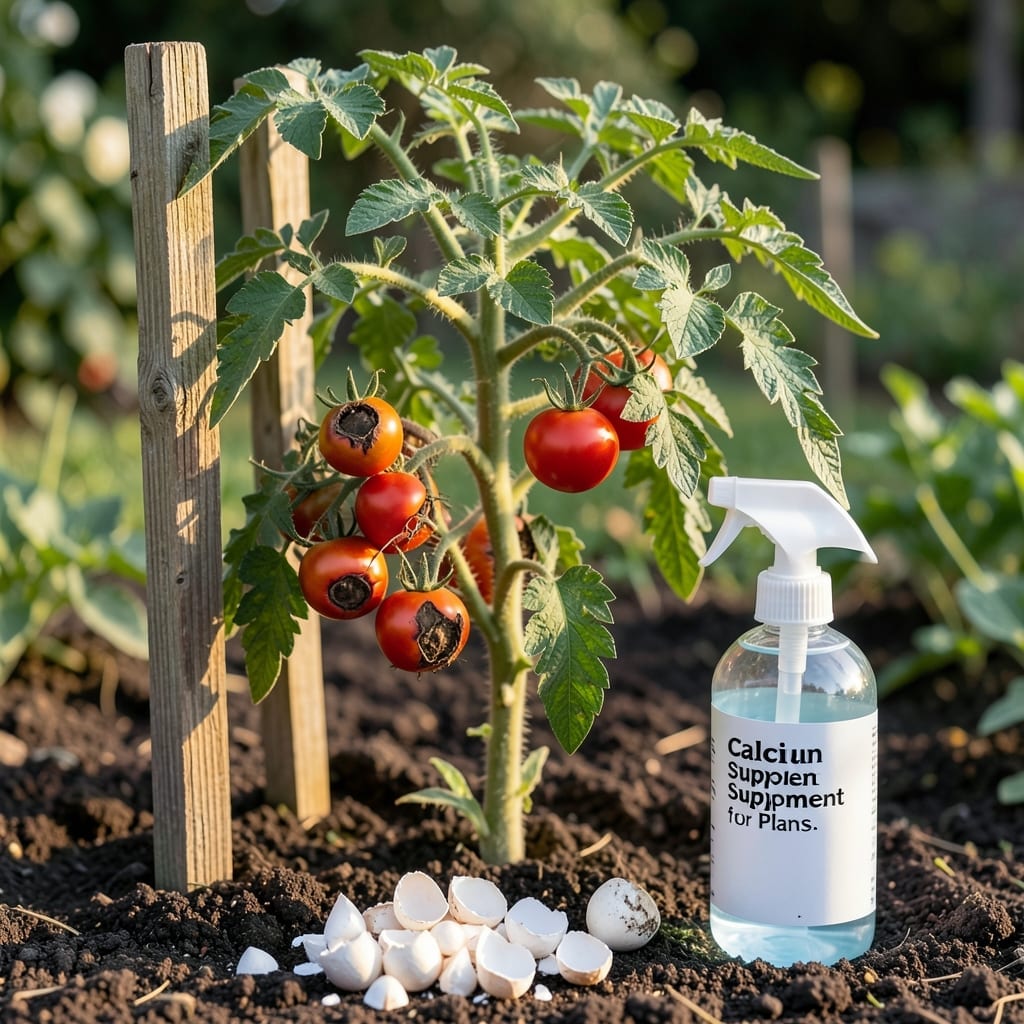
Apply a calcium-rich solution like crushed eggshell tea or calcium nitrate spray to affected plants. Ensure consistent soil moisture and avoid over-fertilizing with nitrogen to prevent future issues.
This issue often stems from uneven water supply, which blocks calcium absorption even when it’s present in the soil. I’ve seen gardeners fix recurring problems by switching to drip irrigation for steady moisture. 🌟 The key is addressing both the nutrient gap and the environmental conditions that trigger it.
💡 In This Article
Blossom end rot develops when tomato fruits can’t access enough calcium during rapid growth phases. Calcium is critical for building strong cell walls in developing fruit tissues. When deficient, cells collapse at the blossom end, creating that telltale sunken, leathery brown spot.
The disorder appears most often when fruits are 1-2 inches in diameter and growing rapidly.
Uneven soil moisture is the primary culprit behind this nutrient disruption. Tomatoes need consistent water to transport calcium from the soil into the plant. Drought stress causes calcium uptake to stop, while overwatering can leach calcium from the root zone. Even with adequate soil calcium, plants can’t absorb it without steady moisture. 💫
Soil pH also plays a crucial role. Calcium becomes less available when pH drops below 6.0 or rises above 7.5. Sandy soils, which drain quickly, often lack sufficient calcium. Heavy clay soils may contain calcium but bind it so tightly that roots can’t access it. The ideal pH range of 6.2-6.8 maximizes nutrient availability.
Temperature extremes compound the problem. Cool soil below 55°F slows root activity and calcium absorption. High temperatures above 90°F increase fruit growth rate, creating higher calcium demand. This is why blossom end rot often appears during heat waves or after cold snaps. ✨
Nitrogen over-fertilization creates another obstacle. Excess nitrogen promotes rapid leafy growth at the expense of fruit development. The plant prioritizes calcium for new leaves rather than developing tomatoes, leaving fruits vulnerable. A balanced fertilizer with a 3-1-2 NPK ratio supports both foliage and fruit health.
Results vary, but foliar sprays often show effects within 3-5 days. Soil amendments like eggshells take 2-3 weeks to break down. New fruits will benefit, but existing affected ones won’t recover.
No, over-fertilizing—especially with nitrogen—can worsen the problem. Stick to a balanced 3-1-2 NPK ratio and focus on calcium sources. Too much nitrogen diverts calcium to leaves instead of fruit.
Yes, diluted milk (1 part milk to 4 parts water) can provide calcium. Spray it on leaves weekly, but avoid overdoing it as the lactose may attract pests. This works best as a supplement, not a primary treatment.
Recurring issues often stem from inconsistent watering or soil pH imbalance. Test your soil—aim for pH 6.2-6.8—and switch to drip irrigation for steady moisture. Preventative calcium at planting helps too.