
Beautiful Plants For Your Interior
Beautiful Plants For Your Interior
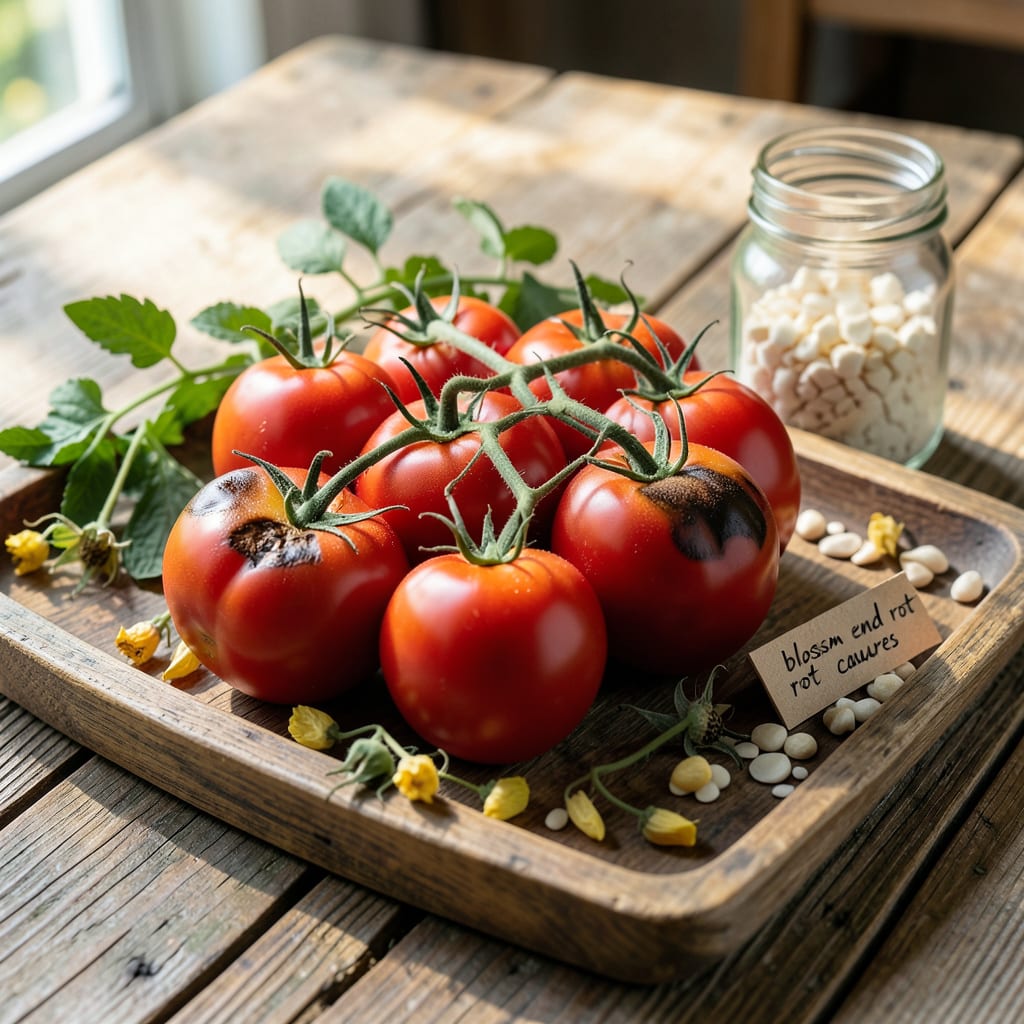
That sunken, black bottom on your tomatoes isn’t sunburn or disease. It’s blossom end rot, and I’ve battled it in my own garden for seasons.
This happens when developing fruit can’t pull enough calcium from the soil. The kicker? It’s rarely about lacking calcium in your dirt. More often, it’s inconsistent watering or damaged roots that block the uptake.
You’ll spot the first signs when fruits are half-sized. Catch it early, and you can still save the rest of the harvest with a few simple fixes.
Works for container tomatoes, in-ground plants, and even hanging baskets. Here’s exactly how to stop it.
Blossom end rot in tomatoes is primarily triggered by calcium deficiency or uneven water supply, but the root causes run deeper. Here’s the science behind the most common culprits:
Tomatoes need calcium to build strong cell walls. When the fruit doesn’t get enough—even if the soil has plenty—cells at the blossom end collapse, creating the telltale brown, sunken lesions. This often happens because calcium moves slowly in the plant and is prioritized for new growth over developing fruit. Rapid growth, high humidity, or excessive nitrogen can worsen the imbalance.
Fluctuations in water availability disrupt calcium uptake. Drought stress or overwatering both interfere with the plant’s ability to absorb calcium from the soil. Dry spells slow nutrient transport, while soggy roots suffocate and damage root hairs, which are critical for calcium absorption. Even short-term water stress during fruit development can trigger rot.
Hot, dry weather speeds up transpiration, pulling water—and calcium—away from the fruit. Conversely, cold snaps slow root activity, reducing calcium uptake. Temperature stress also disrupts cell membrane integrity, making the blossom end more vulnerable to breakdown.
Calcium is most available to plants when soil pH is between 6.0 and 6.8. If your soil is too acidic (pH < 6.0) or alkaline (pH > 7.5), calcium becomes chemically “locked up” and inaccessible, even if it’s present in the soil. A simple soil test can confirm if pH is the hidden culprit.
Blossom end rot can be frustrating, but these targeted fixes will help you save your tomato crop and prevent future issues. Address the root causes with these practical steps:
💡 Prevention tip: Test soil pH (aim for 6.2–6.8). Acidic soils block calcium uptake—adjust with lime if needed.
💡 Prevention tip: Avoid letting soil dry out completely between waterings—this disrupts calcium transport.
💡 Prevention tip: Use compost or organic matter to improve soil structure and nutrient availability.
💡 Prevention tip: Choose heat-tolerant tomato varieties like ‘Heatmaster’ or ‘Solar Fire’ for hot climates.
With these adjustments, your tomatoes will bounce back—and you’ll enjoy healthy, rot-free harvests all season! 🍅✨
Yes, you can cut off the affected bottom portion and eat the rest. The rot only impacts the fruit’s end, leaving the top perfectly safe and flavorful. Just remove at least 1/2 inch above the damaged area.
A foliar spray with calcium chloride or calcium nitrate works within 24-48 hours. For soil, crushed eggshells take weeks to break down, so use gypsum for faster results.
A 2-3 inch layer of organic mulch maintains consistent moisture, which is key for steady calcium uptake. Straw, wood chips, or grass clippings all work well.
Pots dry out faster and have limited root space, making calcium uptake erratic. Use large containers, water daily in heat, and add 1 tablespoon of lime to the soil mix.
