
Beautiful Plants For Your Interior
Beautiful Plants For Your Interior
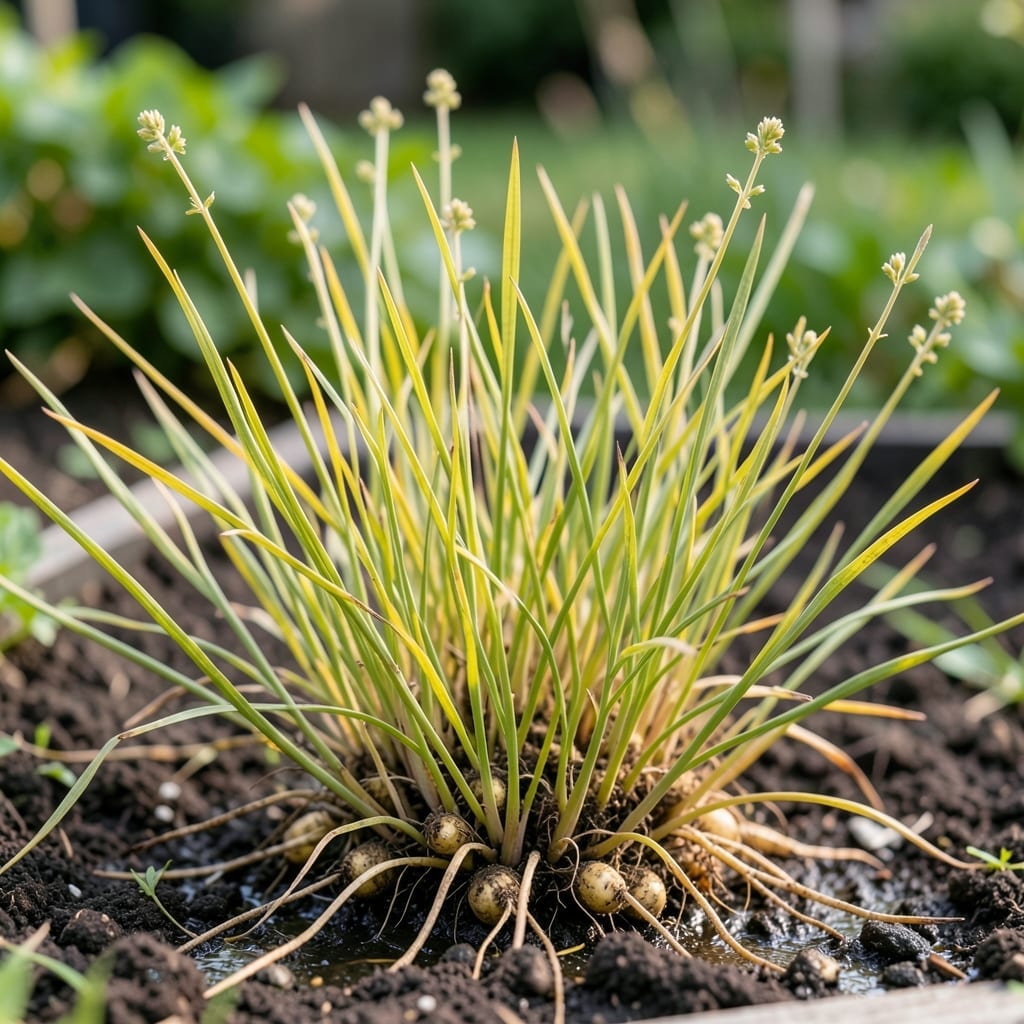
Nutsedge has an aggressive, fibrous root system with nut-like tubers that store energy, allowing it to spread rapidly underground and regrow even after removal.
I’ve battled this weed in my own garden, and what makes it so stubborn is those underground nut-like tubers. They act like energy reserves, fueling new growth even after you pull the visible plants. This means you can think you’ve won the fight, only to see it pop up again weeks later. 🔥
The fibrous roots also spread horizontally, creating a network that’s tough to fully eliminate with a single treatment.
💡 In This Article
These underground tubers are essentially storage organs packed with starch and nutrients. Each one can remain dormant for months or even years, waiting for the right conditions to sprout. The tuber’s outer layer is tough and resistant to drying out, which helps it survive in harsh soil environments.
When a tuber detects moisture and warmth, it germinates by sending up a shoot while simultaneously growing new roots. A single tuber can produce 10-20 shoots in optimal conditions. This explains why you might see multiple nutsedges popping up in a cluster—they’re all connected to the same underground network.
What makes these tubers particularly problematic is their depth. They typically form 8-12 inches below the soil surface, far beyond the reach of most hand-pulling attempts. Even if you remove the above-ground portion, the tubers remain untouched, ready to fuel new growth.
The energy storage capacity of these tubers is impressive. Research shows they can contain up to 20% starch by dry weight, providing enough resources for multiple growth cycles. This is why nutsedges can bounce back so quickly after mowing or herbicide treatments that don’t reach the root system.
In warm climates, tubers can form in as little as 4-6 weeks after the initial plant emerges. This rapid production means that even if you remove the parent plant, new tubers may already be developing underground, ensuring the plant’s survival. 🔥
They usually develop 8-12 inches below the surface, which is why shallow pulling rarely works. This depth protects them from drying out and many surface treatments.
Yes, each tuber contains enough stored energy to produce 10-20 new shoots. Even small root fragments left behind can regenerate into full plants.
The underground tubers act like energy reserves. Even if you remove visible growth, these dormant structures can fuel new shoots for months or years.
In warm climates, tubers can develop in as little as 4-6 weeks after initial growth. This rapid production makes early intervention crucial.