
Beautiful Plants For Your Interior
Beautiful Plants For Your Interior
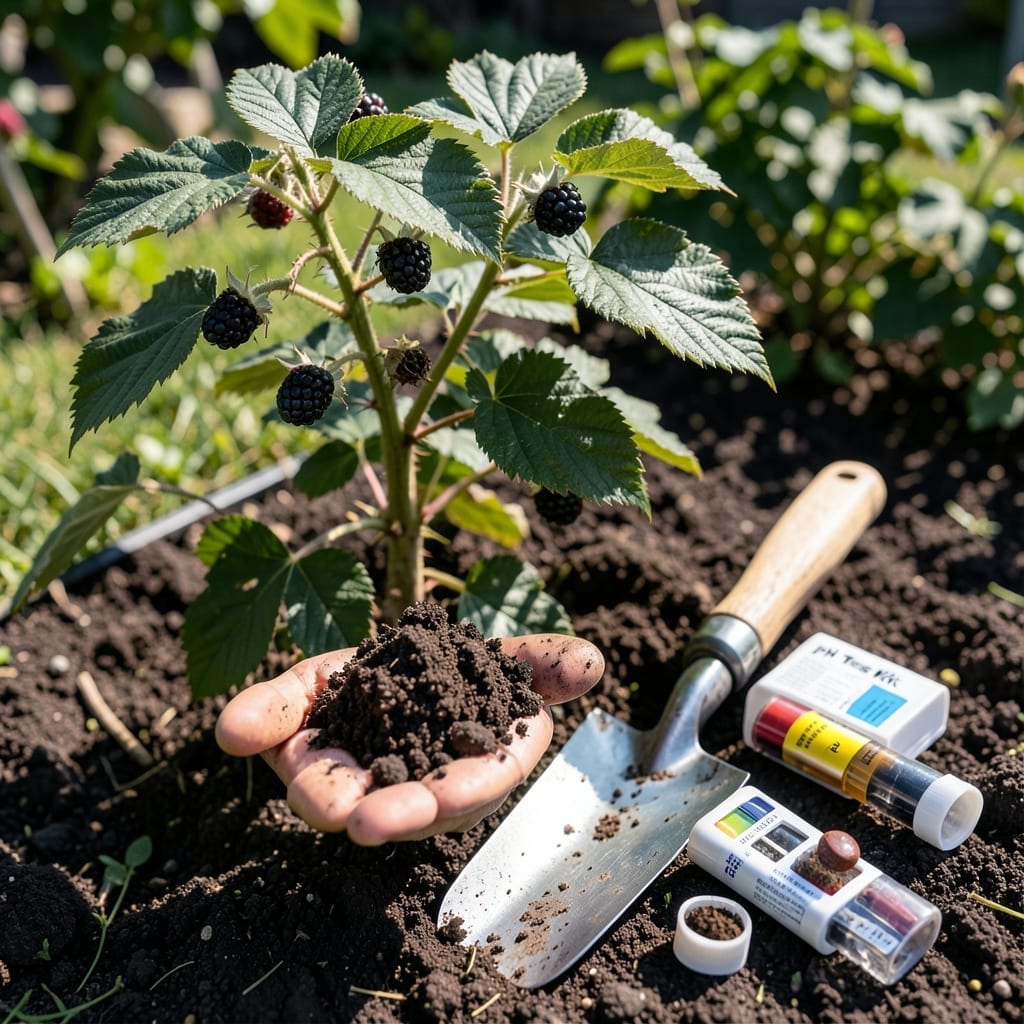
Blackberries thrive in well-draining, loamy soil with a pH between 5.5 and 6.5. Rich in organic matter, the soil should retain moisture without waterlogging, ensuring strong root development and fruit production.
I’ve found that slightly acidic conditions help blackberries absorb essential nutrients like iron and phosphorus. Adding compost or aged manure can boost organic content, while sand improves drainage in heavy clay. 🌟
For best results, test your soil before planting and amend as needed to hit that sweet spot between 5.5 and 6.5 pH. ✨
💡 In This Article
The pH level directly affects nutrient solubility in soil. At 5.5-6.5 pH, blackberries access iron, manganese, and phosphorus efficiently. Below 5.0, aluminum toxicity can stunt root growth. Above 7.0, iron becomes locked in soil particles, causing yellowing leaves. 🔥
Test soil pH with a $10-$20 digital meter or lab analysis. For adjustment, add lime to raise pH or sulfur to lower it. Elemental sulfur works faster than aluminum sulfate but requires 3-6 months to fully react. Always retest after 2-3 months before adding more amendments. ✨
Acidic conditions also suppress harmful soil pathogens. Blackberries evolved in forest edges where decaying leaves created naturally acidic soil. This environment promotes beneficial mycorrhizal fungi that help roots absorb water and nutrients. These fungi struggle in alkaline soils above 7.5 pH. 💫
Consider your water source too. Well water often contains limestone that gradually raises soil pH. If your water tests above 7.0 pH, consider using rainwater for irrigation or adding vinegar (1 tablespoon per gallon) occasionally to maintain acidity. 🌟
Remember that pH affects more than nutrients—it influences microbial activity. At optimal pH, beneficial bacteria thrive, breaking down organic matter into plant-available nutrients. This microbial activity creates a living soil that supports blackberry health long-term. ⚡
Above 7.0 pH, iron becomes unavailable, causing yellow leaves with green veins. This condition, called chlorosis, weakens plants and reduces fruit production. Add sulfur to gradually lower pH.
Yes, but amend first with 4-6 inches of sand and 3-4 inches of compost. This breaks up compaction and improves drainage, which clay soil lacks.
Test before planting and every 2-3 years afterward. pH can change over time due to watering, fertilization, or natural processes. Use a $10-$20 digital meter for quick checks.
Apply 2-3 inches of straw or wood chips to retain moisture, regulate temperature, and suppress weeds. Keep mulch 2 inches away from canes to prevent rot.