
Beautiful Plants For Your Interior
Beautiful Plants For Your Interior
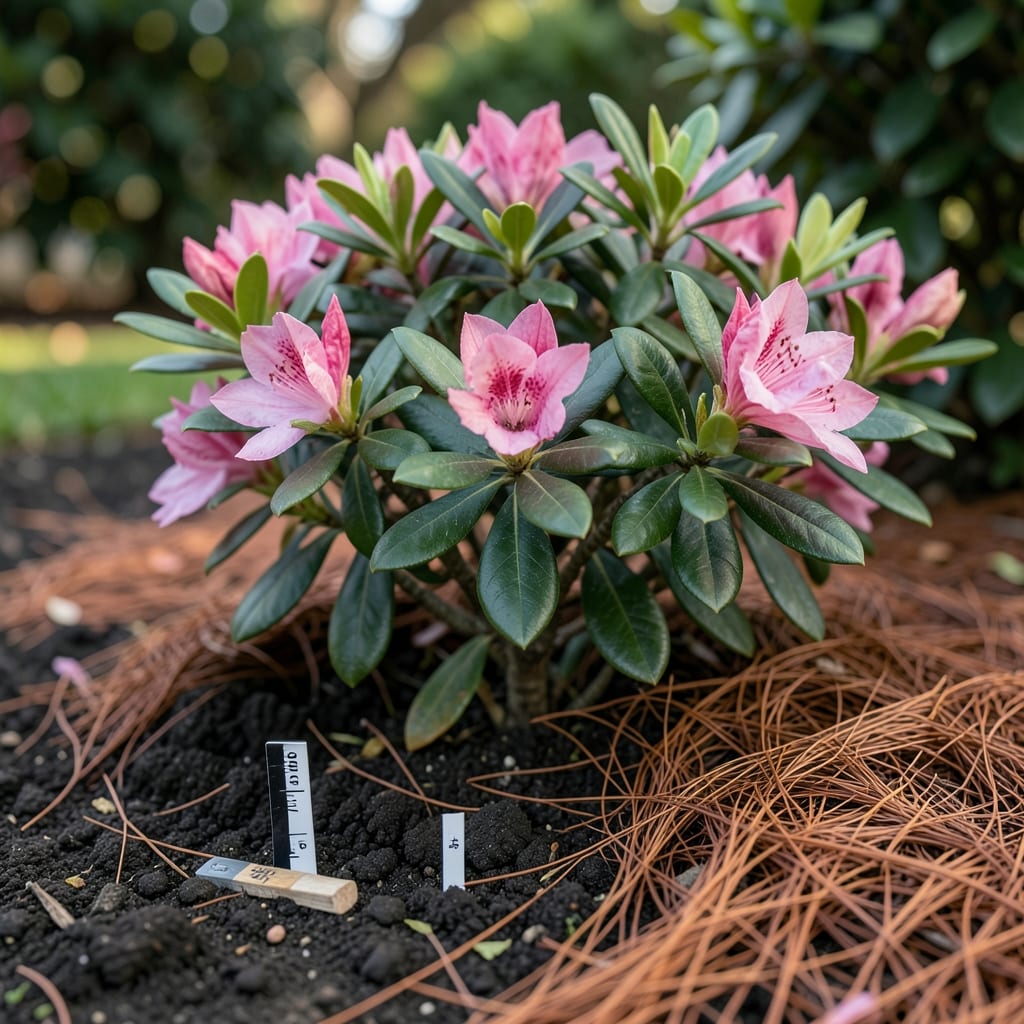
Azaleas thrive in acidic soil with a pH between 4.5 and 6.0, which allows them to absorb essential nutrients like iron and aluminum for vibrant blooms and healthy growth.
I’ve found that azaleas struggle in neutral or alkaline soils because these conditions lock out iron and other critical micronutrients. Without proper acidity, their leaves often turn yellow—a condition called chlorosis—while the veins stay green. This happens because the plant can’t process the nutrients it needs for photosynthesis. 🌟
Testing your soil with a pH meter or kit is the easiest way to check if it meets these needs. Adding amendments like sulfur or peat moss can help lower the pH if necessary. ✨
💡 In This Article
The science behind this requirement lies in nutrient solubility. In acidic soil, iron and other micronutrients like manganese and zinc remain in forms that azalea roots can absorb. At pH levels above 6.0, these nutrients bind to soil particles, becoming unavailable to the plant.
This is why azaleas often develop yellow leaves (interveinal chlorosis) in alkaline conditions—they’re literally starving for iron. 🌿
Azaleas belong to the Ericaceae family, a group of plants that evolved in naturally acidic environments like forest floors rich in decaying organic matter. Their roots have a unique symbiotic relationship with mycorrhizal fungi that thrive in acidic conditions. These fungi help break down organic matter, releasing nutrients in a form the plant can use.
Without this ideal pH range of 4.5-6.0, this symbiotic relationship weakens. ✨
The plant’s ability to photosynthesize depends on chlorophyll production, which requires iron. When soil pH rises above 6.5, iron oxidizes into insoluble forms, creating a deficiency even if iron is present in the soil. The result? Poor growth, weak stems, and those telltale yellow leaves with green veins.
The lower the pH within the ideal range, the more soluble iron becomes, ensuring vibrant green foliage and abundant blooms. 💛
Acidic soil also helps azaleas avoid toxicity from other elements. In neutral or alkaline soils, nutrients like calcium and magnesium can accumulate to harmful levels. The acidic environment keeps these in check while promoting the uptake of phosphorus—a critical nutrient for flower production. This balance is what allows azaleas to produce their spectacular, long-lasting blooms.
🔥
What’s fascinating is how quickly azaleas respond to soil pH changes. I’ve seen plants recover from chlorosis within weeks after amending the soil to lower the pH. The transformation is dramatic: yellow leaves regain their green hue, and new growth appears healthier.
This response highlights just how finely tuned these plants are to their native acidic conditions. 🌟
Azaleas develop yellow leaves with green veins, a condition called chlorosis. This occurs because iron becomes unavailable in higher pH soils, starving the plant of essential nutrients.
Test your soil once a year, ideally in spring before new growth begins. This helps you make timely adjustments. Use a pH meter for quick results or a lab test for precise readings.
Vinegar provides only a temporary pH drop and can harm plant roots if overused. For lasting results, use elemental sulfur or organic amendments like peat moss instead.
Elemental sulfur works quickest—apply 1 pound per 100 square feet to reduce pH by about 1 unit. Water it in well and retest after 2-3 months.