
Beautiful Plants For Your Interior
Beautiful Plants For Your Interior
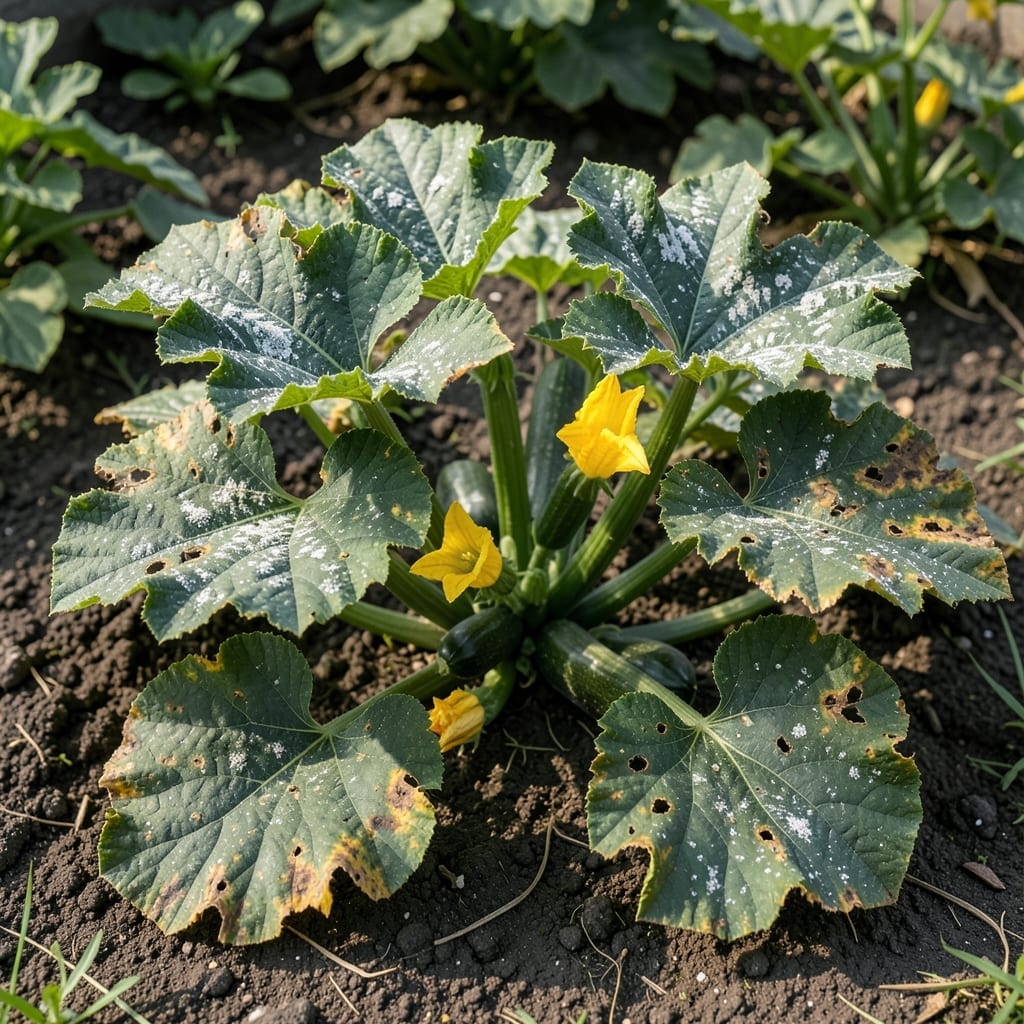
Yellow spots, brown edges, or holes in your zucchini leaves? I’ve been there, staring at my plants wondering what went wrong overnight. These issues hit fast but are often fixable with quick action.
The usual suspects are pests, diseases, or nutrient imbalances. Powdery mildew shows up as white dust, while cucumber beetles leave ragged holes. Most problems start small, so catching them early makes all the difference.
You’ll get your plants back on track with simple solutions like neem oil, better airflow, or soil amendments. The key is matching the symptom to the right treatment without overcomplicating it.
This guide helps you diagnose and treat issues before they spread to your entire crop.
Zucchini plants are hardy, but their leaves can fall victim to several stress factors. Here’s why you might see discoloration, spots, or wilting:
Pathogens like Pseudoperonospora cubensis (downy mildew) or Xanthomonas campestris (bacterial leaf spot) thrive in wet, humid conditions. These microbes penetrate leaf tissues, disrupting photosynthesis and causing yellowing, brown lesions, or a downy growth. Overhead watering or poor air circulation exacerbates the problem.
Sap-sucking pests like aphids, cucumber beetles, and spider mites pierce leaf cells, leading to stippling, curling, or yellowing. Beetles also transmit bacterial wilt (Erwinia tracheiphila), which clogs the plant’s vascular system, causing rapid wilting and death.
Extreme heat, drought, or waterlogged soil stress the plant, triggering leaf scorch (brown edges) or edema (blisters). Zucchinis prefer consistent moisture—fluctuations weaken their defenses. Nutrient deficiencies (e.g., magnesium or nitrogen) may also manifest as interveinal chlorosis (yellowing between veins).
Over-fertilization, especially with high-nitrogen formulas, can burn roots and cause leaf margins to brown. Poor soil drainage or planting in cold, compacted soil stunts root growth, reducing the plant’s ability to absorb water and nutrients efficiently.
Tackle zucchini leaf problems head-on with these practical fixes. Each solution is tailored to a specific cause, with prevention tips to keep your plants thriving.
If your zucchini leaves are turning yellow, the plant may lack nitrogen or other essential nutrients. Fix it by:
Prevention tip: 💡 Test your soil annually and amend it before planting to ensure it’s rich in organic matter.
Chewed or spotted leaves often signal pests like aphids, cucumber beetles, or squash bugs. Try these:
Prevention tip: 🌿 Plant companion flowers like marigolds or nasturtiums to deter pests naturally.
White, powdery spots on leaves mean mildew. Combat it by:
Prevention tip: ✨ Space plants 2–3 feet apart and prune excess foliage to improve airflow.
Wilting can stem from both overwatering and underwatering. Fix it with:
Prevention tip: 🎯 Use drip irrigation to deliver water directly to the roots and avoid wetting the leaves.
White spots often indicate powdery mildew, a fungal disease. It thrives in humid conditions. Treat by removing affected leaves and spraying with a baking soda solution weekly.
Cucumber beetles or squash bugs are likely culprits. Handpick pests or spray with neem oil every 5-7 days. Plant marigolds nearby to deter them.
Yes, overwatering leads to yellowing or wilting. Check soil 1-2 inches deep—water only if dry. Use drip irrigation to keep leaves dry.
Yellow leaves often signal nutrient deficiency. Use a balanced fertilizer every 2-3 weeks and mix compost into soil. Test soil annually for best results.