
Beautiful Plants For Your Interior
Beautiful Plants For Your Interior
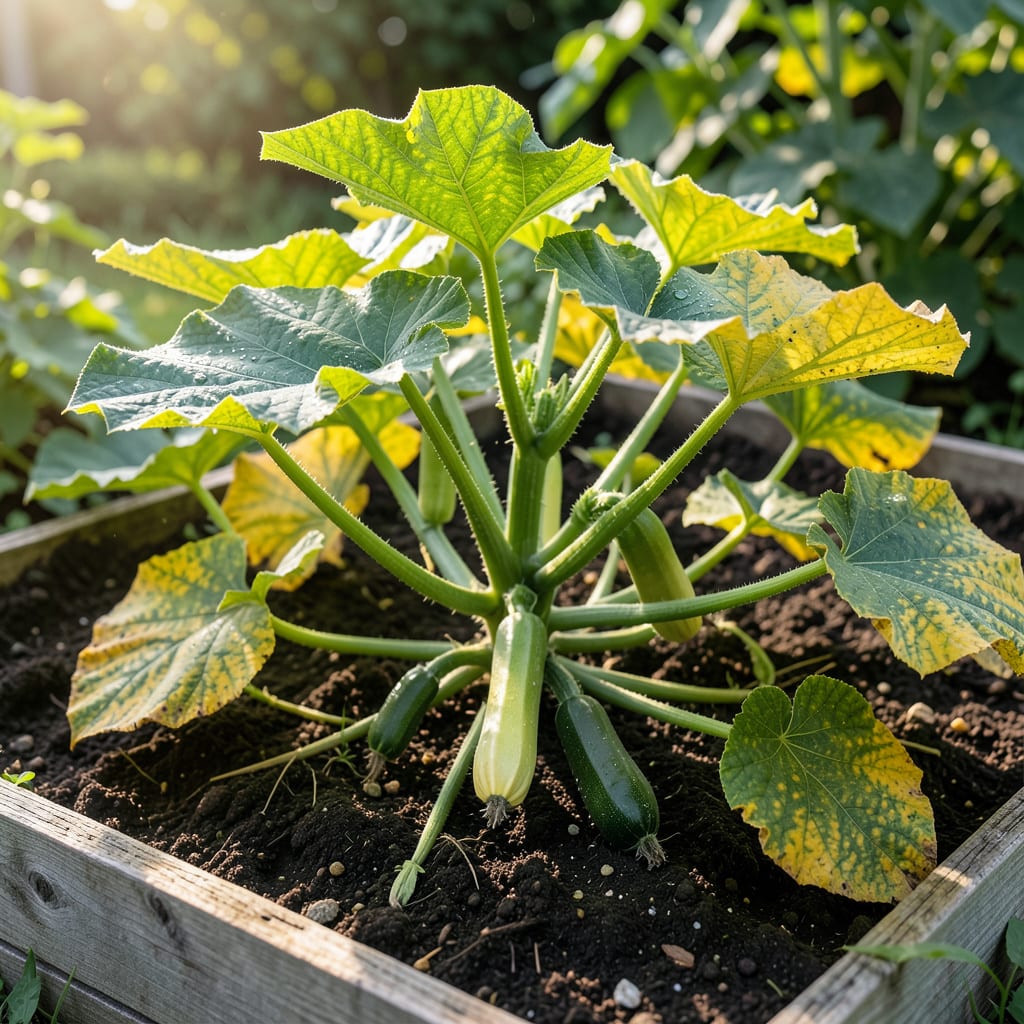
Yellow leaves on zucchini mean the plant is crying for help. I’ve seen entire crops go from vibrant green to sickly yellow in days, and the fix is usually simpler than you think.
Most cases come down to water—either too much or not enough—or a nitrogen hunger that leaves can’t hide. A quick soil check and a little fertilizer often turn things around faster than you’d expect.
You’ll spot the difference within 3-5 days of the right treatment. The new growth comes back rich and green, and your plants get back to producing those giant, tender zucchinis.
Works for container plants, garden beds, or even the ones struggling in last year’s soil. Here’s how to diagnose and fix it.
Yellowing leaves on your zucchini plants can signal several underlying issues. Here’s a breakdown of the most common causes and the science behind them:
Zucchini plants are heavy feeders, and a lack of essential nutrients often manifests as yellowing leaves. Nitrogen deficiency typically causes uniform yellowing starting with older leaves, as nitrogen is mobile and the plant redistributes it to newer growth. Magnesium deficiency, on the other hand, often appears as yellowing between the veins (interveinal chlorosis) on older leaves, while potassium deficiency may cause yellow edges or spots.
Too much water or poorly draining soil can lead to root rot, which restricts the plant’s ability to absorb nutrients. When roots suffocate, they can’t deliver water and minerals to the leaves, resulting in yellowing. Look for wilting despite wet soil or a foul odor from the roots as telltale signs.
Pests like aphids, spider mites, or squash bugs sap the plant’s vitality by feeding on its juices. Aphids, for instance, excrete a sticky substance called honeydew that can lead to sooty mold, further stressing the plant. Spider mites cause stippling or mottled yellowing on the upper leaf surfaces. Inspect the undersides of leaves for tiny insects or webbing.
Diseases like powdery mildew or bacterial leaf spot can turn leaves yellow. Powdery mildew appears as a white, powdery coating on the leaves, while bacterial leaf spot causes small, yellow-haloed lesions. These pathogens thrive in humid conditions and can spread rapidly if not addressed.
Extreme heat, cold snaps, or sudden temperature fluctuations can stress zucchini plants, leading to yellowing leaves. Heat stress often causes leaf scorch, where edges turn brown and crispy before yellowing. Cold stress, on the other hand, may result in generalized yellowing as the plant struggles to photosynthesize efficiently.
Here’s how to nurse your zucchini plants back to health, depending on the root cause:
Let the soil dry out slightly between waterings. Check moisture by sticking your finger 1-2 inches into the soil—if it’s damp, hold off. Improve drainage by amending heavy soil with compost or creating raised beds. Prevention tip: 💡 Use mulch to retain moisture without waterlogging.
Yellow leaves often signal a lack of nitrogen (lower leaves) or magnesium (interveinal yellowing). Apply a balanced fertilizer or side-dress with compost. For magnesium, sprinkle 1 tablespoon of Epsom salt per gallon of water at the base. Prevention tip: 💡 Test soil annually and enrich with organic matter before planting.
Inspect undersides of leaves for aphids, spider mites, or squash bugs. Blast pests off with water or apply insecticidal soap. For severe cases, use neem oil. Prevention tip: 💡 Encourage beneficial insects like ladybugs with companion plants like marigolds.
Remove infected leaves immediately to prevent spread. Treat with copper-based fungicides or a baking soda spray (1 tsp baking soda + 1 quart water + a few drops of soap). Prevention tip: 💡 Space plants properly for airflow and avoid overhead watering.
Shield plants with shade cloth during peak afternoon heat. Ensure they receive 6-8 hours of morning sun. Prevention tip: 💡 Harden off seedlings gradually before transplanting outdoors.
Act quickly at the first sign of yellowing, and your zucchini will reward you with lush, green foliage and a bountiful harvest!
Severely yellowed leaves won’t recover, but new growth will be green with proper care. Focus on fixing the underlying issue to support healthy foliage.
Water deeply 1-2 times per week, allowing the top 1-2 inches of soil to dry between waterings. Adjust based on weather and soil drainage.
A balanced 10-10-10 fertilizer works for general health. For nitrogen deficiency, use a higher-nitrogen formula like 20-10-10.
Yes, prune yellow leaves to redirect energy to healthy growth. Use clean shears and remove leaves at the base to prevent disease spread.
