
Beautiful Plants For Your Interior
Beautiful Plants For Your Interior
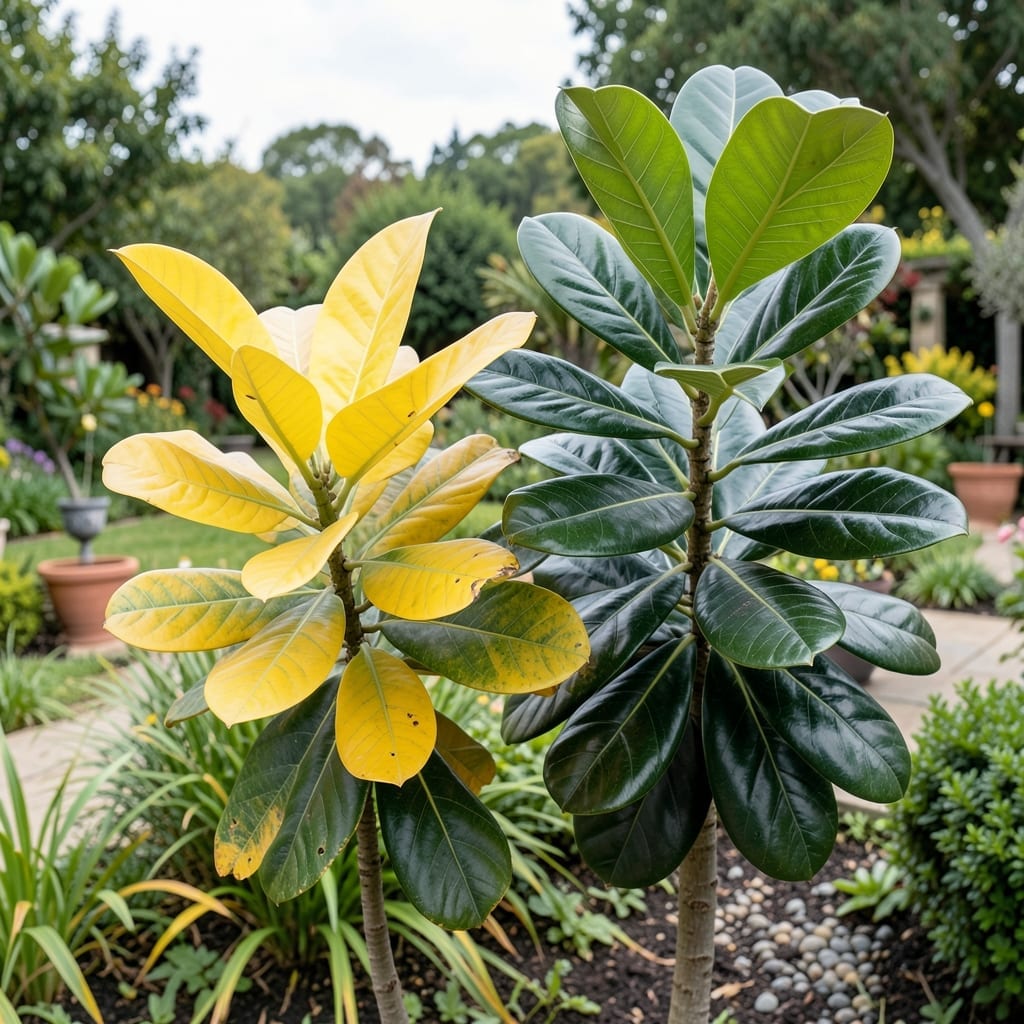
Yellow leaves on your rubber plant aren’t a death sentence. I’ve nursed dozens back to health with just light and water tweaks.
Most often, it’s too much love—overwatering or sudden light changes. The fix starts with checking the soil: if it’s soggy two inches down, you’re drowning the roots. Let it dry between drinks.
Adjust the light next. These plants thrive in bright, indirect spots. Too little and they pale; too much and they scorch. A east-facing window is usually spot-on.
With these changes, you’ll see new dark green growth within weeks. Patience and consistency turn the tide every time.
Yellow leaves on your rubber plant (Ficus elastica) are a distress signal, often tied to environmental or care imbalances. Below are the most common causes, explained with actionable insights to help you diagnose and fix the issue.
Rubber plants despise soggy roots. Overwatering suffocates the roots, preventing oxygen uptake and leading to root rot. This stress manifests as yellowing leaves, often starting with the lower foliage. Check the soil: If it feels damp 2–3 inches down or smells musty, you’re overwatering. Ensure your pot has drainage holes and use a well-draining potting mix with perlite or sand.
Too little light causes chlorosis (yellowing) as the plant struggles to produce chlorophyll. Rubber plants thrive in bright, indirect light. Direct sunlight, however, can scorch leaves, leading to yellow or brown patches. Solution: Place your plant near an east- or north-facing window, or use a sheer curtain to filter harsh rays.
Rubber plants prefer stable temperatures between 60–75°F (15–24°C). Sudden drops, cold drafts (e.g., near AC vents), or heat sources (like radiators) can shock the plant, triggering leaf yellowing. Fix: Keep your plant away from drafty windows, doors, or vents, and avoid placing it near appliances that emit heat.
A lack of essential nutrients—particularly nitrogen, magnesium, or iron—can cause leaves to turn yellow. Nitrogen deficiency often yellows older leaves first, while magnesium or iron shortages may create interveinal yellowing (green veins with yellow tissue). Remedy: Use a balanced, water-soluble fertilizer (e.g., 10-10-10) every 4–6 weeks during the growing season, and consider a magnesium supplement like Epsom salt if needed.
Sap-sucking pests like spider mites, mealybugs, or scale can weaken your rubber plant, leading to yellowing leaves. Inspect the undersides of leaves and stems for webbing, cottony clusters, or sticky residue. Action: Wipe leaves with a damp cloth or use insecticidal soap to eliminate pests. Isolate the plant to prevent spreading.
Reviving your rubber plant starts with pinpointing the issue and applying the right fix. Below are targeted solutions for the most common causes of yellowing leaves, along with prevention tips to keep your plant thriving.
If soggy soil is the culprit, stop watering immediately and let the top 1–2 inches of soil dry out. Check the roots for rot—trim any mushy, dark roots with clean scissors and repot in fresh, well-draining soil. Use a pot with drainage holes to prevent future waterlogging. Prevention tip: Water only when the soil feels dry to the touch, and always empty the saucer after watering.
Move your rubber plant to a brighter spot with indirect sunlight, such as near an east- or north-facing window. Avoid harsh direct light, which can scorch leaves. Rotate the pot quarterly to ensure even growth. Prevention tip: Dust the leaves monthly with a damp cloth to maximize light absorption.
Yellow leaves, especially on older growth, may signal a lack of nutrients. Use a balanced liquid fertilizer (10-10-10) diluted to half strength, applied every 4–6 weeks during spring and summer. Avoid fertilizing in winter when growth slows. Prevention tip: Repot every 2–3 years with fresh potting mix to replenish nutrients.
Keep your rubber plant in a room with steady temperatures between 60–75°F (15–24°C). Avoid drafts from AC units, heaters, or open windows. If cold drafts are unavoidable, move the plant away from the source. Prevention tip: Group plants together to create a stable microclimate.
Wipe leaves with a damp cloth or neem oil solution to remove spider mites, mealybugs, or scale. For severe cases, use insecticidal soap, but test on a small area first. Isolate the plant to prevent pests from spreading. Prevention tip: Inspect leaves weekly and keep humidity levels moderate to deter pests.
Water only when the top 1-2 inches of soil are dry. Typically, this means every 1-2 weeks in summer and less in winter. Overwatering is the most common cause of yellow leaves.
No, once leaves turn yellow they won’t regain their green color. Focus on fixing the underlying issue to prevent new leaves from yellowing. Remove the affected leaves to redirect energy to healthy growth.
Place it in bright, indirect light like an east-facing window. Too little light causes yellowing, while direct sun can scorch the leaves. Rotate the pot occasionally for even growth.
Misting isn’t necessary and can encourage fungal growth. Instead, maintain 40-50% humidity or use a pebble tray with water to create a humid microclimate around the plant.