
Beautiful Plants For Your Interior
Beautiful Plants For Your Interior
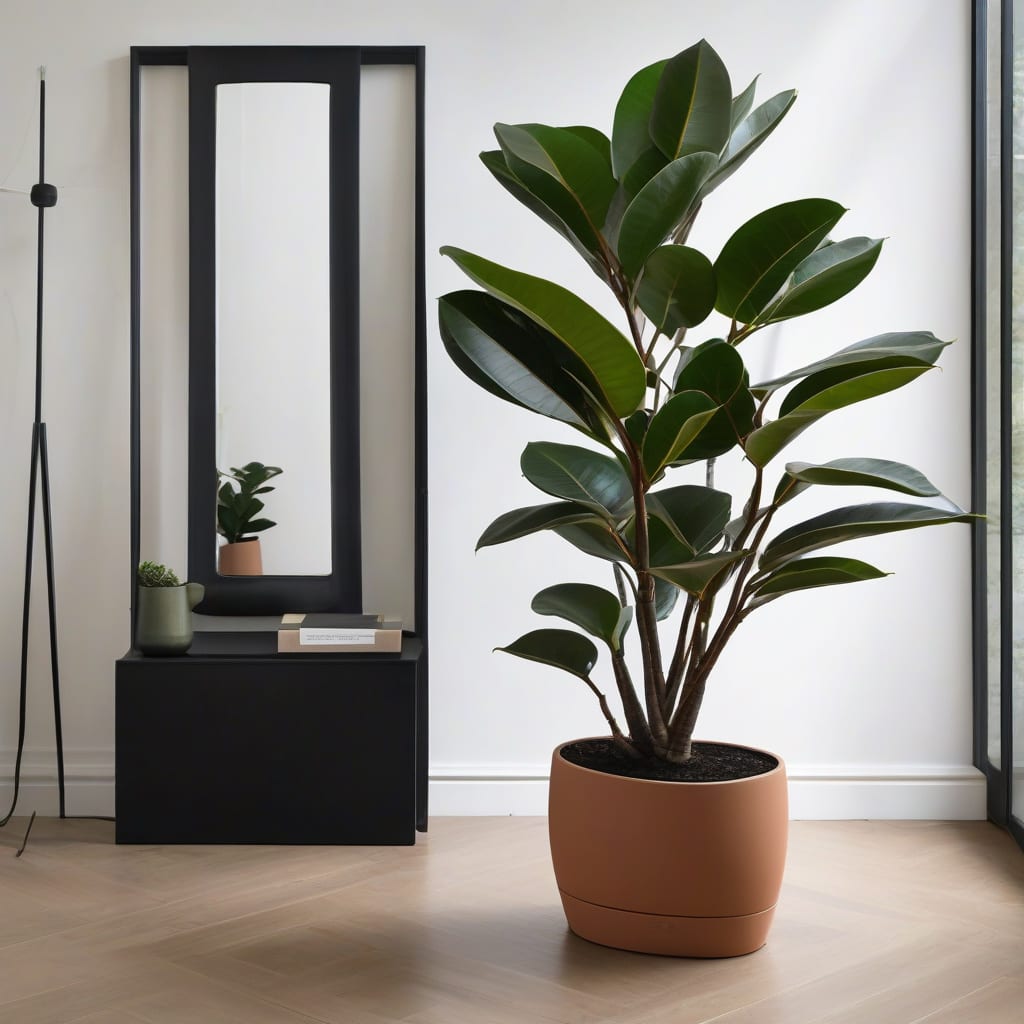
Rubber trees 🌳 can become stunning indoor focal points, but understanding their growth potential is crucial for proper care. In ideal conditions, they can grow quite tall, but indoor spaces present unique challenges.
Let’s explore the factors that influence a Rubber Tree‘s height indoors and what you can expect in terms of maximum growth. With the right conditions and care, you can help your Rubber Tree thrive in your indoor space.


Rubber trees can grow quite tall indoors, but their height is influenced by several key factors. Understanding these factors is crucial for managing their growth and keeping them healthy.
The amount of light your Rubber Tree receives is one of the most critical factors affecting its height. Rubber Trees prefer bright, indirect light, and the amount of light directly impacts their growth rate and maximum height.
The quality of care also plays a significant role in determining your Rubber Tree’s height. Proper watering techniques, fertilization, and pruning practices all contribute to the overall health and growth of the plant.
Watering consistency is particularly important. Rubber Trees prefer consistent moisture but can’t tolerate waterlogging. Overwatering can lead to root rot, while underwatering can cause stress and slow growth.
The container size is another crucial factor. A larger pot provides more room for the roots to grow, which can support a taller plant. However, it’s essential to balance pot size with the plant’s current root system to avoid over-potting.
Soil quality is equally important. A well-draining potting mix is essential to prevent water from accumulating in the soil and causing root problems. A mix that retains some moisture but drains excess water is ideal for Rubber Trees 🌿.
In addition to these factors, temperature and humidity also impact Rubber Tree growth. They thrive in warm, humid environments, typically between 65°F to 75°F (18°C to 24°C). Maintaining a consistent temperature and providing adequate humidity can support healthy growth and maximize height potential.
By understanding and managing these factors, you can create an optimal environment for your Rubber Tree to grow tall and thrive indoors. Regular monitoring and adjustments to these factors will help you achieve the best possible growth for your plant 🌳.
It’s also worth noting that pruning plays a crucial role in managing the height of your Rubber Tree. Regular pruning can help control the plant’s height while promoting a fuller, healthier appearance.
Pruning techniques can vary depending on your desired outcome. Whether you’re looking to maintain a certain height or encourage bushier growth, understanding how to prune effectively is key to managing your Rubber Tree’s size.
The maximum height of a Rubber Tree indoors can vary significantly based on these factors. While they have the potential to grow quite tall, proper care and management are essential to achieving their full height potential.
By focusing on the factors that influence height and implementing proper care techniques, you can help your Rubber Tree reach its maximum potential indoors.
Rubber trees can grow quite tall indoors, but managing their height is crucial for maintaining a desirable shape and promoting healthy growth 🌱.
Pruning is an essential technique for controlling the height of your Rubber Tree. By pruning regularly, you can maintain a compact shape and encourage fuller growth. Pruning also helps remove any dead or damaged leaves, which can improve the overall appearance of the plant.
Look for branches that are growing too tall or are damaged. Identify the cutting points just above a leaf node.
Using sharp, clean pruning tools, make cuts just above a leaf node at a 45-degree angle. This encourages new growth and helps the plant heal quickly.
After pruning, monitor your Rubber Tree’s response and adjust your pruning schedule as needed. Regular pruning helps maintain the desired height and shape 🌿.
In addition to pruning, training your Rubber Tree can help manage its height and promote a more balanced structure. You can use stakes or trellises to support the plant as it grows, guiding it into a more upright or bushy shape.
Regular maintenance is key to keeping your Rubber Tree healthy and well-shaped. By combining pruning and training techniques, you can effectively manage the height of your plant and ensure it remains a beautiful addition to your indoor space 🌳.
It’s also important to consider the overall health of your Rubber Tree when managing its height. A healthy plant is more likely to grow well and respond positively to pruning and training.
By following these practical techniques, you can enjoy a thriving Rubber Tree that fits perfectly in your home.
Rubber Trees can grow quite tall indoors, typically reaching heights between 6 to 8 feet when properly cared for. Their growth rate and maximum height depend on various factors, including light exposure, watering consistency, and container size.
Rubber Trees can grow up to 8 feet tall indoors with proper care, but average heights range from 6 to 7 feet. Regular pruning helps maintain desired height.
The growth rate of Rubber Trees indoors is generally slow to moderate. They can grow about 1-2 feet per year under optimal conditions. Factors such as light intensity, watering frequency, and fertilization play crucial roles in determining their growth rate.
Light exposure significantly impacts the height of Rubber Trees. They thrive in bright, indirect light, which supports healthy growth. Insufficient light can lead to leggy growth, while too much direct sunlight can cause leaf scorch 🌞.
In comparison to their outdoor growth potential, Rubber Trees grown indoors typically reach a smaller maximum height. Outdoors, in their natural habitat, they can grow much taller, sometimes reaching heights of over 100 feet. However, indoor conditions limit their growth, making 6-8 feet a more realistic maximum height 🌳.
Understanding these growth expectations helps in planning the care and placement of your Rubber Tree. By providing optimal conditions and regular maintenance, you can help your Rubber Tree reach its full potential height indoors 🌿.
