
Beautiful Plants For Your Interior
Beautiful Plants For Your Interior
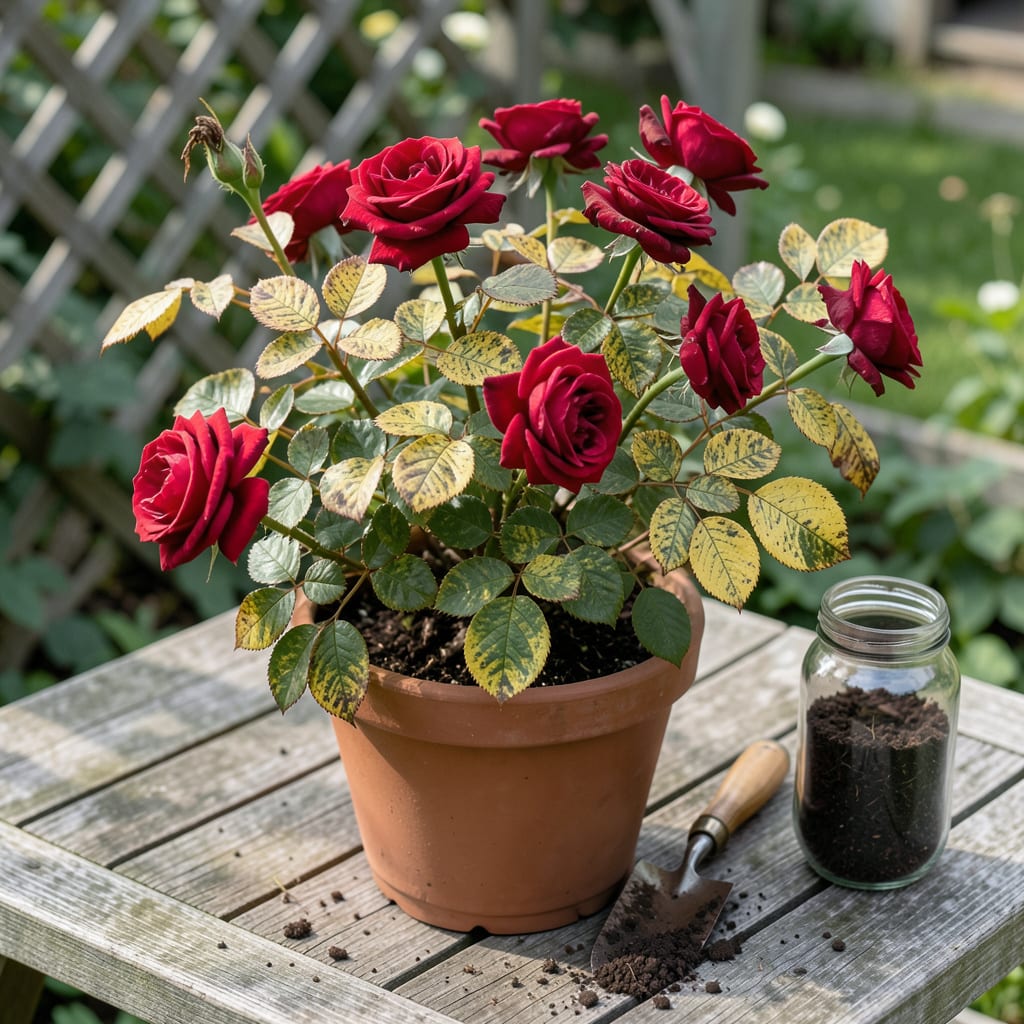
Yellow leaves on your rose bush aren’t just unsightly—they’re a distress signal. I’ve seen this happen mid-season when everything seemed fine, and it always traces back to a few common culprits you can fix.
Sometimes it’s too much water, sometimes not enough nutrients, or occasionally an uninvited pest throwing a party on your plants. The good news? Each cause has a simple solution once you identify it.
You’ll start noticing improvements within 1-2 weeks of addressing the root issue. The key is acting fast before the problem spreads to healthy foliage.
Works for all rose varieties, from climbers to shrubs. Let’s diagnose what’s really going on.
Yellowing leaves on your rose bush can signal several underlying issues, each with distinct causes. Here’s a breakdown of the most common culprits:
Roses require a balanced diet of nitrogen, phosphorus, potassium, magnesium, and iron. A lack of nitrogen often causes uniform yellowing of older leaves, while magnesium deficiency (common in sandy soils) leads to yellowing between leaf veins, a condition called interveinal chlorosis. Iron deficiency also triggers chlorosis but typically affects younger leaves first. A soil test can pinpoint the exact imbalance, allowing you to amend with the right fertilizer (e.g., Epsom salt for magnesium or chelated iron for iron shortages).
Too much water suffocates roots, preventing them from absorbing oxygen and nutrients. This stress manifests as yellowing leaves, often accompanied by wilting or mushy stems. Roses thrive in well-draining soil—if your garden retains water, amend it with compost or perlite. Ensure pots have drainage holes, and water only when the top inch of soil feels dry.
Sap-sucking pests like aphids, spider mites, and whiteflies drain essential fluids from leaves, causing yellowing and stippling (tiny dots). Check the undersides of leaves for clusters of pests or webbing. A strong blast of water or insecticidal soap can dislodge minor infestations, while neem oil offers a natural preventive measure.
Black spot and powdery mildew are common fungal diseases that stress roses, leading to yellow leaves with dark spots or white powdery coatings. These thrive in humid, poorly ventilated conditions. Improve airflow by pruning dense foliage, water at the base (not overhead), and apply fungicides like copper or sulfur at the first sign of infection.
Extreme temperatures, sudden frost, or excessive heat can shock roses, triggering leaf yellowing. Protect plants with mulch to insulate roots, and provide shade during heatwaves. If transplant shock is the issue, give the bush time to acclimate and avoid fertilizing until it recovers.
Once you’ve identified the cause, these targeted fixes can restore your rose bush’s vibrant green leaves. Address each issue promptly to prevent long-term damage.
If the problem is a lack of nutrients, apply a balanced, water-soluble fertilizer (like 10-10-10 or 20-20-20) every 4–6 weeks during the growing season. For nitrogen deficiency, use a high-nitrogen formula. Magnesium shortages? Epsom salt (1 tablespoon per gallon of water) sprayed on leaves works wonders. Prevention tip: 💡 Test soil annually and amend with compost to maintain nutrient balance.
Let the soil dry slightly between waterings—stick your finger 2 inches deep; if dry, it’s time to water. For drainage issues, mix in perlite or sand to loosen compacted soil. If your roses are in pots, ensure containers have drainage holes. Prevention tip: 🌡️ Water early in the day to reduce evaporation and fungal risks.
For black spot or powdery mildew, remove infected leaves and apply a fungicide (copper-based or neem oil). Improve air circulation by pruning crowded branches. Prevention tip: ✨ Avoid overhead watering—use a soaker hose to keep foliage dry.
Blast aphids or spider mites off with a strong jet of water, then apply insecticidal soap or horticultural oil. For stubborn pests, introduce beneficial insects like ladybugs. Prevention tip: 🎯 Inspect leaves weekly, especially undersides, to catch pests early.
Protect leaves from harsh afternoon sun with shade cloth or relocate potted roses. If cold snaps are the issue, mulch heavily to insulate roots. Prevention tip: 🌿 Choose rose varieties suited to your climate for long-term resilience.
Water when the top 2 inches of soil feel dry, typically 2-3 times per week in hot weather. Overwatering is worse than underwatering for roses. Always water at the base, not the leaves.
Once leaves turn yellow, they won’t regain their green color. But fixing the underlying issue will help new growth stay healthy. Remove severely yellowed leaves to redirect energy.
Check undersides of leaves for pests, test soil moisture with your finger, and look for spots or patterns. A soil test kit can confirm nutrient deficiencies in minutes.
Remove only severely damaged leaves to prevent disease spread. If just a few leaves are yellow, address the root cause first. Prune in the morning when plants are hydrated.
