
Beautiful Plants For Your Interior
Beautiful Plants For Your Interior
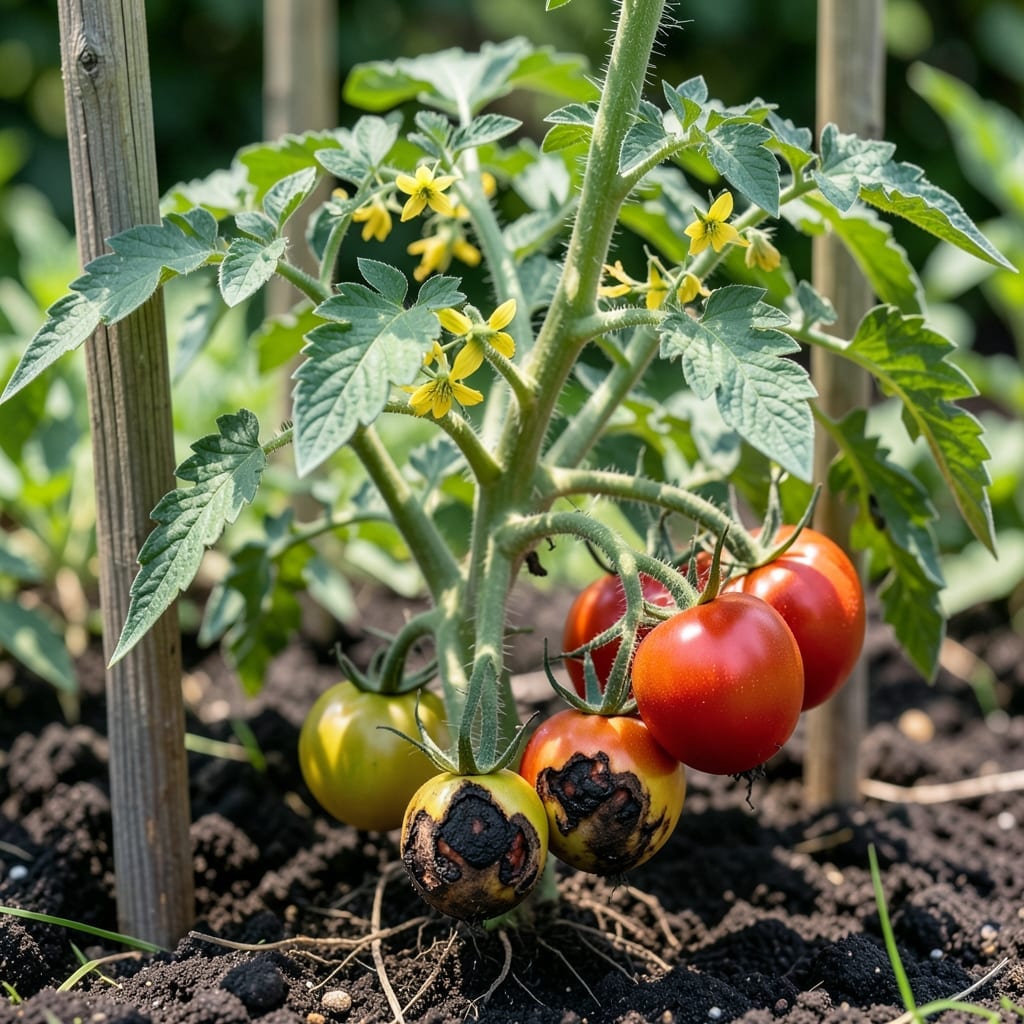
Nothing’s more frustrating than watching your tomatoes develop that telltale brown, sunken spot on the bottom. I’ve lost entire crops to this issue before finally figuring out what was going wrong.
Blossom end rot strikes when calcium can’t reach the fruit, usually because of uneven watering or poor soil. It’s not a disease—it’s your plant’s way of saying it’s stressed and missing something vital.
Fix it with consistent moisture, a calcium boost like crushed eggshells, and well-draining soil. The change can be dramatic: healthy fruits within 2-3 weeks of adjusting your approach.
Prevent it next season by testing your soil early and keeping a regular watering schedule. Your tomatoes will thank you with firm, rot-free harvests all summer long.
Tomatoes rotting at the bottom, known as blossom end rot (BER), is a common and frustrating issue for gardeners. This physiological disorder isn’t caused by pests or diseases but rather by environmental and cultural factors that disrupt the plant’s ability to absorb and distribute calcium. Below are the primary causes, explained scientifically:
The most direct cause of blossom end rot is a localized calcium deficiency in the developing fruit. Calcium is essential for cell wall stability, and when the fruit’s distal (bottom) end lacks it, tissues collapse and rot. This deficiency often occurs even when soil calcium levels are adequate, due to uneven water supply or poor root uptake.
Fluctuations in soil moisture—drought followed by overwatering—disrupt calcium transport. Calcium moves through the plant via transpiration (water evaporation from leaves), so inconsistent watering starves the fruit of this nutrient. Mulching and drip irrigation can stabilize moisture levels.
High heat or cold snaps can stress the plant and inhibit calcium absorption. Temperatures above 85°F (29°C) or below 50°F (10°C) slow down root activity and nutrient uptake, making blossom end rot more likely.
During periods of vigorously fast growth (e.g., after heavy fertilization), the plant may prioritize foliage over fruit, leaving the developing tomatoes calcium-deprived. Balance nitrogen levels to avoid excessive leafy growth at the expense of fruit health.
High soil salinity, compacted roots, or low pH (acidic soil) can all hinder calcium availability. Test your soil: ideal pH for tomatoes is 6.0–6.8. Amend with lime if necessary, but avoid over-application.
Stopping and preventing blossom end rot is mostly about steady calcium supply and ideal growing conditions. Below are the most effective fixes, mapped to each common cause.
💡 Prevention tip: Test your soil before planting. Aim for a pH between 6.0 and 6.8 for optimal calcium availability.
💡 Prevention tip: Water in the early morning to minimize evaporation and fungal risks.
💡 Prevention tip: Feed plants consistently but moderately—follow package instructions and don’t double up!
💡 Prevention tip: Plant tomatoes in a sheltered spot if your climate has extreme temperature swings.
No, blossom end rot isn’t caused by a pathogen, so it won’t spread between plants. Each affected tomato develops the issue independently due to calcium imbalance.
Cut off the rotten portion—the rest is safe to eat if the flesh is firm. The unaffected part retains normal flavor and nutrition.
With consistent watering and calcium supplements, new fruits should show improvement within 1-2 weeks. Existing affected tomatoes won’t recover, but future ones will.
All types can be affected, but large varieties like beefsteak are more prone. Cherry tomatoes often resist better due to their size.