
Beautiful Plants For Your Interior
Beautiful Plants For Your Interior
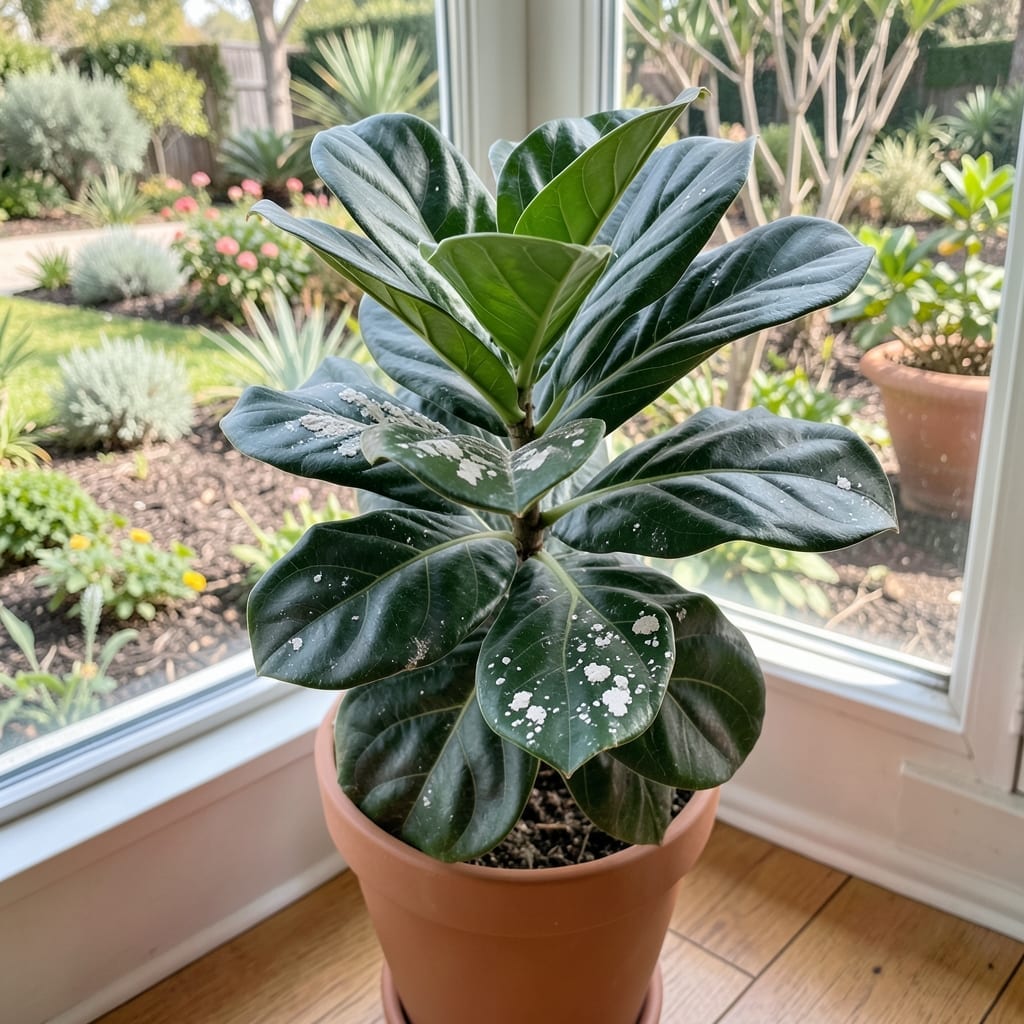
Those white spots on your fiddle leaf fig aren’t just ugly—they’re a cry for help. I’ve seen this exact pattern on my own plants, and the good news is it’s usually fixable with a few simple changes.
Most cases boil down to three culprits: pests hiding under leaves, fungal infections spreading in damp conditions, or stress from sudden changes in light or temperature. The key is catching it early before it spreads.
Natural remedies like neem oil, improved airflow, and adjusted watering routines can turn things around fast. My largest fig bounced back within 2 weeks of fixing the issue.
Prevention comes down to consistent care and quick action when you spot the first white speck. Here’s how to diagnose and treat it properly.
White spots on your fiddle leaf fig can be alarming, but understanding the root causes helps you address them effectively. Here are the most common culprits:
Fungal issues like powdery mildew or leaf spot diseases often manifest as white, powdery, or circular spots. These thrive in high humidity and poor air circulation. Overwatering or wet foliage creates the perfect breeding ground for spores, which spread rapidly across leaves.
Tiny pests such as mealybugs, scale insects, or spider mites can leave cottony white residue or speckled spots. Mealybugs, in particular, excrete a white, waxy substance as they feed on plant sap, while scale insects appear as small, hard bumps. Spider mites may cause stippling or webbing alongside discoloration.
If your tap water is high in calcium, magnesium, or other minerals, it can leave chalky white deposits on leaves after evaporation. This is especially common if you mist your plant frequently or use hard water for irrigation.
Direct, intense sunlight can scorch the leaves, leading to bleached or white patches. Fiddle leaf figs prefer bright, indirect light, and prolonged exposure to harsh rays—especially through windows—can damage the leaf tissue, causing discoloration.
Foliar sprays, fertilizers, or even household cleaners can leave behind white residue if not properly diluted or rinsed off. Always test sprays on a small area first and wipe leaves gently to prevent buildup.
Once you’ve identified the cause, these targeted fixes will help restore your fiddle leaf fig’s glossy green leaves. Address each issue promptly to prevent lasting damage.
Consistency is key—monitor your plant closely after treatment and adjust care as needed. Healthy fiddle leaf figs bounce back quickly with the right attention!
Yes, if caused by pests or fungi. Isolate the affected plant immediately to prevent infestation or infection from spreading to nearby plants.
Pests like mealybugs leave cottony residue, while fungal spots appear powdery or circular. Use a magnifying glass to check for tiny insects under leaves.
Existing spots won’t vanish, but new growth will be healthy. Trim severely damaged leaves to encourage fresh, spot-free foliage.
Minerals in tap water leave chalky deposits when they evaporate. Switch to filtered or distilled water to prevent buildup.