
Beautiful Plants For Your Interior
Beautiful Plants For Your Interior
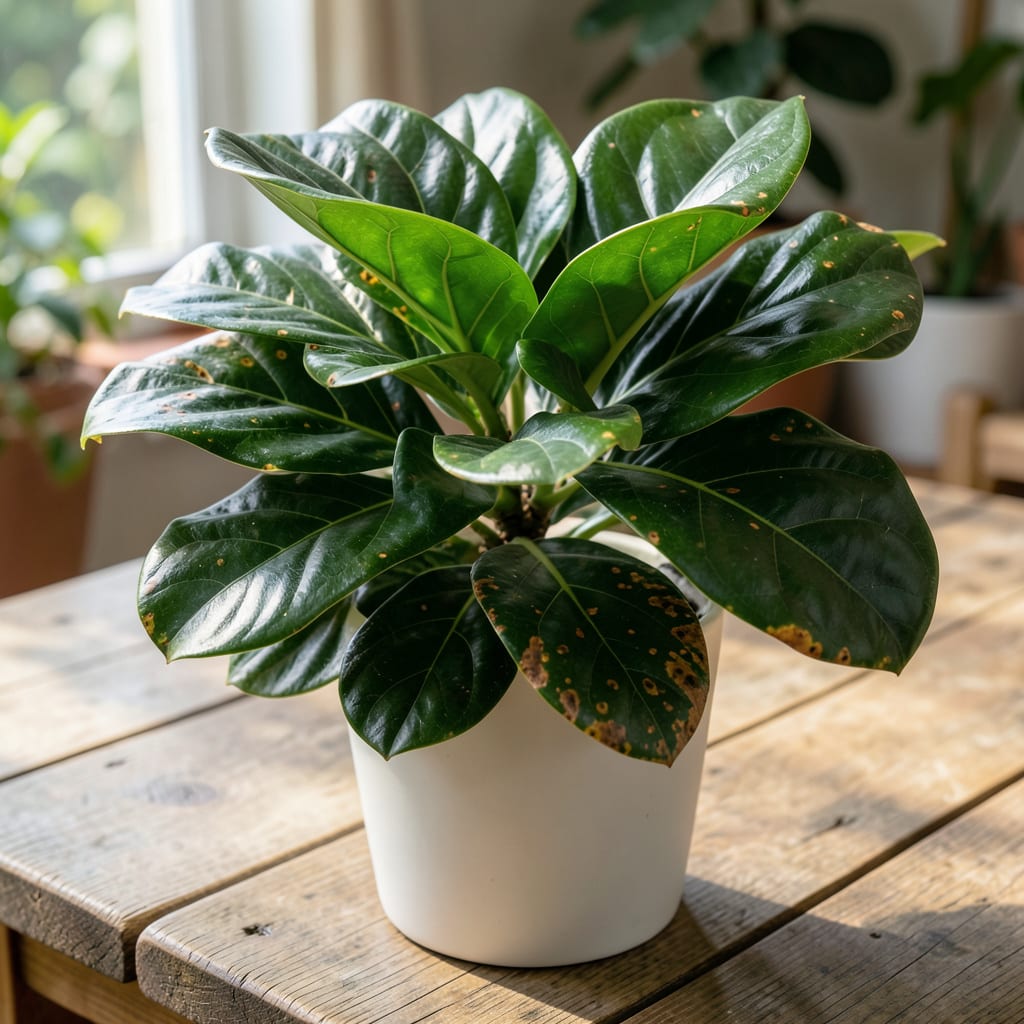
Those brown spots on your new fiddle leaf fig leaves aren’t just unsightly—they’re a cry for help. I’ve rescued more than a few from this exact issue, and it always starts with spotting the problem early.
Overwatering, dry air, or even a sneaky pest can trigger this. The good news? Most cases are fixable with small adjustments to your care routine. I’ve seen plants bounce back in 2-3 weeks once the root cause is addressed.
You’ll learn to decode the spots—dark edges mean one thing, crispy centers another. Each clue points to a different solution, from tweaking your watering to upping humidity.
No green thumb required. Just patience and a willingness to play plant detective for a bit.
Brown spots on new fiddle leaf fig leaves are a red flag, often signaling environmental stress or infection. Here’s why it happens:
Root asphyxiation from waterlogged soil restricts oxygen uptake, leading to Edema—a condition where cells rupture, causing brown, blister-like spots. Fiddle leaf figs (Ficus lyrata) thrive in moist but well-draining soil. Soggy roots also invite Phytophthora or Pythium fungi, which manifest as dark, spreading lesions.
These tropical natives require 40-65% humidity. Dry air causes leaf margin necrosis—brown, crispy edges or spots. Direct sunlight, especially in dry climates, can scorch new growth, leaving bleached or tan patches that darken over time. Even indoor lighting too close to leaves can trigger photooxidative stress.
Alternaria or Myrothecium fungi create circular, concentric brown spots, often with yellow halos. Bacterial leaf spot (Xanthomonas or Pseudomonas) appears as water-soaked, irregular brown patches that may ooze. These pathogens thrive in high humidity + poor airflow.
Sudden temperature drops below 60°F (15°C) or cold drafts (e.g., near AC vents) disrupt cellular function, causing localized necrosis. Hot, dry air from heaters can also stress new leaves, leading to scorched spots.
Over-fertilizing, especially with high-salt formulas, leads to leaf tip burn or interveinal brown spotting. Conversely, calcium or magnesium deficiencies may cause necrotic speckling on new growth. Always flush soil every 2-3 months to prevent salt buildup.
When your fiddle leaf fig’s new leaves develop brown spots, quick action can save your plant. Below are targeted fixes for each common cause, along with prevention tips to keep your plant thriving.
Fix: Let the soil dry out completely between waterings. If the roots are soggy, repot the plant in fresh, well-draining soil and a pot with drainage holes. Trim any black, mushy roots to prevent rot.
Prevention: Use a moisture meter to check soil dampness before watering. Always empty the saucer after watering to avoid standing water.
Fix: Give your plant a deep watering until water runs out the drainage holes. Increase humidity by misting the leaves or placing a humidifier nearby. Grouping plants together can also boost local humidity.
Prevention: Stick to a consistent watering schedule—check soil moisture weekly. Consider a pebble tray with water to maintain steady humidity.
Fix: Move your fiddle leaf fig to bright, indirect light. If the leaves feel hot or crispy, trim the damaged parts with clean scissors to help the plant focus on new growth.
Prevention: Keep the plant at least 3–5 feet away from windows with harsh afternoon sun. Use sheer curtains to diffuse light if needed.
Fix: Flush the soil with water to remove excess salts from fertilizers. If the plant lacks nutrients, use a balanced, diluted liquid fertilizer (like 3-1-2 NPK) every 4–6 weeks during growing season.
Prevention: Fertilize sparingly—less is often more. Test your soil occasionally to monitor nutrient levels.
Fix: Wipe down leaves with a damp cloth to remove pests like spider mites or scale. Apply neem oil or insecticidal soap weekly until the infestation clears.
Prevention: Inspect new plants before bringing them home. Regularly dust leaves to discourage pests from settling.
💡 Pro Tip: Always sterilize your pruning tools with rubbing alcohol before and after use to prevent spreading disease or pests.
Water when the top 2-3 inches of soil feel dry. Typically every 7-10 days, but adjust based on humidity and light. Overwatering is the most common cause of brown spots.
Yes! These tropical plants need 40-65% humidity. Dry air causes crispy brown edges or spots. Use a humidifier or pebble tray to boost moisture.
Only if over 50% of the leaf is damaged. Otherwise, leave it—healthy parts still photosynthesize. Always use sterilized tools to prevent spreading disease.
Bright, indirect light is ideal. Avoid direct sun, which can scorch stressed leaves. East-facing windows or filtered light work best during recovery.
