
Beautiful Plants For Your Interior
Beautiful Plants For Your Interior
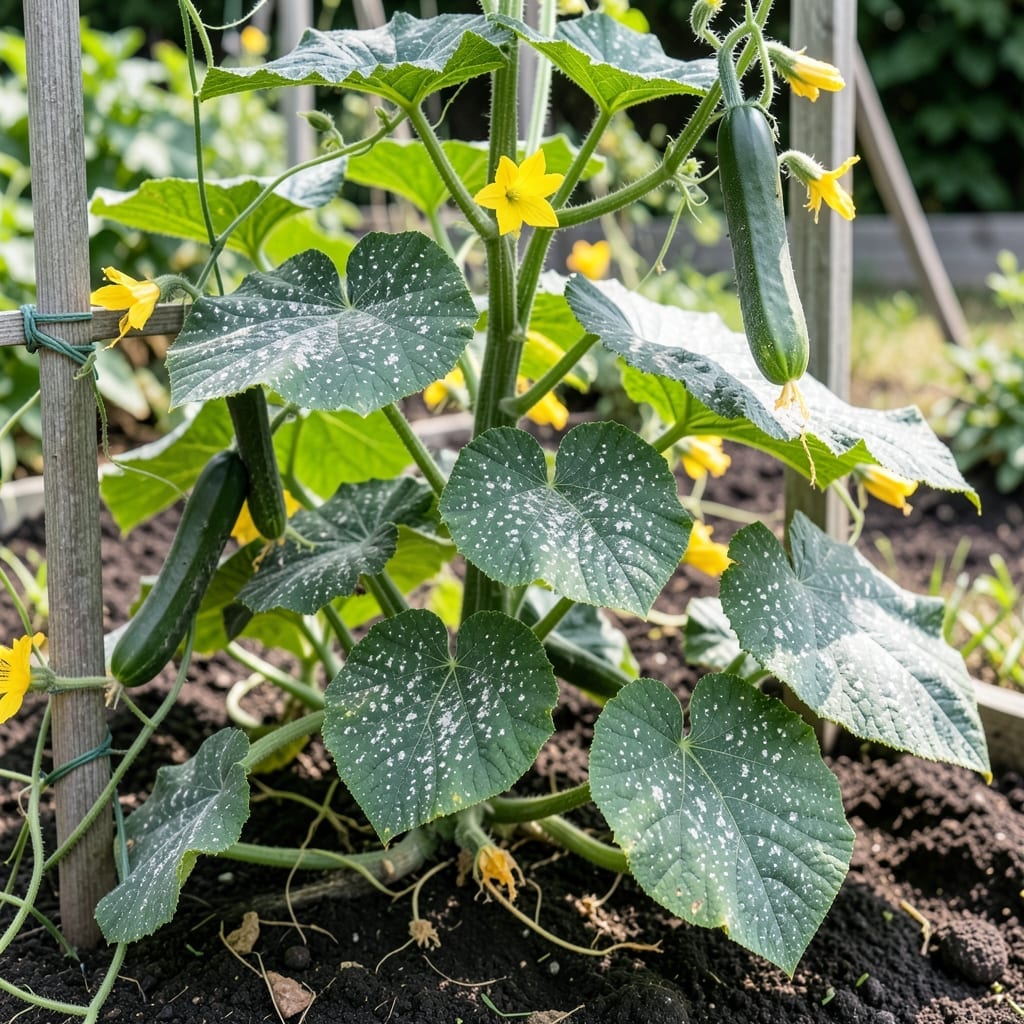
White spots on your cucumber leaves aren’t just ugly—they’re a warning sign. I’ve seen entire vines go from healthy to hopeless in a week when these spots spread unchecked.
Most cases come down to three usual suspects: powdery mildew, spider mites, or downy mildew. Each leaves its own signature pattern, and treatment changes based on the culprit. Don’t grab the spray bottle yet—identification comes first.
Organic solutions work surprisingly well if you catch it early. A baking soda mix stopped my last outbreak cold, and the plants bounced back faster than I expected. Prevention is even simpler: airflow, spacing, and consistent watering.
Works for backyard gardens, raised beds, or container cucumbers alike. Here’s how to diagnose and treat it properly.
White spots on cucumber plants often signal underlying issues that disrupt their health. Here are the most common causes, explained simply:
Pathogens like Powdery Mildew (Podosphaera xanthii) or Downy Mildew (Pseudoperonospora cubensis) thrive in humid, poorly ventilated conditions. They form white, powdery or downy patches on leaves, stunting growth by blocking sunlight absorption. High humidity (above 80%) and wet foliage accelerate their spread.
Sap-sucking pests such as whiteflies and spider mites leave behind sticky honeydew, which fosters sooty mold—appearing as white or black spots. Their feeding also weakens the plant, making it more susceptible to secondary infections.
A lack of magnesium or zinc can cause interveinal chlorosis (white or yellow spotting between leaf veins). Magnesium deficiency often appears first on older leaves, while zinc deficiency affects newer growth. Soil pH imbalances (too high or low) may limit nutrient uptake.
Excessive sunlight or sunscald can bleach leaf tissue, creating white patches. Similarly, overwatering or poor drainage leads to root stress, reducing the plant’s ability to absorb nutrients and causing discoloration.
White spots on your cucumber leaves or fruit can often be resolved with targeted, organic solutions. Below are the most effective fixes for each common cause, along with prevention tips to keep your plants healthy long-term.
Fix: Mix 1 tablespoon of baking soda, 1 teaspoon of liquid soap, and 1 gallon of water. Spray this solution on affected leaves every 7–10 days until the spots disappear. For severe cases, use neem oil (follow label instructions).
Prevention: Improve air circulation by spacing plants 18–24 inches apart. Water at the base in the morning to allow foliage to dry quickly. 💡 Pro tip: Plant resistant varieties like ‘Diva’ or ‘Sweet Success’.
Fix: Blast pests off with a strong stream of water. Apply insecticidal soap or a 1:10 mix of rubbing alcohol and water directly to the spots. Introduce beneficial insects like ladybugs.
Prevention: Inspect plants weekly, especially the undersides of leaves. Use row covers early in the season to block pests. 🌡️ Pro tip: Avoid over-fertilizing with nitrogen, which attracts aphids.
Fix: Provide temporary shade using shade cloth (30–50% density) during peak sun hours. Move potted cucumbers to a cooler spot.
Prevention: Harden off seedlings gradually before transplanting. Mulch around plants to retain soil moisture and reduce heat reflection. ✨ Pro tip: Water deeply during dry spells to prevent stress.
Fix: Remove and destroy infected leaves or fruit immediately. Apply copper-based fungicides or a diluted hydrogen peroxide solution (1 part 3% peroxide to 9 parts water) to the remaining plant.
Prevention: Rotate crops yearly and avoid overhead watering. Clean up garden debris in fall to reduce overwintering spores. 🎯 Pro tip: Space plants for good airflow and avoid crowded beds.
Consistency is key—treat at the first sign of spots and stay vigilant with prevention to enjoy a bountiful, spot-free harvest!
Yes, fungal spores and pests can easily jump to nearby plants. Isolate affected cucumbers and treat immediately.
Powdery mildew looks like white dust on leaf surfaces. Spider mites create tiny webs and speckling, often on leaf undersides.
Neem oil is effective against fungal issues and soft-bodied pests like mites. For mineral deficiencies or sunscald, it won’t help.
If the spots are only on leaves, the fruit is fine. Discard any cucumbers with spots or mold. Always wash thoroughly before eating.