
Beautiful Plants For Your Interior
Beautiful Plants For Your Interior
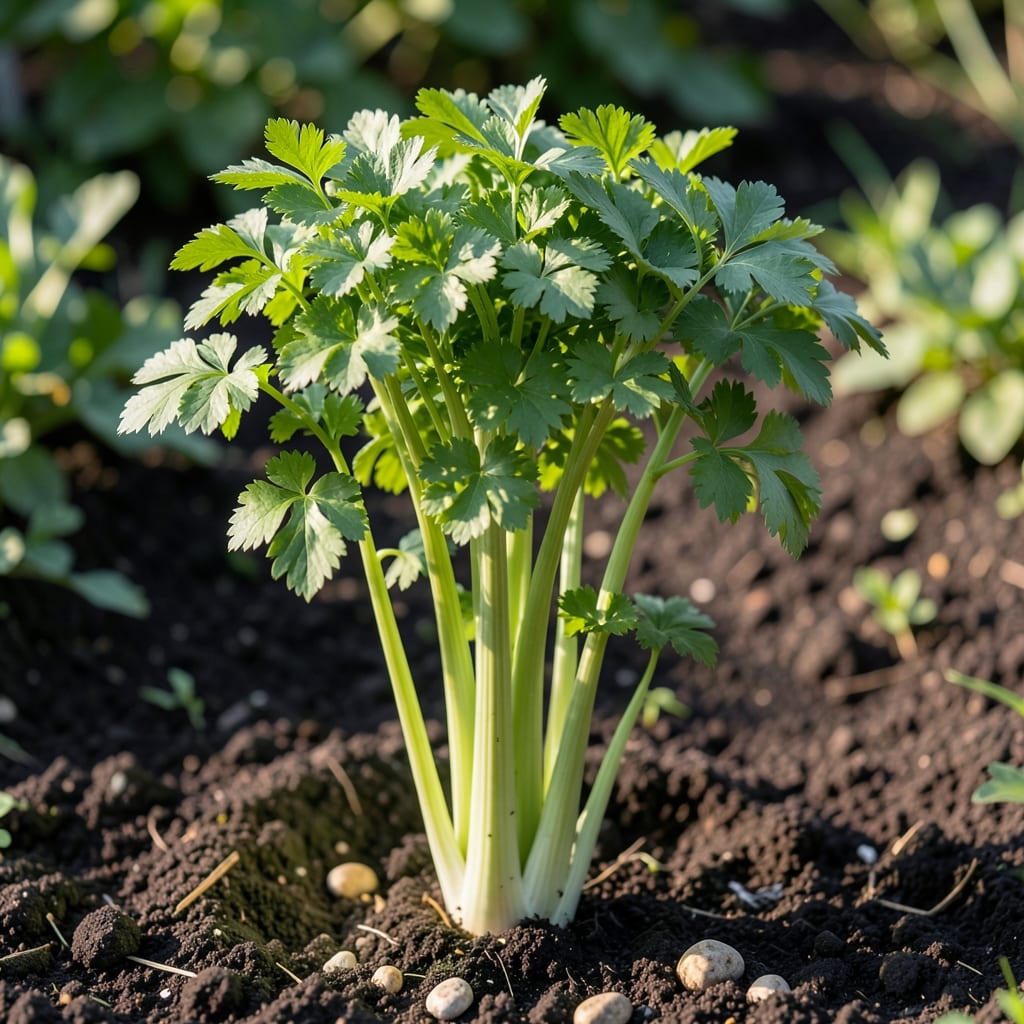
Celery is not a root but a leafy stalk vegetable. It grows above ground, with its edible stalks and leaves belonging to the Apium graveolens plant family.
This classification surprises many because its crisp texture resembles root vegetables like carrots. In reality, celery’s edible portion is a thickened stem that stores water and nutrients. Botanists categorize it as a biennial plant, meaning it completes its life cycle over two years. 🔥
What makes celery unique is its growth habit—unlike true roots, its stalks emerge from the soil surface. The plant’s fibrous structure and high water content distinguish it from underground vegetables. I often explain this to gardeners who expect celery to develop like potatoes or beets.
💡 In This Article
Celery belongs to the Apiaceae family, scientifically named Apium graveolens. Unlike root vegetables that store nutrients underground, celery’s edible portion is a modified stem called a petiole. This thickened stalk connects the leaf blade to the main plant stem, forming the crisp, fibrous structure we consume.
True roots like carrots or beets develop below soil as storage organs. Celery’s stalks grow above ground, with its vascular bundles arranged in a dense, stringy pattern that gives it that characteristic crunch. The plant also produces small white flowers in its second year, a trait absent in root crops. 🔥
Botanists classify celery as a biennial, meaning it produces leaves the first year and flowers the second. Its growth habit is upright, with stalks reaching 12-16 inches tall. The leaves are pinnate, with leaflets arranged on either side of the petiole, another clue it’s not a root.
What most people don’t realize is that celery’s stringiness comes from collagen-like fibers in its vascular system. These fibers are more concentrated than in root vegetables, which have a smoother, more uniform texture. The high water content (95%) in celery stalks also sets it apart from starchy roots. ✨
This classification affects how we grow and harvest celery. While root vegetables are pulled from the soil, celery is cut at the base, leaving the roots in the ground. The plant can even regrow from the base if 1-2 inches of stalk remain attached to the roots.
We eat the thickened stems, called petioles, which connect the leaf blades to the main plant. These are modified above-ground structures, not roots. The stringy fibers you notice are vascular bundles that transport water and nutrients.
Celery grows upright above soil, while true roots like carrots develop underground as storage organs. Celery’s edible portion emerges from the soil surface, and the plant can regrow if 1-2 inches of stalk remain attached to its roots.
Its crisp texture and earthy flavor resemble roots, but this comes from its high 95% water content and dense vascular system. Unlike starchy roots, celery’s fibrous structure gives it that signature crunch.
Yes! If you leave 1-2 inches of the base intact when cutting, the plant can produce new stalks. This works because the growing point remains at the soil level, unlike root vegetables which are entirely removed when harvested.