
Beautiful Plants For Your Interior
Beautiful Plants For Your Interior
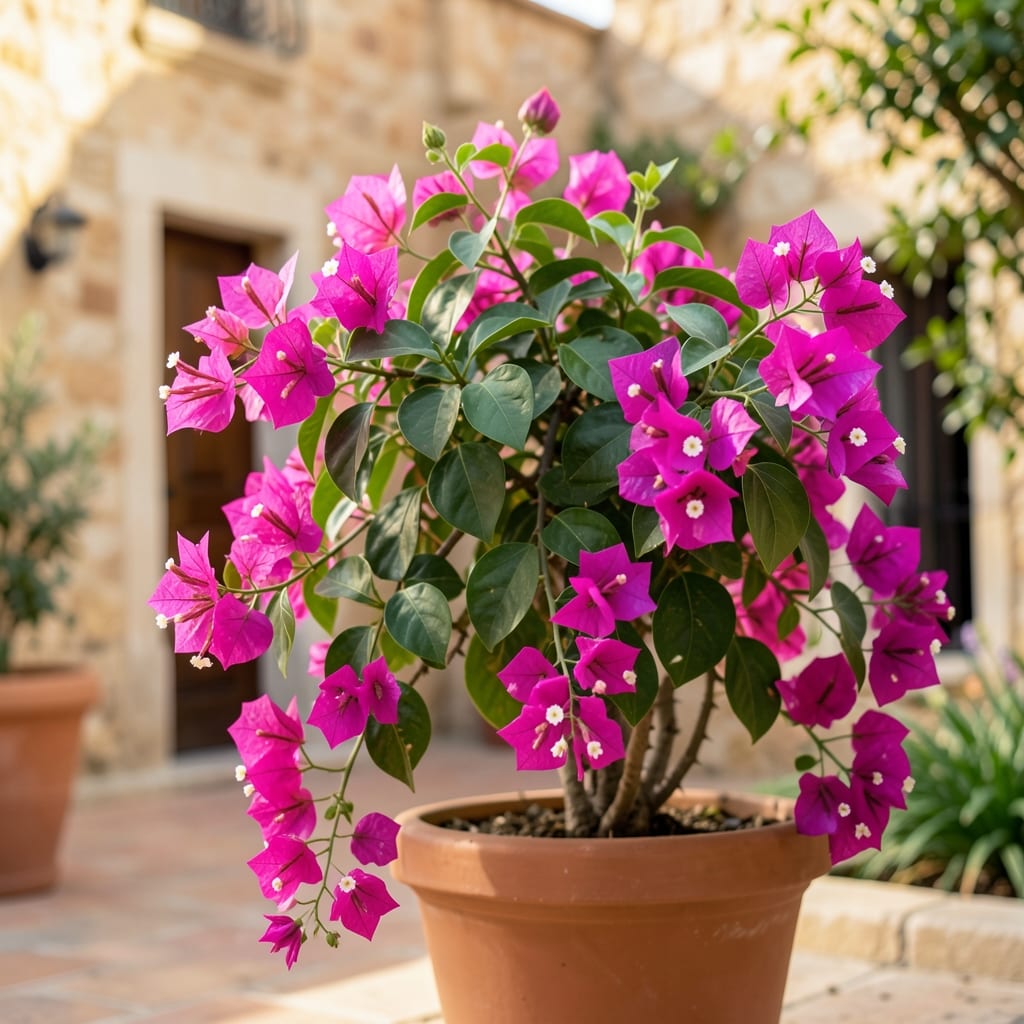
Bougainvillea is pronounced as boo-gun-VIL-ee-uh or boo-gan-VIL-yuh, with the stress on the third syllable. The phonetic spelling is /ˌbuːɡənˈvɪli.ə/ in American English.
I’ve found that many people stumble over this word because it looks complex, but breaking it into four syllables makes it manageable. The French origin of the name often trips up English speakers, as the spelling doesn’t match the sounds. 🌟
Try saying it slowly at first, then speed up as you get comfortable with the rhythm.
💡 In This Article
The word has five syllables that flow together with a distinct rhythm. The first two syllables (“boo-gun”) are unstressed and quick, almost like a setup for the main event. The third syllable (“VIL”) hits hard with emphasis, while the final two (“ee-uh”) soften the landing, creating a melodic rise and fall. ✨
In the International Phonetic Alphabet (IPA), the transcription /ˌbuːɡənˈvɪli.ə/ reveals the nuances. The ˌ before “buː” indicates a secondary stress, while the ˈ before “vɪl” marks the primary stress on the third syllable. The “ə” at the end represents the neutral schwa sound, common in unstressed English syllables. 🔥
Many stumble by placing the stress on the second syllable, turning it into “boo-GAIN-vil-ee-uh”. This misplacement often comes from the French origin of the name, where the stress patterns differ. American English adapts it with a clearer, more pronounced third syllable, making it sound more natural to English speakers. ⚡
Another common mistake is over-articulating the double “n” and “ll”, leading to a clumsy “boo-gain-nil-ee-uh”. However, the correct pronunciation smooths these consonants together. The “gou” sounds like “gun”, and the “ville” resembles “vil”, not “ville” as in French. 💫
To hear it aloud, imagine saying “boo” as in the exclamation, followed by “gun” like the weapon, then “VIL” with force, and ending with a soft “ee-uh”. This breakdown helps train your mouth to produce the word naturally, without the hesitation that often comes with unfamiliar terms. 🌟
The French origin creates confusion since stress patterns differ from English. Gardeners often adapt it to sound more natural in conversation, leading to variations like boo-gun-VIL-yuh or boo-gan-VIL-ee-uh.
The third syllable (VIL) always takes the primary stress in American English. Think of it as the peak of a small hill: boo-gun-VIL-ee-uh.
While understandable, this version over-articulates the consonants. The correct flow smooths the n and ll sounds together, more like boo-gun-VIL-ee-uh.
Try the chunking method: “boo” + “gun” + “VIL” + “ee-uh”. Record yourself and compare to audio guides until the rhythm feels smooth.