
Beautiful Plants For Your Interior
Beautiful Plants For Your Interior
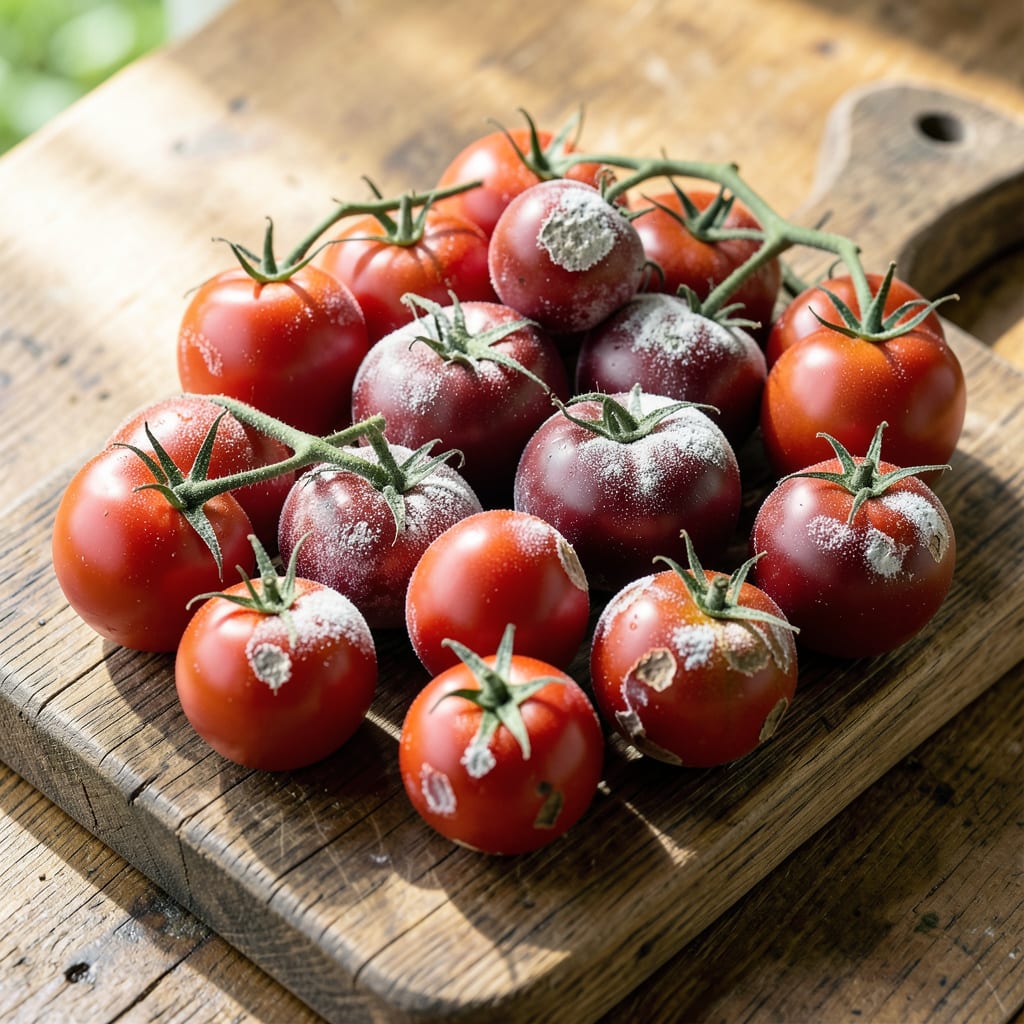
White patches on your tomatoes aren’t just unsightly—they’re a distress signal. I’ve seen healthy plants turn overnight from thriving to struggling when this issue hits.
Fortunately, most causes are preventable with simple adjustments. From powdery mildew to sun scald, the fix often starts with better airflow, consistent watering, or a bit of shade at peak sun. Here’s how to diagnose and treat it fast.
📚 In This Guide
Here’s how I identify the cause and apply organic fixes to restore your plants to full health.
Examine the white patches closely with a hand lens if possible. Note whether they appear on the upper or lower leaf surfaces, stems, or fruit. Powdery mildew presents as a fine, talc-like coating, while sun scald causes dry, papery spots on fruit exposed to intense direct sunlight.
Check the pattern: irregular blotches often indicate fungal issues, while uniform bleaching suggests environmental stress. I’ve found that white patches on lower leaves usually point to powdery mildew, while fruit discoloration often stems from sun exposure or nutrient deficiencies.
Evaluate your growing conditions for clues. Powdery mildew thrives in high humidity (above 60%) combined with 70-80°F temperatures. Sun scald occurs when fruit is suddenly exposed to intense sunlight after a period of shade, such as after pruning.
Check your watering routine—overhead irrigation in the evening creates perfect conditions for fungal spores to germinate. I always water at the base in the morning to allow foliage to dry before temperatures drop. Poor air circulation, common in dense plantings, also encourages fungal growth.
For powdery mildew, mix 1 tablespoon baking soda, 1 teaspoon neem oil, and 1 quart water in a spray bottle. Apply to affected leaves every 7-10 days until the issue resolves. This raises the pH on leaf surfaces, inhibiting fungal growth without harming the plant.
For sun scald, create shade cloth or use companion planting with taller crops to filter light. If the patches are due to nutrient deficiency (often magnesium or calcium), apply a foliar spray of Epsom salt (1 tablespoon per gallon) or crushed eggshells at the base. I’ve seen dramatic improvements within 10-14 days with consistent treatment.
Improve air circulation by pruning dense foliage and spacing plants at least 18-24 inches apart. Stake or cage tomato plants to keep foliage off the ground, reducing humidity around leaves. This simple step has prevented more outbreaks in my garden than any other.
Rotate crops annually to prevent soil-borne diseases from recurring. For container gardeners, replace potting mix between plantings. Maintain consistent moisture levels—fluctuations between drought and overwatering stress plants, making them more susceptible to issues. I mulch heavily to retain even soil moisture.
These practical insights will help you accurately diagnose and treat the problem while preventing future issues.
The Temperature Factor: Powdery mildew flourishes in that specific 70-80°F range mentioned in Step 2. If you’re in this temperature zone, be extra vigilant about humidity control. I’ve found that even a few degrees above or below can significantly reduce fungal growth risks.
My Game-Changer: In Step 1, don’t just look at the patches—feel them too. Powdery mildew will feel like fine dust between your fingers, while sun scald spots will be dry and papery. This tactile check has saved me from misdiagnosing the issue more times than I can count.
What to Watch For: The 7-10 day treatment interval in Step 3 is crucial. I learned the hard way that skipping applications or stretching the interval beyond 10 days allows the fungus to regain its foothold. Set calendar reminders to stay on schedule.
Prevention Wisdom: The 18-24 inch spacing in Step 4 isn’t just a suggestion—it’s your first line of defense. I used to crowd my plants until I realized that proper spacing reduces humidity around leaves by up to 40%, dramatically cutting fungal risks.
White patches on tomatoes are often caused by fungal diseases like powdery mildew, sun scald from excessive heat, or pest infestations like whiteflies. Check for other symptoms to pinpoint the issue.
Yes, if the patches are due to sun scald or minor fungal issues. Wash them thoroughly and remove affected areas. Avoid eating tomatoes with severe mold or rot.
Ensure proper spacing for airflow, water at the base to keep leaves dry, and use mulch to prevent soil-borne diseases. Organic fungicides like neem oil can also help.
Neem oil, baking soda spray (1 tsp baking soda + 1 quart water + a few drops of soap), or sulfur-based fungicides work well. Apply early morning or late evening for best results.
If the patches spread rapidly or the plant is severely infected, remove it to prevent contamination. Healthy plants nearby should still be treated preventatively.
