
Beautiful Plants For Your Interior
Beautiful Plants For Your Interior
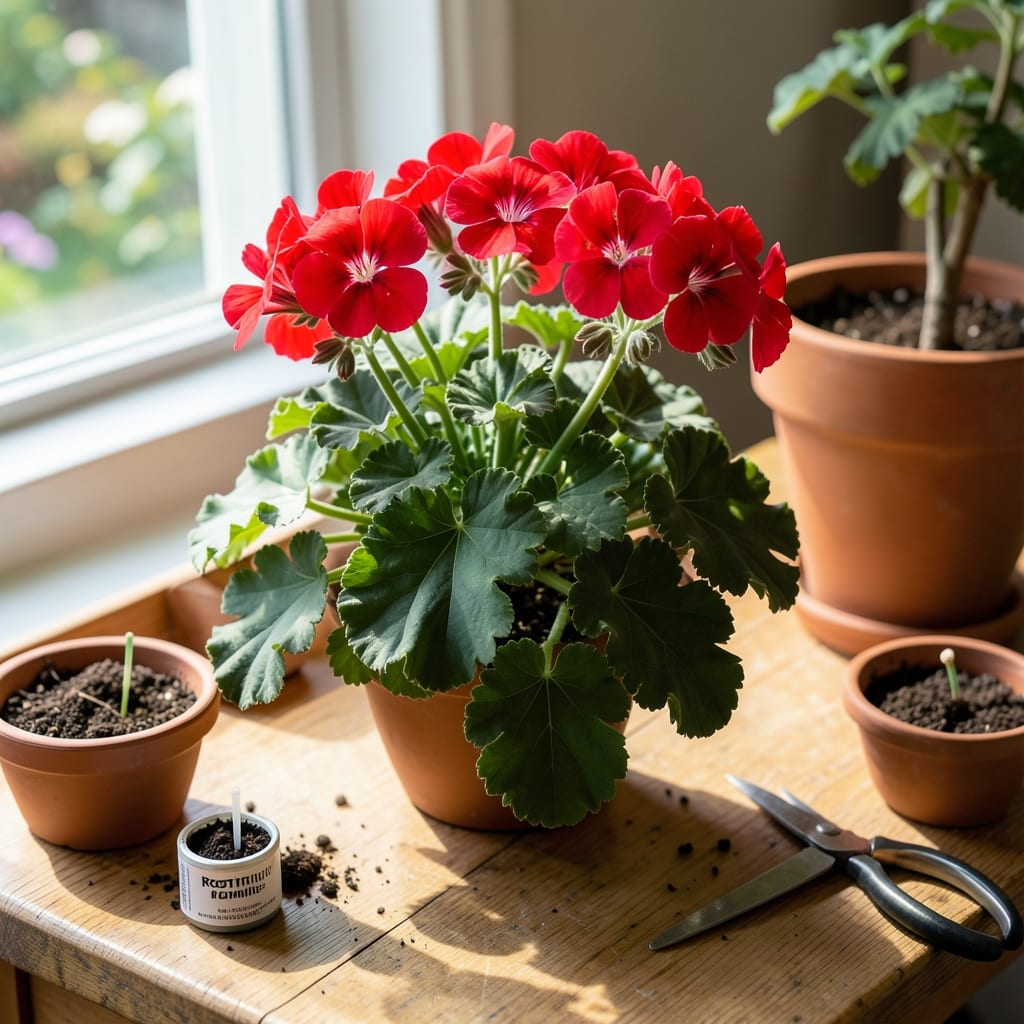
Take 4-6 inch cuttings from healthy geranium stems just below a leaf node, remove lower leaves, and place in water or moist potting mix. Roots form in 2-4 weeks with proper light and humidity.
I love how geraniums reward patience with vigorous new plants. The key is choosing stems with visible nodes, as these growth points contain the hormones needed for root development. 🌟 Keep cuttings in bright, indirect light and maintain consistent moisture—too much water leads to rot, while too little slows root formation.
💡 In This Article
Water rooting leverages the plant’s natural response to moisture. When you submerge the stem, the nodes detect the aquatic environment and trigger callus formation within 3-5 days. These calluses then produce root initials that grow downward in search of oxygen. The transparency of water lets you monitor progress daily—a huge advantage for beginners. 💫
Soil propagation works differently. The cutting must first develop calluses to prevent rot in the moist medium. This method mimics natural conditions, encouraging roots to spread horizontally. The underground environment maintains higher humidity around the stem, which can speed up root development by 20-30% compared to water.
However, you can’t observe the process without disturbing the cutting.
Node activation is the biological key to both methods. These growth points contain meristematic cells that can differentiate into roots when exposed to the right conditions. In water, the absence of soil microbes means the plant directs all energy toward root production.
In soil, beneficial microorganisms form symbiotic relationships that can enhance nutrient uptake once roots form.
Gardeners often choose water for the visual feedback and lower risk of disease, while soil enthusiasts appreciate the seamless transition to permanent planting. Water-rooted cuttings may experience slight transplant shock when moved to soil, as the roots adapt from aquatic to terrestrial conditions. This shock typically lasts 3-7 days and is rarely fatal. ✨
Temperature plays a crucial role in both methods. Ideal rooting occurs between 65-75°F, as this range optimizes cellular respiration and hormone production. Below 60°F, the process slows dramatically, while above 80°F increases rot risk. A heating mat can maintain consistent warmth for soil propagation, giving it an edge in cooler climates. 🔥
Late summer to early fall is ideal, as plants are still actively growing. Spring also works well before new growth hardens off. Avoid winter when growth slows.
This usually happens from too much stem submerged or using non-sterile water. Change water every 3-4 days and submerge only the bottom 1-2 nodes.
Water roots should be 1-2 inches long with visible white tips. For soil cuttings, gentle resistance when tugged means roots have formed.
It’s optional but can speed up rooting by 30-50%. Especially helpful for woody stems or less-than-ideal conditions.