
Beautiful Plants For Your Interior
Beautiful Plants For Your Interior
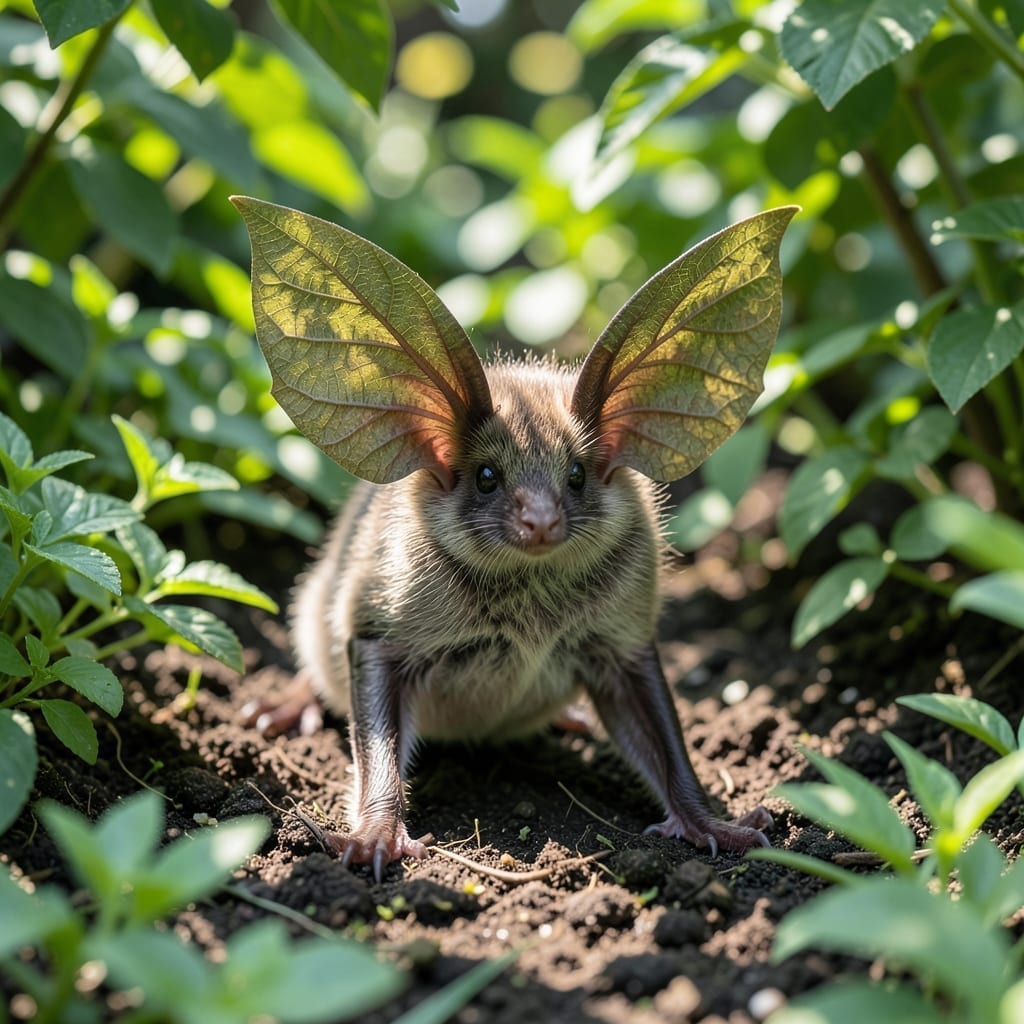
The bat-eared fox is the most well-known animal with leaf-like ears, featuring large, pointed ears that resemble foliage, evolved for heat dissipation and acute hearing.
What fascinates me about this species is how its oversized ears serve dual purposes in the harsh African savanna. Heat dissipation works through an extensive network of blood vessels, while the wide surface area captures even faint sounds from prey. I’ve also noticed the fennec fox shares similar adaptations, though with a more rounded shape. 🌟
💡 In This Article
The bat-eared fox’s ears measure 5-6 inches long, nearly as large as its face, with pointed tips and visible vein-like blood vessel networks. This creates a striking visual similarity to broad, flat leaves like those of the baobab tree in its native African savanna.
The ear’s thin, almost translucent edges catch sunlight just like foliage, enhancing the leaf-like illusion from a distance. 🌟
What truly mimics leaf structure is the internal vascular system. Each ear contains hundreds of tiny blood vessels arranged in a branching pattern reminiscent of a leaf’s veins. These vessels sit just 1-2mm beneath the skin surface, creating the same intricate network visible in autumn leaves when held to light.
The ears also have a slightly wavy margin, like the serrated edge of an oak leaf.
Functionally, these ears operate like living solar panels. The large surface area, combined with the thin skin and rich blood supply, allows for rapid heat exchange—similar to how leaves regulate temperature through transpiration.
In the 90°F+ savanna heat, blood flows through the ears at an accelerated rate, cooling by as much as 5-10°F before returning to the body core.
Even the ear’s movement resembles leaves in wind. Bat-eared foxes can rotate their ears independently through 90 degrees of motion, tracking sounds with the same fluid precision that leaves respond to air currents. This adaptability allows them to pinpoint the exact location of insects moving beneath the soil surface, their primary food source. ✨
The coloration adds to the illusion. The ears have a pale, almost silvery interior that reflects light like the underside of many leaves.
The outer surface matches the fox’s tawny coat, but when backlit by the sun, the ears take on the same luminous quality as leaves caught in sunlight, creating a perfect natural camouflage among savanna vegetation.
Its 5-6 inch ears have pointed tips and visible blood vessel networks that mimic leaf veins. The thin, translucent edges catch sunlight like foliage, creating a striking visual resemblance.
Yes! The fennec fox has enormous 6-inch ears that dissipate heat, while the serval’s large, rounded ears feature vein-like patterns through their thin fur.
The large surface area aids heat dissipation in hot climates. The bat-eared fox can cool blood by 5-10°F in 90°F+ savanna temperatures through its ears.
The bat-eared fox can rotate its ears 90 degrees to pinpoint insect sounds underground, while the fennec fox detects prey with remarkable precision in the desert.