
Beautiful Plants For Your Interior
Beautiful Plants For Your Interior
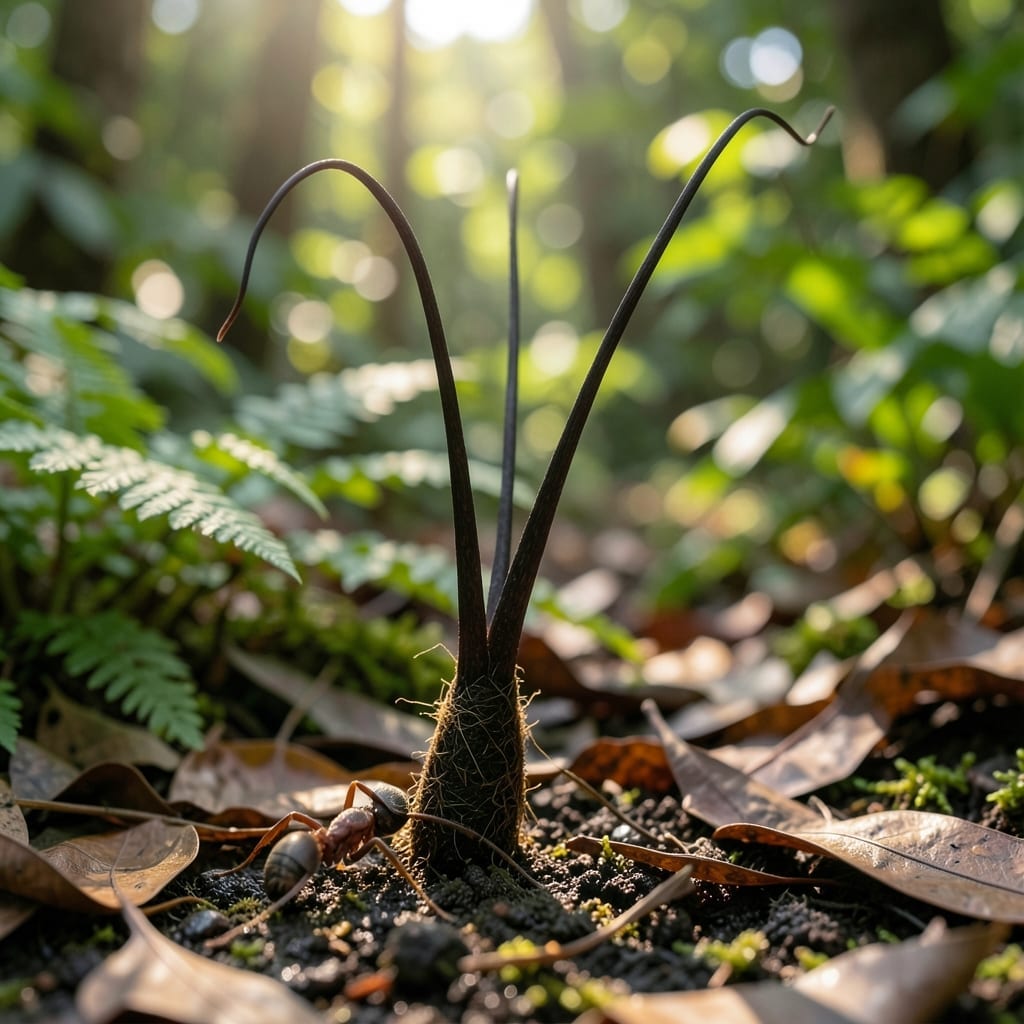
The Last of Us fungus is inspired by real Cordyceps, a parasitic organism that infects insects, altering their behavior before killing them to spread its spores.
This real-world fungus has fascinated scientists for decades due to its ability to hijack an insect’s nervous system. Ophiocordyceps species, for example, can force ants to climb to high vantage points before killing them, ensuring optimal spore dispersal. While the game amplifies the scale to humans, the core concept of behavioral manipulation remains rooted in actual mycological science. ✨
💡 In This Article
The real Cordyceps fungus operates like a biological puppeteer. It injects chemicals that hijack the insect’s nervous system, compelling the host to perform actions it normally wouldn’t.
In carpenter ants, for example, Ophiocordyceps secretes compounds that alter muscle contractions, forcing the ant to climb to a precise 25-30 cm height before clamping its jaws onto vegetation. 🔥
This process begins when fungal spores land on an insect’s exoskeleton. Within 24-48 hours, the spores germinate and penetrate the host’s body. The fungus then grows hyphal networks throughout the insect, releasing psychoactive compounds like cordycepin that mimic neurotransmitters. These chemicals disrupt normal neural pathways, effectively rewiring the insect’s behavior. ✨
Temperature and humidity play critical roles in this manipulation. Studies show Ophiocordyceps thrives in tropical environments with 80-90% humidity and temperatures around 77°F. These conditions accelerate fungal growth while keeping the host alive long enough for the fungus to complete its lifecycle. The infected insect typically dies within 6-10 days of initial exposure. ⚡
What makes this particularly fascinating is the precision of the behavioral changes. Infected ants don’t just climb randomly—they seek out specific locations that offer ideal conditions for spore dispersal. Researchers have documented cases where 90% of infected ants die within 20 cm of each other, creating what scientists call “graveyard patches.” 💫
This level of control suggests the fungus has evolved over millions of years to perfect its manipulation techniques. The compounds it produces don’t just affect behavior—they also suppress the insect’s immune response, preventing it from fighting back against the infection. This dual mechanism ensures the fungus can complete its lifecycle undisturbed.
Yes, but only in insects. Real Cordyceps releases chemicals that hijack an insect’s nervous system, forcing specific behaviors like climbing to high points before death. This mind control is well-documented in ants.
Human body temperature of 98.6°F is too high for Cordyceps to survive. Our immune systems would also attack the fungus immediately, making infection impossible. The game’s scenario is pure fiction.
Initial infection begins within 24-48 hours of spore contact. Full behavioral manipulation develops over 6-10 days, with death occurring once the fungus is ready to release spores.
Cordyceps thrives in tropical environments with 80-90% humidity and temperatures around 77°F. These conditions allow spores to remain viable and accelerate fungal growth in hosts.