
Beautiful Plants For Your Interior
Beautiful Plants For Your Interior
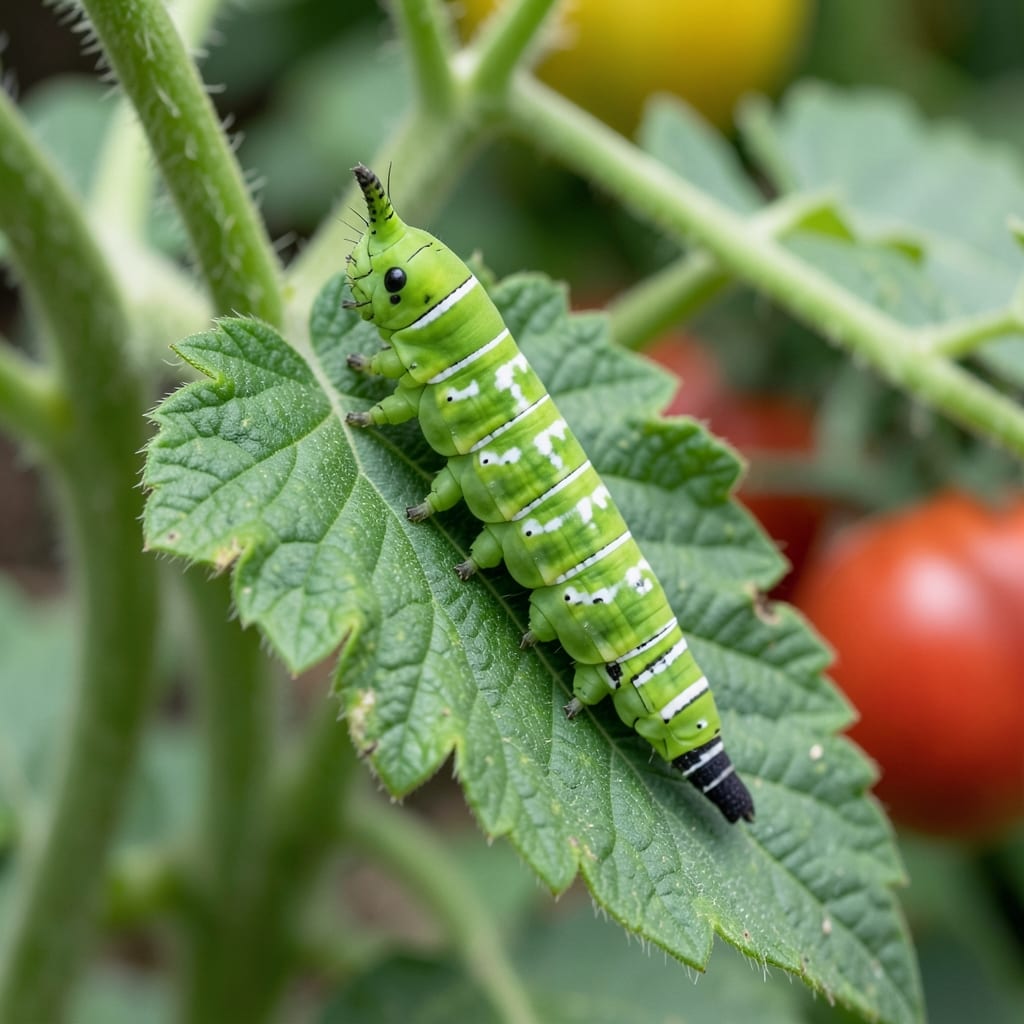
Common pests include tomato hornworms, aphids, whiteflies, and flea beetles. These insects chew or suck sap from leaves, causing visible damage and stunted plant growth.
I’ve seen these invaders turn thriving plants into skeletonized stems overnight. The hornworms leave dark, pelleted frass, while aphids create sticky honeydew that attracts ants and sooty mold. 💫
Early detection can save your crop, so I check undersides of leaves weekly for eggs or larvae. Organic controls like neem oil work best when applied at dusk to avoid harming pollinators.
💡 In This Article
Tomato hornworms create large, irregular holes in leaves, often starting at the edges and working inward. These bright green caterpillars can grow up to 4 inches long and may also strip entire leaves overnight. Their damage is typically concentrated at the top of the plant where they prefer the tender new growth. 🔥
Aphids leave behind curled, yellowing leaves covered in a sticky substance called honeydew. This sugary residue attracts ants and often develops into black sooty mold. You’ll find clusters of these tiny green, black, or pink insects on the undersides of leaves and along stems. ✨
Whiteflies cause stippling or yellowing of leaves as they suck plant sap. When you disturb the plant, these 1/16-inch white insects will fly up in a cloud. Their feeding also produces honeydew, similar to aphids, leading to sooty mold growth on leaf surfaces.
Flea beetles create small, round shot holes throughout the leaf surface, giving it a ” Swiss cheese” appearance. These tiny black or bronze beetles jump like fleas when disturbed. They’re most active in cool weather and can completely defoliate young plants if left unchecked. 💫
Spidermites, though tiny, leave distinctive webbing on leaf undersides and cause a speckled, bronzed appearance on the foliage. Their damage often starts on the lower leaves and works upward as the infestation spreads.
Hornworms create large, jagged holes often starting at leaf edges. You’ll also see dark green or black droppings on leaves and soil. Their damage appears overnight since they eat voraciously.
Look for curled, sticky leaves with tiny green, black, or pink bugs clustered underneath. Aphids leave behind honeydew, which attracts ants and causes sooty mold.
Yes, but they prefer young plants and seedlings. Their shot-hole damage looks like tiny round holes scattered across leaves. These pests jump when disturbed.
Inspect plants in the early morning or late evening when pests are most active. Focus on leaf undersides where many insects hide during the day.