
Beautiful Plants For Your Interior
Beautiful Plants For Your Interior
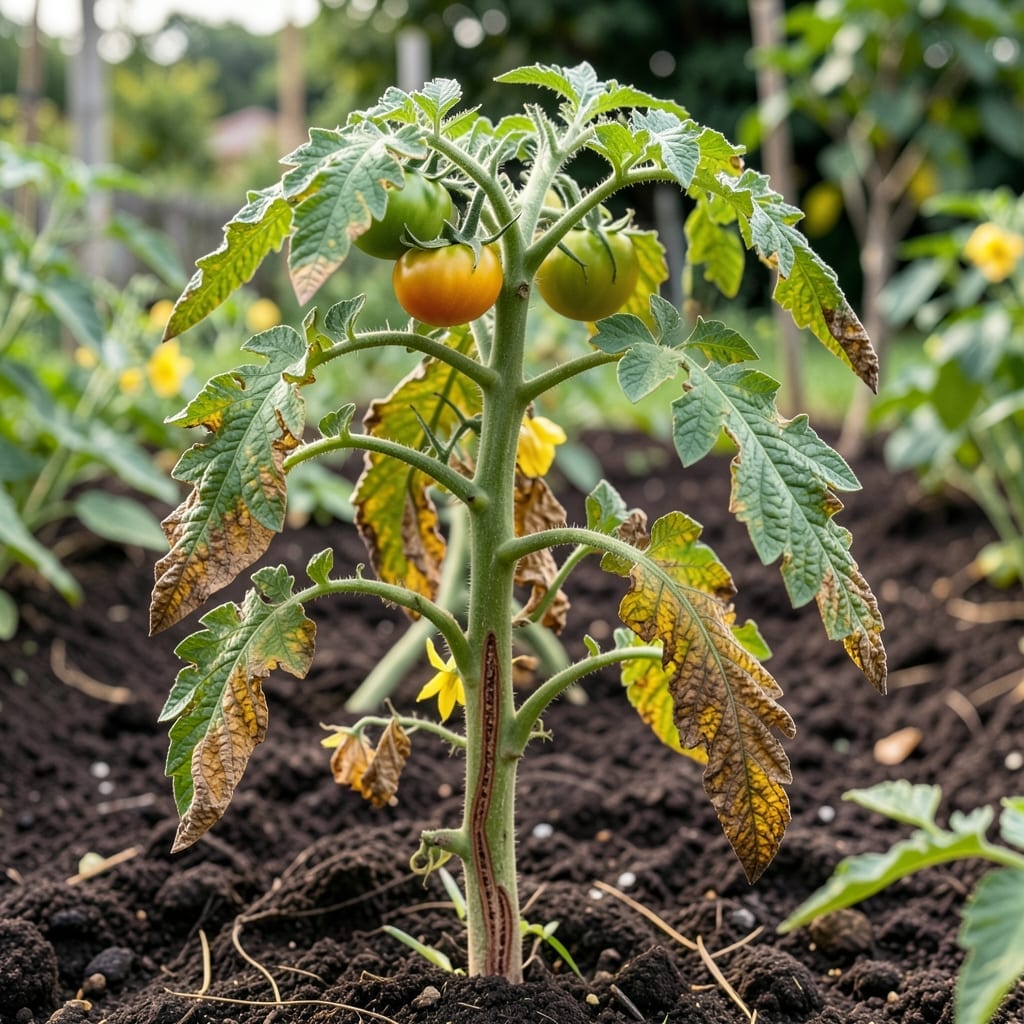
Fusarium wilt is a destructive soil-borne fungal disease that blocks water flow in plants, causing yellowing, wilting, and stunted growth, often leading to death.
I’ve seen this fungus devastate entire crops because it thrives in warm soil and attacks the vascular system, starving plants of nutrients. 💫 What’s particularly challenging is its ability to survive for years as dormant spores, waiting for the right host. Early signs like leaf discoloration often get overlooked until the damage becomes irreversible.
💡 In This Article
The fungus Fusarium oxysporum produces microscopic spores called chlamydospores that can lie dormant in soil for up to 10 years. These spores germinate when they detect root exudates from susceptible plants, like tomatoes or bananas. The pathogen then invades through root tips or wounds, colonizing the xylem vessels that transport water throughout the plant. 🔥
Once inside, the fungus produces mycelium that blocks water flow, creating the classic wilting symptom. Warm soil temperatures between 75-85°F accelerate this process, while cooler conditions slow it down. The pathogen thrives in well-drained but moist soils with a pH of 5.5-7.5, making most garden beds ideal for its survival. ✨
Infection spreads through contaminated tools, irrigation water, or even wind-blown soil. The fungus can also hitch a ride on infected plant debris or seeds. What’s particularly insidious is that some strains are host-specific, meaning the Fusarium that attacks tomatoes won’t affect beans, but will persist indefinitely waiting for another tomato plant. 💫
Overhead watering creates perfect conditions by splashing soil onto lower leaves, giving spores additional entry points. Similarly, over-fertilizing with nitrogen creates lush, succulent growth that’s more susceptible to infection. The fungus can even spread through grafted plants if the rootstock isn’t resistant to the specific Fusarium strain. ⚡
In greenhouse settings, the pathogen spreads rapidly through shared irrigation systems and poor sanitation practices. Even seemingly healthy plants can carry the fungus asymptomatically, making early detection challenging. This is why commercial growers often test soil before planting vulnerable crops. 🌟
Chlamydospores can remain dormant for up to 10 years, waiting for susceptible plants. They activate when they sense root secretions from hosts like tomatoes or bananas.
Warm soil between 75-85°F speeds up infection. Cooler conditions slow fungal growth, but won’t eliminate established spores.
Resistant varieties slow infection but aren’t immune. Look for VF or F labels on seeds, as these tolerate specific strains better than standard varieties.
Yes, avoid planting susceptible crops in the same spot for 3-4 years. This starves the fungus by removing its preferred host plants.
Use a 10% bleach solution between uses. This kills spores on pruners, shovels, and other equipment that might spread the pathogen.