
Beautiful Plants For Your Interior
Beautiful Plants For Your Interior
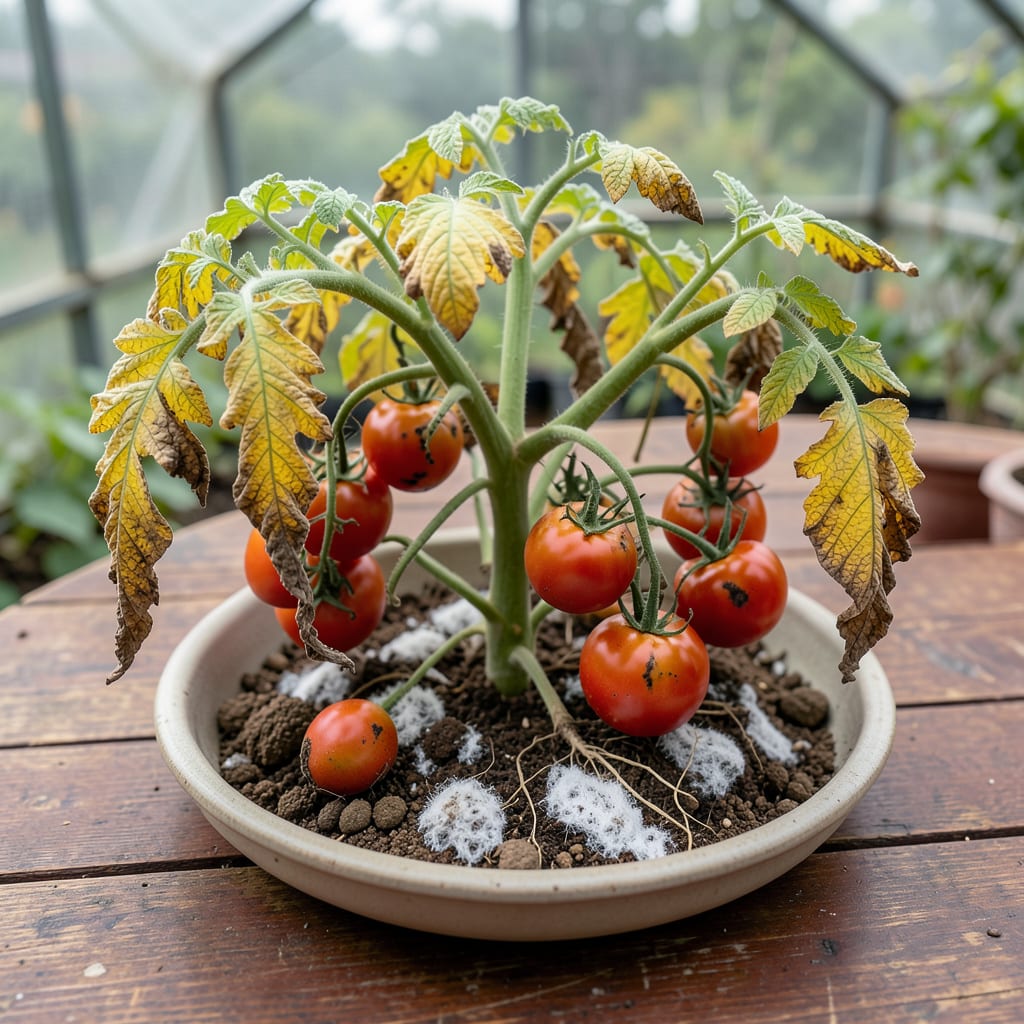
Your tomato plants were thriving yesterday, but today half the leaves are yellow and wilting. Fusarium wilt moves fast, and I’ve lost entire crops to it before learning how to spot it early.
This fungus lives in the soil, attacking the plant’s vascular system from the roots up. The first sign is usually drooping leaves on one side of the plant, followed by yellowing between the veins. Left unchecked, it spreads to the whole plant in 2-3 days.
Organic removal starts with pulling infected plants immediately—roots and all—to prevent the spores from spreading. Solarizing the soil or rotating crops for 3-4 years breaks the cycle naturally.
Catching it early saves the rest of your garden. Here’s how to act before it’s too late.
Fusarium wilt in tomato plants is a destructive fungal disease caused by the soilborne pathogen Fusarium oxysporum f. sp. lycopersici. This section breaks down the primary causes behind its occurrence, helping you understand how to prevent it.
The fungus thrives in soil, especially in warm, tropical, and subtropical climates. It can survive for years in the soil or on contaminated gardening tools, pots, or even plant debris. When tomatoes are planted in infected soil or handled with unclean tools, the pathogen enters through the roots, colonizing the plant’s vascular system and blocking water and nutrient flow.
Some tomato cultivars lack genetic resistance to Fusarium oxysporum. Heirloom and older varieties, in particular, are often more vulnerable. Growing these without preventive measures—like crop rotation or resistant rootstocks—increases the risk of infection.
Excess moisture in the soil creates ideal conditions for fungal growth. Overwatering or poorly drained beds can stress tomato plants, weakening their defenses. The fungus spreads more easily in waterlogged soil, moving from one plant to another through root contact or splash dispersal.
Fusarium wilt is most aggressive in soils with temperatures between 75°F and 85°F (24°C–29°C). These conditions accelerate fungal activity, allowing it to infect plants more rapidly. High heat also stresses tomatoes, making them more susceptible to disease.
Fusarium wilt can be stubborn, but these targeted solutions help save your tomatoes and prevent future outbreaks. Act fast for the best results!
Fusarium spores linger in the soil for years. Remove and replace the top 6–12 inches of soil around affected plants. For a chemical-free fix, solarize the soil: Water the area, cover it with clear plastic, and let the sun bake it for 4–6 weeks. This kills spores naturally.
Prevention tip 💡: Rotate crops—avoid planting tomatoes, potatoes, or peppers in the same spot for at least 3 years.
Pull up wilted plants immediately—roots and all—to stop the fungus from spreading. Do not compost them; burn or bag them to avoid contaminating other areas. Disinfect tools with a 10% bleach solution after handling infected plants.
Prevention tip ✨: Choose resistant varieties like ‘Celebrity,’ ‘Mountain Merit,’ or ‘San Marzano’ for future plantings.
Young plants are vulnerable. Boost their defenses by drenching the soil with a Trichoderma-based fungicide (a beneficial fungus that outcompetes Fusarium). Water at the base to keep foliage dry, and avoid overhead irrigation.
Prevention tip 🎯: Start seeds in sterile potting mix and use disease-free transplants.
Fusarium thrives in soggy soil. Amend heavy clay or compacted beds with compost or aged manure to improve drainage. Raised beds can also help keep roots from sitting in water.
Prevention tip 🌡️: Use drip irrigation to maintain consistent (but not excessive) moisture.
It can move through a plant in 2-3 days, turning healthy foliage yellow and wilted. In warm soil (75-85°F), the fungus spreads even faster, often jumping to neighboring plants within a week if left unchecked.
Unfortunately, no. Once symptoms appear, the fungus has already blocked the plant’s water flow. Removing it immediately is the only way to protect the rest of your garden. Never compost infected plants.
Rotate crops for 3-4 years, avoiding tomatoes, peppers, and potatoes in the same spot. Solarizing soil or using resistant varieties like ‘Celebrity’ or ‘Mountain Merit’ also helps.
