
Beautiful Plants For Your Interior
Beautiful Plants For Your Interior
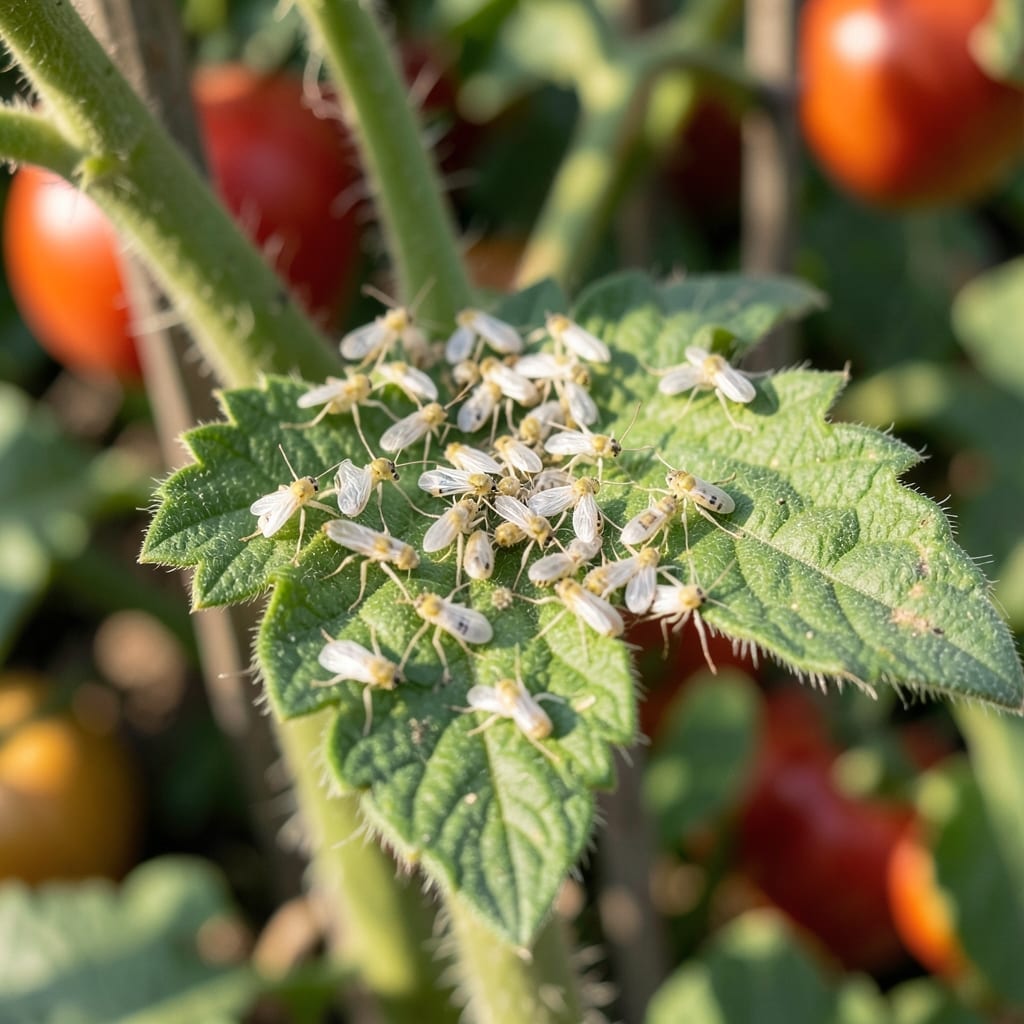
White bugs on tomato leaves mean trouble if left unchecked. I first spotted them last summer—tiny white dots multiplying overnight, leaving sticky residue and stunted growth in their wake.
These pests (usually whiteflies or aphids) sap plant strength quickly. The good news? Organic solutions work fast. A strong spray of water knocks them off immediately, while neem oil or insecticidal soap handles the rest.
Your plants bounce back within a week with consistent treatment. The key is catching them early before they spread to every leaf and stem.
Works for greenhouse or garden tomatoes, and keeps your harvest healthy without harsh chemicals. Here’s exactly how to fix it.
White bugs on your tomato plants are usually the result of a few common pests and environmental triggers. Here’s why they appear and thrive in your garden:
Aphids are tiny, soft-bodied insects that cluster on the undersides of leaves and stems. They feed on sap, weakening the plant and excreting a sticky substance called honeydew, which attracts ants and promotes sooty mold. These pests reproduce rapidly in warm, humid conditions, making overcrowded or overwatered plants prime targets. Tomato plants with excessive nitrogen (from over-fertilization) are especially vulnerable.
Whiteflies are another sap-sucking culprit, easily identified by the white, moth-like adults that flutter away when disturbed. They lay eggs on the undersides of leaves, and their nymphs cause curling, yellowing, and stunted growth. Whiteflies thrive in greenhouses or sheltered outdoor areas with poor airflow and high humidity. They’re also drawn to plants stressed by drought or nutrient deficiencies.
Mealybugs appear as cottony white masses in leaf axils or stem joints. They spread quickly in dense plantings or unpruned foliage, where they hide from predators. These pests are often introduced via infected nursery plants or contaminated soil. Overuse of synthetic pesticides can kill their natural predators (like ladybugs), allowing their populations to explode.
Stressed plants are magnets for pests. Overwatering, underwatering, or poor soil drainage can weaken tomato plants, making them more susceptible to infestations. Additionally, high temperatures and dry spells can drive whiteflies and aphids to seek refuge in your garden. Ensuring proper spacing, airflow, and consistent watering helps deter these invaders.
Tackling white bugs on tomato plants starts with identifying the pest and applying targeted fixes. Here’s how to address the most common culprits and keep your crop thriving:
Use a strong spray of water from a hose to dislodge aphids from leaves and stems. For stubborn infestations, apply insecticidal soap or neem oil (mix 1 tbsp per gallon of water) every 5–7 days. Prevention tip: 💡 Introduce ladybugs or lacewings—natural predators that devour aphids.
Set up yellow sticky traps near plants to catch adult whiteflies. Apply horticultural oil or a soapy water spray (1 tsp mild soap per liter) to smother eggs and nymphs. Prevention tip: 🌡️ Use reflective mulch to confuse whiteflies and reduce landing spots.
Dab mealybugs with a cotton swab soaked in rubbing alcohol to kill them on contact. For larger outbreaks, spray with pyrethrin-based insecticide (follow label instructions). Prevention tip: ✨ Inspect new plants before bringing them near your garden to avoid contamination.
Gently scrape off scale with a soft toothbrush or cloth. Follow up with neem oil or dormant oil spray to suffocate remaining pests. Prevention tip: 🎯 Prune heavily infested branches and dispose of them in sealed bags to prevent spread.
For all methods, apply treatments in the early morning or late evening to avoid harming beneficial insects. Repeat as needed, and always test sprays on a small area first to check for plant sensitivity.
Whiteflies look like tiny white moths that fly away when disturbed. Aphids are smaller, pear-shaped, and usually stay put. Check leaf undersides for clusters or sticky residue.
A strong water spray knocks off many pests immediately but may not eliminate eggs. Repeat daily for 3-4 days for best results. Combine with neem oil for stubborn cases.
They work well for whiteflies but less so for aphids or mealybugs. Place traps just above plant level for maximum catch.
A vinegar-water mix (1:3 ratio) can deter some pests but may harm plants. Test on a small area first and avoid using in direct sunlight.