
Beautiful Plants For Your Interior
Beautiful Plants For Your Interior
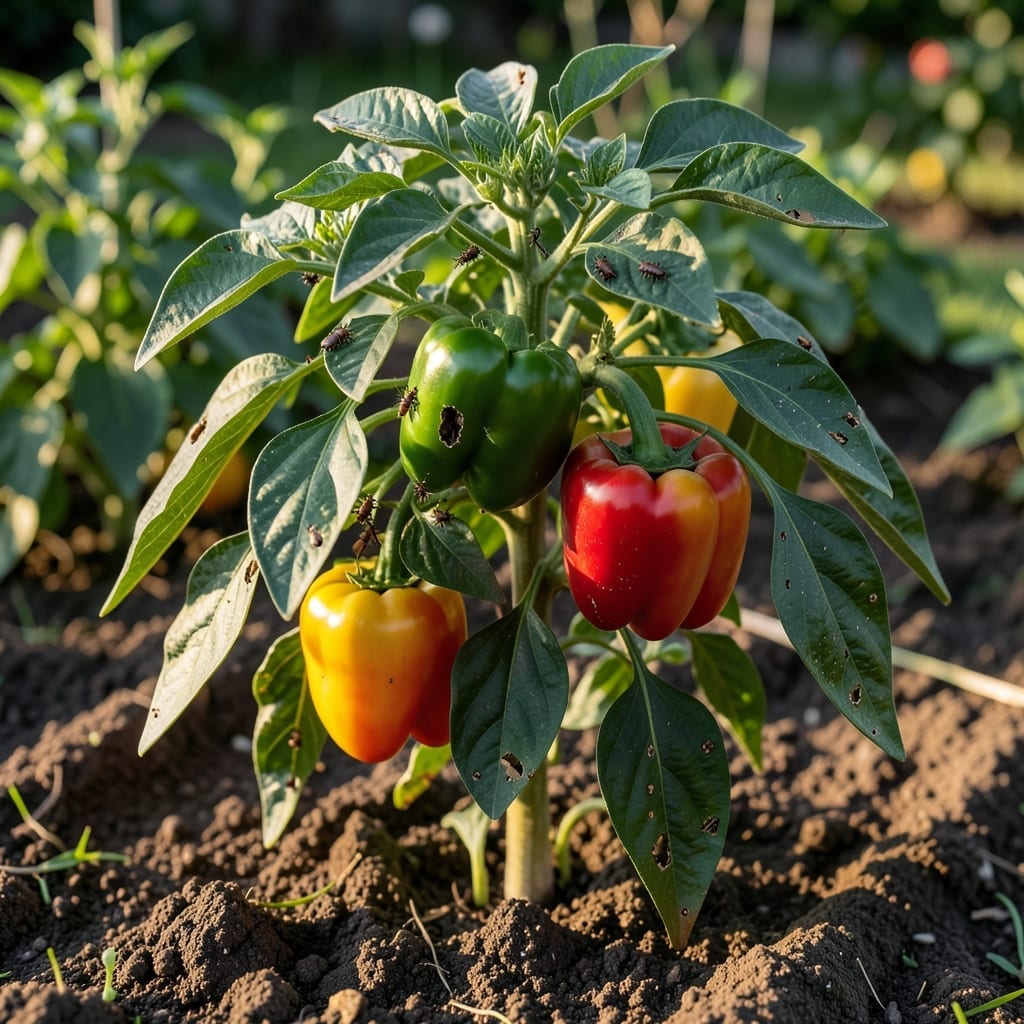
Nothing ruins a gardener’s day like seeing pepper leaves full of holes overnight. I’ve lost count of how many times I’ve rushed outside with my coffee, only to find my plants looking like Swiss cheese.
Here’s the thing—pepper plants attract specific pests that leave distinct damage patterns. Once you learn to spot the difference between aphid clusters and beetle bites, you’ll know exactly what you’re dealing with.
You’ll stop the damage within 24-48 hours using simple, organic solutions that don’t harm beneficial insects. No fancy equipment needed—just household items and a little observation.
Works for both container and in-ground plants, and prevents future infestations before they start. Let’s save those peppers.
Understanding why your pepper plant leaves are being eaten starts with identifying the culprits. Here are the most common causes, explained with actionable insights:
Peppers are a magnet for aphids, flea beetles, and hornworms. Aphids suck sap, causing curled or yellowed leaves, while flea beetles create tiny holes. Hornworms devour entire leaves overnight. Check undersides of leaves for clusters of green/black bugs or dark droppings.
These nocturnal feeders leave ragged edges and silvery slime trails on leaves. They thrive in moist environments, so overwatering or dense mulch can invite them. Inspect plants at dawn for fresh damage or the pests themselves.
While not “eating” leaves, pathogens like bacterial leaf spot or powdery mildew cause discoloration and lesions that mimic pest damage. Look for spotted, wilting, or powder-coated foliage—often worsened by poor airflow or wet foliage.
Rabbits, deer, and even squirrels may nibble pepper leaves, especially young plants. Clean-cut edges or missing sections (not ragged) suggest larger animals. Fencing or repellents can deter them.
Yellowing or distorted leaves might signal nitrogen, magnesium, or calcium shortages. Unlike pest damage, deficiencies affect growth uniformly. Test soil pH (ideal: 6.0–6.8) and amend with compost or targeted fertilizers.
Here’s how to tackle the most common culprits munching on your pepper plant leaves, with simple, actionable fixes and prevention tips.
Spray leaves with a strong stream of water to dislodge aphids. For stubborn infestations, use insecticidal soap or a DIY mix of 1 tsp dish soap + 1 liter of water. Prevention: Attract ladybugs (natural predators) by planting marigolds or dill nearby. 💡
Create a copper tape barrier around pots or beds—slugs hate the electric charge! Alternatively, set out beer traps (shallow dishes filled with beer) to lure and drown them. Prevention: Water in the morning so soil dries by night, as these pests thrive in dampness. 🌡️
Wipe leaves with a damp cloth to remove mites and their webs. Follow up with a neem oil spray (1 tbsp neem oil + 1 tsp dish soap + 1 liter of water). Prevention: Mist plants regularly to increase humidity, as mites prefer dry conditions. ✨
Check leaves daily and remove beetles by hand (drop them in soapy water). For larger infestations, dust leaves with kaolin clay, a natural repellent. Prevention: Rotate crops yearly to disrupt beetle life cycles. 🎯
Release parasitic wasps or lacewings to prey on caterpillars. For immediate action, pick off caterpillars and eggs by hand. Prevention: Use row covers to block adult moths from laying eggs. 🌿
Look for clusters of tiny green or black bugs on undersides of leaves, plus curled or yellowing foliage. They leave behind a sticky residue called honeydew.
Set up beer traps at soil level or create a copper tape barrier around your plants. These methods work overnight to reduce slug populations.
Yes! A mix of 1 tsp dish soap + 1 liter water sprays away many soft-bodied insects. Neem oil also works for mites and fungi.
Nocturnal pests like slugs, snails, and some beetles feed after dark. Check plants at dawn for fresh damage or slime trails.