
Beautiful Plants For Your Interior
Beautiful Plants For Your Interior
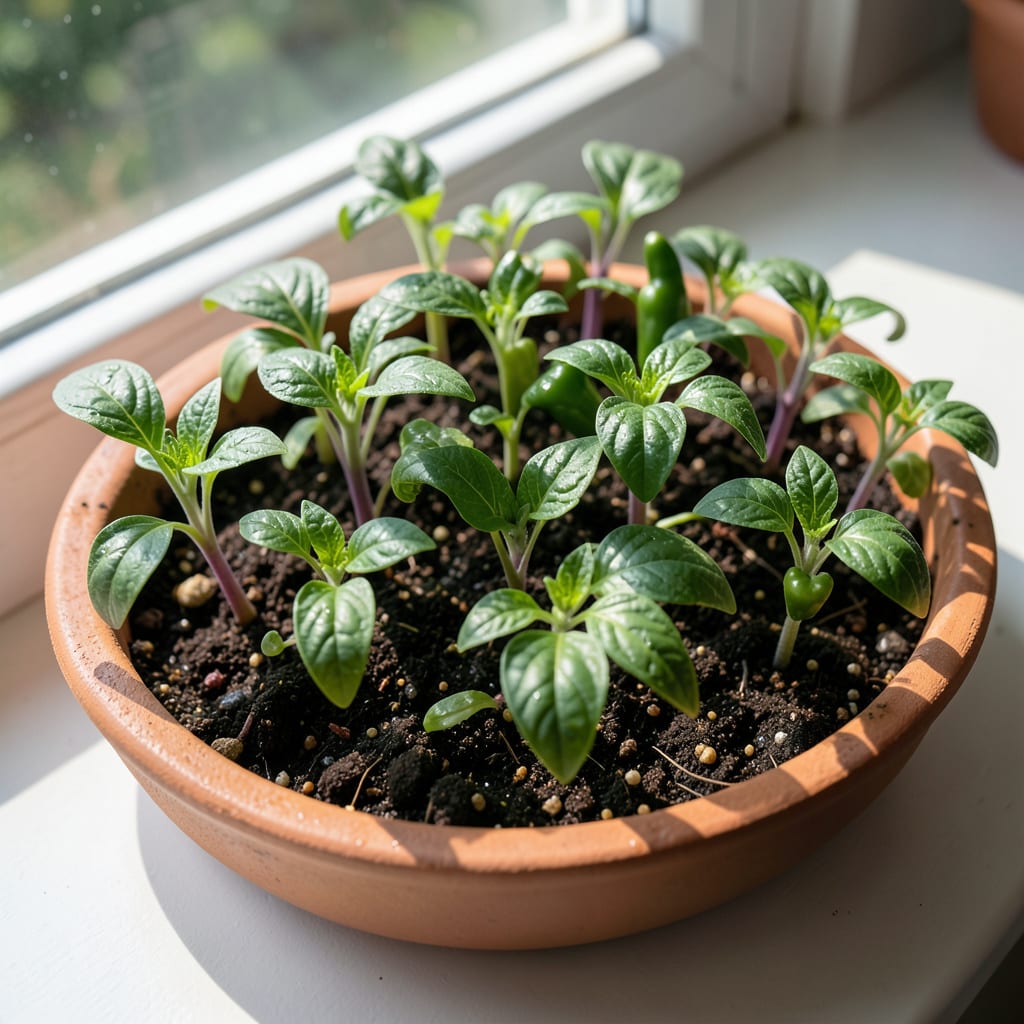
Seeing curled leaves on pepper seedlings is a gut-punch moment. 🌱 I’ve been there—healthy sprouts one day, sad little spirals the next, and suddenly you’re questioning every watering session and sunlight decision.
Here’s the thing—this is fixable, often within 24-48 hours. The usual culprits are environmental stressors like uneven watering, temperature swings, or pests hitching a ride. We’ll get your seedlings back to strong, straight growth fast.
📚 In This Guide
Here’s my proven approach to restore your plants quickly and prevent future leaf curl.
Examine the leaf curl direction and plant condition first. Upward curling often signals overwatering or calcium deficiency, while downward curl suggests underwatering or excessive heat. I check the soil’s moisture by inserting my finger 1-2 inches deep—dry soil means thirsty plants, soggy soil means back off.
Look for yellowing between leaf veins, which screams calcium deficiency. If the curl appears with brown leaf edges, your seedlings might be getting too much fertilizer. I always start with this visual inspection—it’s the fastest way to pinpoint the issue without guessing.
Move seedlings to a location with consistent 70-80°F temperatures and 12-16 hours of bright, indirect light daily. I use a full-spectrum grow light positioned 6-8 inches above the plants if natural light is insufficient. Too much direct sun can scorch leaves, causing edges to curl upward for protection.
If using grow lights, ensure they’re on a timer to prevent photoperiod stress. I’ve found that even 2 hours of darkness beyond their ideal photoperiod can trigger leaf curl. Also, maintain 40-50% humidity—too dry and leaves curl to conserve moisture; too humid and fungal issues arise.
Water only when the top 1 inch of soil feels dry to the touch. Use room temperature water and pour slowly at the base, avoiding leaf wetting. I water in the morning so foliage dries before evening, reducing disease risk. Overwatering creates anaerobic conditions that suffocate roots, causing leaves to curl and yellow.
If you’ve been heavy-handed with water, let the soil dry out slightly between waterings. For underwatered plants, submerge the pot in 1 inch of water for 10-15 minutes to rehydrate the root ball thoroughly. This method ensures even moisture without compacting the soil.
For calcium deficiency, I apply a calcium-magnesium supplement (like Cal-Mag) at half strength weekly until new growth appears normal. Avoid high-nitrogen fertilizers during early stages—they promote leafy growth at the expense of structural strength, which can worsen curling.
If the soil is compacted, gently loosen the top ½ inch with a fork to improve aeration. I also add a ¼ inch layer of vermiculite to the soil surface to maintain moisture without waterlogging. This simple step prevents both over and underwatering issues that lead to curled leaves.
Remove severely curled leaves with clean scissors—they won’t recover and may stress the plant further. I make cuts at a 45-degree angle just above a leaf node to encourage bushier growth. Focus on the worst-affected foliage first, leaving healthy leaves to photosynthesize.
After adjustments, monitor daily for 3-5 days. New growth should emerge normal if you’ve addressed the root cause. If curling persists, re-examine your light, water, and nutrient balance. I keep a journal to track what works—it’s saved my seedlings more than once.
My seedlings used to curl until I figured out these simple but effective strategies.
Diagnosis Tip: In Step 1, don’t just look at the curl direction—check the soil 1-2 inches deep as instructed. I learned the hard way that surface dryness doesn’t always mean the plant needs water. Soggy soil at that depth is your clue to back off immediately.
Light Placement: For Step 2, that 6-8 inches gap between your full-spectrum grow light and seedlings is non-negotiable. I once placed mine too close, and the heat stress caused upward curling within hours. Also, that 12-16 hours of light is a sweet spot—any less and they get leggy, any more and you risk photoperiod stress.
Watering Hack: The 10-15 minutes submersion method in Step 3 works wonders for underwatered plants. I use a shallow tray—just enough to cover the pot’s base with that 1 inch of water. Room temperature is key here; cold water can shock the roots and make curling worse.
Recovery Timeline: Step 5 mentions monitoring for 3-5 days, and I can’t stress this enough. Don’t expect overnight miracles. New growth is your true indicator of success, not the existing curled leaves. Keep that journal—it’s how I caught patterns in my own setup.
Curling leaves often signal stress like overwatering, underwatering, or environmental factors (e.g., temperature swings or pests). Check soil moisture and inspect for bugs or disease signs.
Yes! With prompt action—adjusting water, improving airflow, or treating pests—seedlings often bounce back. Remove severely damaged leaves to redirect energy to healthy growth.
Water when the top inch of soil feels dry. Overwatering causes root rot, while underwatering leads to stress. Aim for consistent moisture, not soggy soil.
Aphids, spider mites, and whiteflies are common culprits. Look for sticky residue, webbing, or visible bugs. Use insecticidal soap or neem oil for organic control.
Sometimes! Viruses (like mosaic virus) or fungal issues (e.g., leaf curl disease) may cause curling. Remove infected plants to prevent spread and sanitize tools.
